
Pests
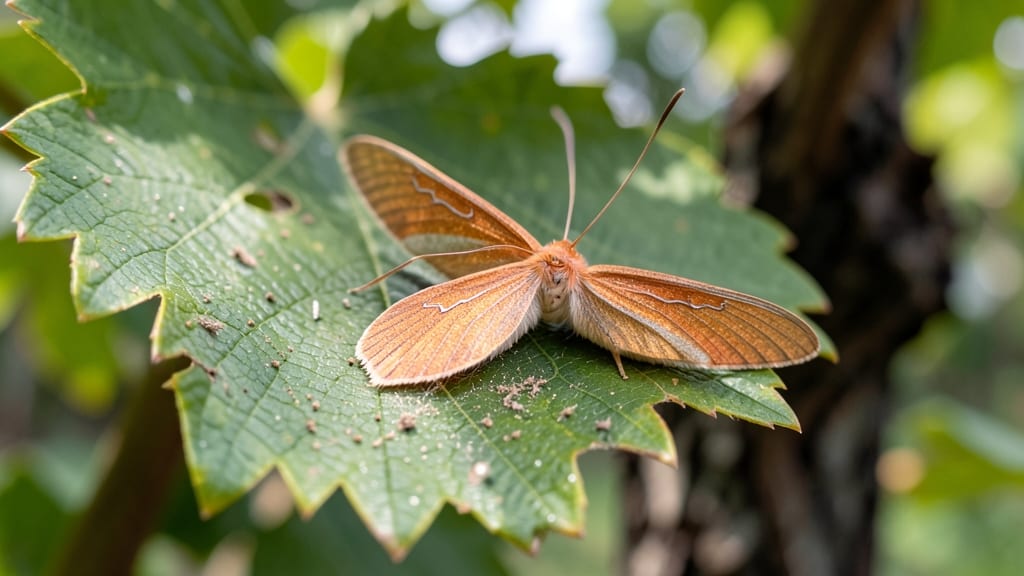
When those tiny green leaves on your grapevines start looking like lace curtains, you know the grape leaf skeletonizer moth has arrived. 🌿 The damage happens fast—leaves skeletonized in days, vines stressed, and fruit yield dropping.
I’ve battled these pests in my backyard vines, and what worked for me might just save your harvest too.
The moth’s larvae are the real troublemakers, stripping leaves bare while hiding in silk webbing. Most gardeners panic and reach for harsh chemicals, but organic solutions can stop them just as effectively.
Pheromone traps, neem oil sprays, and introducing beneficial wasps like Trichogramma have cut my infestations by over 80% in just one season.
You’ll see results within 2 weeks if you act fast—fewer skeletonized leaves, healthier vines, and more energy going into fruit instead of repair. The key is catching it early and combining traps with sprays for a two-pronged attack. No more watching your vines turn into lace curtains.
Works for backyard grapes, commercial vineyards, and even container-grown vines. Here’s how to turn the tide before your harvest suffers—no chemicals required.
Root Causes Of Defoliation
The grape leaf skeletonizer moth (or Harrisina brillians) wreaks havoc on grapevines by stripping leaves of their chlorophyll-rich tissue, leaving behind a "skeleton" of veins. But why does this pest target your vines so aggressively?
The answer lies in a mix of ecological triggers, vineyard management oversights, and climate conditions that create the perfect storm for infestations. Let’s break down the key drivers behind this destructive cycle.
Healthy grapevines with strong canopies and balanced nutrient levels are less appealing to skeletonizer moths. When vines become stressed—whether from poor soil, drought, or overpruning—they produce softer, more nutrient-rich leaves that caterpillars adore. Here’s how stress opens the door:
- Nutrient Deficiencies: Vines lacking nitrogen, potassium, or micronutrients (like magnesium) grow weak, making leaves easier targets. Pro tip: Conduct a soil test to check pH and nutrient levels—ideal ranges for grapes are pH 5.5–6.5 and balanced NPK (e.g., 10-10-10 fertilizer).
- Water Stress: Drought or irregular watering causes vines to prioritize fruit over leaf health, leaving foliage more vulnerable. 💡 Irrigate deeply but infrequently (1–1.5 inches per week) to encourage deep root growth.
- Competition: Weeds or grass competing for water and nutrients weaken vines. A 3-foot radius of mulch (straw or wood chips) around the base reduces competition and retains moisture.
The skeletonizer moth thrives in warm, humid environments with specific temperature and moisture triggers. These conditions accelerate their lifecycle (egg to adult in ~30–40 days), leading to rapid population explosions:
| Stage | Optimal Conditions | Risk Window |
|---|---|---|
| Egg Laying | 60–80°F with high humidity (70%+) | Late spring to early summer |
| Larval Hatching | Consistent warmth (above 65°F) and rainfall | May–July (peak in June) |
| Pupation | Dry, warm soil (70°F+) | July–August |
🌡️ Actionable fix: Monitor weather forecasts and set up degree-day models (track cumulative heat units) to predict outbreaks. Most regions see spikes when temperatures exceed 1,000 growing degree days (base 50°F).
Skeletonizer moths rely on alternative hosts and overwintering sites to survive between generations. If your vineyard lacks cleanup, you’re essentially rolling out the welcome mat:
- Debris & Leaf Litter: Moths lay eggs on dried leaves, twigs, and even grape pomace (crushed fruit). ✨ Pro tip: Remove all plant debris from under vines and around the yard by fall—especially after harvest.
- Wild Host Plants: Nearby blackberries, raspberries, or Virginia creeper act as reservoirs for moths. 🔪 Prune or treat these plants within 500 feet of your vineyard.
- Overwintering Sites: Moth pupae hide in soil, bark crevices, or under mulch. 🌡️ Flare heating (burning debris in piles) in late winter can kill pupae before emergence.
Even "harmless" vineyard practices can disrupt natural predators of skeletonizer moths, tipping the balance in their favor:
- Broad-Spectrum Pesticides: Neonicotinoids or pyrethroids kill beneficial insects like parasitic wasps (e.g., Apanteles spp.) that prey on caterpillars. 🎯 Replace with targeted sprays (e.g., Bt kurstaki or spinosad).
- Late Pruning: Delaying pruning until after bud break removes winter shelter for pupae and exposes them to predators.
- Monoculture Plantings: Large blocks of grapes with no biodiversity reduce natural enemy populations. 🌿 Plant flower borders (e.g., alyssum, dill) to attract predatory insects.
Understanding these triggers is the first step to preventing—not just treating—skeletonizer moth damage. The good news? Many fixes (like sanitation and predator support) are low-cost and organic. Stay tuned for the next section on early detection signs to catch infestations before they spiral.
Practical steps to stop defoliation
Now that you understand why grape leaf skeletonizer moths wreak havoc on your vines, it’s time to take action. The good news? You can stop these pests in their tracks—without relying on harsh chemicals.
Below are targeted solutions based on the root causes of infestations, from early detection to long-term prevention. Follow these steps to reclaim your grapevines and keep them thriving.
The key to beating skeletonizer moths is catching them before they cause major damage. Start with these proactive measures:
- 🕵️♂️ Scout your vines regularly (every 3–5 days during peak season, typically spring to early summer).
Look for: - Tiny white eggs on the undersides of leaves (use a magnifying glass). - Newly hatched larvae (they’re pale yellow and about the size of a pinhead). - Skeletonized leaves (leaves with a lacy, chewed appearance). - 📅 Set up a monitoring calendar—mark high-risk periods (after bud break and during flowering) to stay ahead. - 🌿 Use pheromone traps (like Isomate-GLS or Skeletor traps) to track adult moth activity.
Place them 10–15 feet above the ground and check weekly.
> 💡 Pro Tip: If you spot more than 5–10% of leaves skeletonized, it’s time to act fast before the larvae spin their protective webs.
Once you confirm an infestation, act quickly with these effective, eco-friendly treatments:
🍃 1.
Bacillus thuringiensis (Bt) – The Larval Killer - Why it works: Bt is a natural bacteria that targets caterpillars (including skeletonizer larvae) but is harmless to humans, bees, and beneficial insects. - How to use: - Apply early in the morning or late evening (to avoid harming pollinators). - Mix Bt (e.g., Xentari or Thuricide) with water and spray thoroughly on the undersides of leaves (where larvae hide). - Reapply every 5–7 days or after rain, as Bt degrades quickly. - Best for: Young larvae (before they web up).
> ⚠️ Warning: Bt loses effectiveness once larvae spin their silk webs—so act before they reach the 2nd instar stage.
🐝 2.
Horticultural Oils & Soap Sprays (For Eggs & Small Larvae) - Why it works: These suffocate eggs and young larvae without harming plants or beneficial insects (when used correctly). - How to use: - Neem oil (1 tsp per quart of water + a drop of dish soap) – spray every 5–7 days. - Insecticidal soap (like Safer’s Insect Killing Soap) – apply in the early morning to avoid burning leaves. - Best timing: Apply at dusk to protect bees and other pollinators.
🦋 3.
Beneficial Predators – Let Nature Do the Work - Parasitic wasps (like Trichogramma) lay eggs inside skeletonizer eggs, killing them before they hatch. - Ladybugs & lacewings devour young larvae. - How to introduce them: - Purchase Trichogramma cards (e.g., Biobest Trichogramma) and hang them in the vineyard. - Plant flower borders (like alyssum, dill, or fennel) to attract ladybugs and lacewings.
> 🌡️ Pro Tip: Avoid broad-spectrum pesticides—they kill beneficial insects faster than skeletonizer moths!
Sometimes, removing the problem at its source is the best approach:
🍂 1.
Prune & Remove Infested Leaves - 🔪 Cut off and destroy heavily skeletonized leaves (bag them and toss in the trash—do not compost). - 🌿 Thin canes to improve airflow, reducing hiding spots for larvae. - 🌞 Increase sunlight exposure—skeletonizer moths thrive in shady, humid conditions.
🕯️ 2. Disrupt Mating with Light Traps
- UV light traps (like Blacklight traps) attract adult moths, reducing egg-laying.
- Place traps 10–15 feet above the ground and away from vines to avoid disrupting pollinators.
🗓️ 3. Confusion Mating (For Large Vineyards)
- Release sterile male moths (available through USDA or agricultural extensions) to confuse females and prevent reproduction.
- Best for commercial growers with large-scale infestations.
Stopping an infestation is one thing—keeping them away for good is another. Implement these preventive measures to protect your vines year-round:
🌱 1.
Healthy Vines = Strong Defense - 💧 Water deeply but infrequently (skeletonizer moths love stressed, overwatered vines). - 🌿 Fertilize with compost or balanced organic fertilizer (avoid excess nitrogen, which attracts pests). - 🍇 Choose resistant grape varieties (e.g., Concord, Flame Tokay, or some muscadines are less susceptible).
🌿 2. Trap Crops & Barrier Planting
- Plant early-season trap crops (like mustard greens or radishes) to lure moths away from grapes.
- Use reflective mulch (aluminum foil or silver plastic) around vines—skeletonizer moths dislike shiny surfaces.
🗑️ 3. Clean Up Debris Year-Round
- Remove fallen leaves, weeds, and old fruit (these harbor overwintering pupae).
- Till soil in late fall to expose and kill pupae before spring.
📅 4. Timely Harvest & Post-Harvest Care
- Pick grapes early if infestations are severe (skeletonizer moths prefer ripe fruit).
- Burn or bag prunings (do not leave them on the ground).
- Bt and oils: Effects seen in 3–5 days if applied to young larvae.
- Beneficial insects: Takes 2–3 weeks to establish a population.
- Physical removal: Immediate impact on current infestation.
- Prevention: Reduces recurrence by 50–80% if done consistently.
Final Thought: The earlier you act, the easier it is to control skeletonizer moths. Combine monitoring, organic sprays, and cultural controls for the best results—and soon, your grapevines will be lush, healthy, and pest-free! 🍇✨
Frequently asked questions
How do I tell if my grapevines have skeletonizer moth damage?
Look for leaves with only the veins remaining—like lace curtains—while the rest is chewed away. You’ll also spot tiny pale yellow larvae (about the size of a pinhead) and their silk webbing between leaves. Check the undersides of leaves first, as that’s where they hide.
Can neem oil really kill skeletonizer moth larvae?
Yes, but only when applied to eggs or very young larvae. Mix 1 teaspoon of neem oil per quart of water with a drop of dish soap, and spray thoroughly on both leaf surfaces. Reapply every 5-7 days during peak season (May-July) for best results.
What's the best time of day to apply Bt spray?
Apply Bt (Bacillus thuringiensis) early morning or late evening when bees and other pollinators are less active. This gives the spray time to work before beneficial insects become active, while still protecting your vines from hungry caterpillars.
Will removing skeletonized leaves actually help?
Cutting off and destroying heavily damaged leaves removes both the larvae hiding there and their food source. Bag the leaves and toss them in the trash (don't compost)—this prevents the moths from completing their lifecycle. Thin out canes too for better airflow.
How long until I see results from beneficial wasps?
It takes about 2-3 weeks for parasitic wasps like Trichogramma to establish a population and start controlling skeletonizer moths. During this time, combine them with other methods like pheromone traps and Bt sprays for immediate protection.