
Pests and Diseases
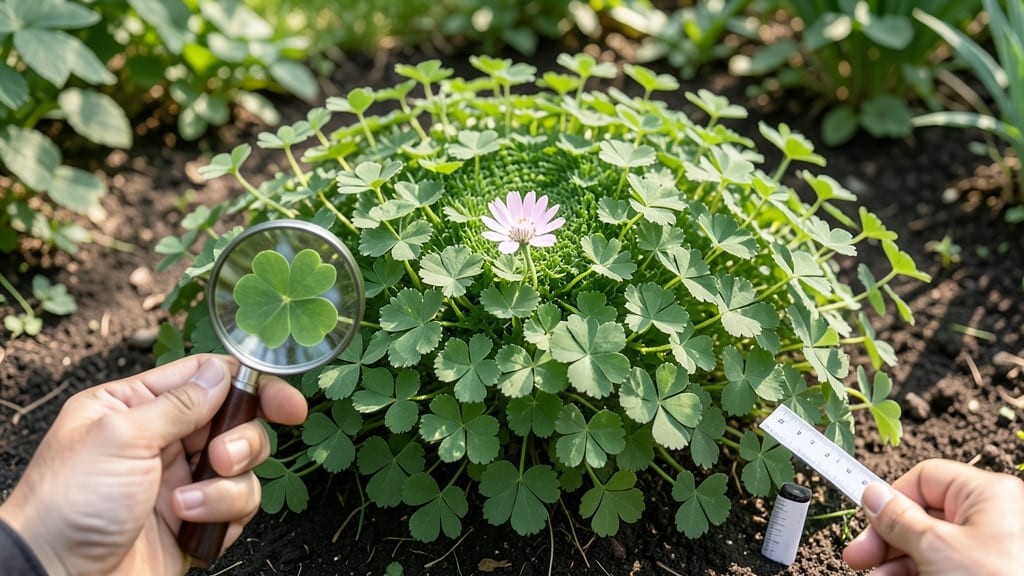
How rare is a 1000-leaf clover? Finding one is astronomically rare, with odds estimated between 1 in 10,000 to 1 in 100,000—far beyond the already unlikely four-leaf variety. Most 'high-leaf' clovers are genetically modified or artificially altered, not naturally occurring.
Most people know four-leaf clovers are rare, but a 1000-leaf clover pushes probability into the realm of myth. 🌱 The sheer number of leaves would require an unnatural genetic mutation—something that simply doesn't happen in nature.
Even the most optimistic botanists agree that these "high-leaf" clovers are almost always human-made, often through tissue culture or selective breeding. If you've ever seen one, there's a good chance it was engineered in a lab rather than plucked from a field.
What makes this even more fascinating is how photosynthesis itself acts as a natural limit. A plant can only produce so many leaves before its energy resources become overwhelmed. In wild clovers, you're more likely to find variations with five or six leaves—but even those are uncommon.
The jump to 1000 leaves isn't just rare; it's biologically implausible under normal conditions.
💡 In This Article
- The Science Behind Clover Leaf Variations
- How to Spot or Grow a 1000-Leaf Clover
The science behind clover leaf variations
Clover leaf variations stem from genetic mutations in the Trifolium genus, where each leaflet typically follows a three-leaf pattern. A four-leaf clover occurs when a random mutation causes an extra leaflet to develop—estimated at roughly 1 in 10,000 plants.
However, the jump to 1000 leaves requires an impossible cascade of mutations. Each additional leaf demands new genetic instructions, energy allocation, and structural support, which nature simply can't sustain. 🌱
Photosynthesis acts as the ultimate limiting factor. A plant's energy budget must balance leaf production with root growth, flowering, and survival. Wild clovers allocate resources to maximize reproductive success, not leaf count.
Even five-leaf clovers (a rare natural variation) push the plant's energy limits—imagine the metabolic strain of 1000 leaves competing for sunlight and nutrients! Lab-grown specimens bypass these constraints by manipulating growth hormones like auxin and cytokinin, which force unnatural growth patterns.
Botanists use chromosomal aberrations to explain natural leaf variations. For example, a four-leaf clover often involves an extra chromosome fragment, but replicating this 333 times (for 1000 leaves) is biologically infeasible.
The closest natural extreme is the Megaphyll trait in some ferns, but even those rarely exceed 50 leaves per frond. This is why most "1000-leaf" clovers are tissue-culture creations, where scientists induce rapid cell division without regard for natural growth laws.
Consider this: A single clover plant produces 10-20 leaves in its lifetime under ideal conditions. To reach 1000 leaves, the plant would need to grow 50x faster than its natural rate while maintaining structural integrity—a physical impossibility without human intervention.
Even if you found such a plant, its stem couldn't support the weight, and its roots would starve from energy depletion. 💫
For comparison, the Guinness World Record for most leaves on a single plant (any species) is held by a 50-leaf Tradescantia (spiderwort) grown in a lab. Extrapolating this to 1000 leaves would require a plant the size of a small tree—clearly not a clover.
This mathematical impossibility explains why "1000-leaf" clovers are almost always marketing gimmicks or scientific novelties, not natural occurrences.