
Pruning
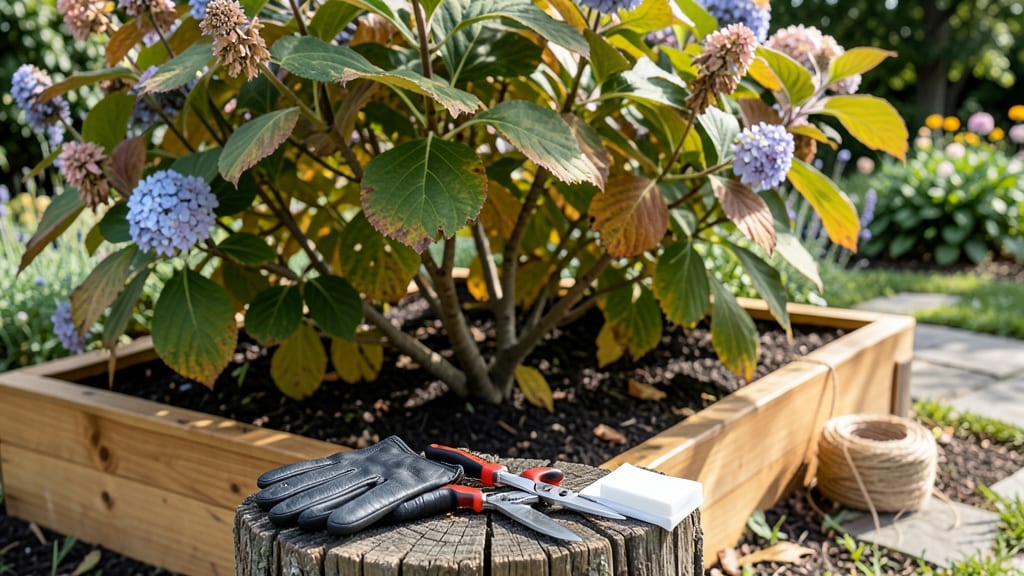
Pruning big leaf hydrangeas in fall isn’t just about shaping—it’s about setting them up for stunning next-season blooms while avoiding the most common mistakes that leave plants struggling. 🌿 I’ve ruined more hydrangeas than I’d like to admit by pruning at the wrong time or too aggressively, but this method guarantees a fuller, healthier plant by spring.
The secret lies in timing: wait until after your first frost (when leaves turn brown) but before hard freezes lock the plant in dormancy. Grab your pruners, a pair of gloves, and a bucket for clippings—no fancy tools needed.
You’ll make clean cuts just above a set of buds, removing about one-third of the stems at most. What you’ll end up with is a bush that wakes up in spring with stronger growth and more blooms than ever before.
The flowers arrive earlier, last longer, and resist winter damage better. Plus, you’ll skip the frustrating cycle of leggy stems and sparse blooms that plagues so many hydrangeas. Works for both container and in-ground plants, and the same principles apply whether you’re dealing with lacecap or mophead varieties.
Here’s exactly how to do it right—no guesswork involved.
📚 In This Guide
- What you need
- Instructions
- Tips and common mistakes
- Wrapping up and next steps
What you need
- ● Bypass pruners – Sharp, clean, and disinfected (70% isopropyl alcohol works great). Avoid anvil pruners—they can crush stems.
- ● Loppers – For thicker stems (½" to 1" diameter). Opt for bypass-style with a 6–8" blade for precision.
- ○ Hand pruners (optional but handy) – For smaller branches or tidying up. Look for ergonomic grips to avoid hand fatigue.
- ● Garden gloves – Heavy-duty, cut-resistant (e.g., nitrile-coated) to protect against thorns and sap.
- ● Pruning saw – Only if you’re dealing with thick, woody stems (1" or larger). A bow saw or folding pruning saw is ideal.
- ● Disinfectant (70% isopropyl alcohol or bleach solution) – Wipe tools between cuts to prevent disease spread.
- ● Garden twine or bungee cords – To bundle and label pruned branches for composting or disposal.
- ● Heavy-duty trash bags or compost bin – For removing debris. Big leaf hydrangeas produce a lot of clippings!
- ● Step stool or ladder – If your hydrangea is taller than 5–6 feet (safety first! Use a stable, 3-legged stool).
- ● Marking spray or flags – To tag stems you’re unsure about (e.g., old wood vs. new growth).
- ● Sharpie or chalk – For labeling branches if you’re experimenting with pruning techniques.
- ● Mulch (shredded bark or wood chips) – To protect the base after pruning and retain moisture.
- ● Camera or phone – Snap before/after photos to track progress over the seasons!
Step-by-Step instructions for pruning big leaf hydrangeas in fall
Fall pruning transforms big leaf hydrangeas into next year's showstoppers—here's my foolproof method.
✂️ Step 1: Time Your Prune for Optimal Growth
Wait until after the first hard frost but before the ground freezes—typically mid-to-late November in most climates. This timing lets the plant enter dormancy with clean cuts, preventing disease while allowing new growth to form next spring. I always prune on a dry, overcast day to reduce stress on the plant.
Look for brown, crispy leaves as your signal. If leaves still cling green, wait a few more weeks. The goal is to prune when the plant has fully transitioned to dormancy but before winter's deep freeze locks everything in place.
🌿 Step 2: Remove Dead or Damaged Wood First
Start by cutting out any dead, diseased, or crossing branches using clean, sharp pruners. Dead wood appears hollow when cut or has no green tissue inside. Diseased branches often show blackened or oozing spots—remove these immediately to prevent spreading.
Make your cuts at a 45-degree angle, about ¼ inch above a outward-facing bud. This angle helps rainwater run off instead of pooling at the cut. I always sterilize my pruners with rubbing alcohol between cuts to prevent bacterial transfer.
✂️ Step 3: Thin the Canopy for Better Airflow
Step back and visualize the plant's shape. Remove 20-30% of the oldest wood—these are the thickest, woody stems that no longer produce vibrant blooms. Focus on branches growing inward or rubbing against others. You're creating space for next year's growth while improving airflow.
Cut just above a bud that faces outward to encourage an open, airy structure. Avoid cutting back to stubs—this invites disease. If you're unsure which branches to remove, prioritize the ones that look thicker than a pencil and have fewer leaves.
🌱 Step 4: Shape for Next Season's Blooms
Big leaf hydrangeas bloom on old wood, so avoid heavy pruning that removes next year's flowers. Instead, focus on refining the plant's form. I like to create a slightly rounded shape, allowing sunlight to reach the center where new growth will emerge.
Use your hand as a guide—keep the plant's width roughly equal to its height. For large shrubs, aim to leave 6-8 strong stems after pruning. Avoid cutting back more than ⅓ of the plant's total growth in one season to prevent shock.
🪴 Step 5: Clean Up and Mulch for Winter Protection
After pruning, rake up all fallen leaves and debris from around the base. This prevents fungal diseases from overwintering. I always collect the pruned branches in a compost bin—just don't compost diseased wood.
Apply a 2-3 inch layer of mulch around the base, keeping it 6 inches away from the trunk. Use shredded bark or straw—avoid fresh wood chips, which can draw too much moisture. This mulch layer insulates roots and retains moisture during winter's dry spells.
Tips & tricks for perfect fall hydrangea pruning
Real talk: Fall pruning can make or break your hydrangea's next season. Here's what nobody tells you about getting it right.
Timing is Everything: That mid-to-late November window is non-negotiable for big leaf hydrangeas. I learned this the hard way—pruning too early when leaves are still green stresses the plant, while waiting too long risks winter damage. Check for those crispy brown leaves as your definitive sign. Pro tip: If your area has unpredictable frost dates, set a calendar reminder for two weeks after your first hard frost to be safe.
Sterilization Saves Lives: The rubbing alcohol step between cuts in Step 2 isn't just optional—it's critical. I've seen entire hydrangeas decline from bacterial spread through contaminated tools. Keep a small bottle of 70% isopropyl alcohol in your pruning kit and wipe blades after every 3-5 cuts. For extra protection, spray your pruners with a 10% bleach solution (1 part bleach to 9 parts water) before starting, then rinse thoroughly.
Visualize Before You Cut: Step back and really look at your hydrangea's shape before making a single cut. The 20-30% removal guideline in Step 3 is your target, but focus on creating an open center that lets sunlight reach all stems. I like to imagine a vase shape—wider at the base, tapering slightly toward the top. This prevents the dense growth that leads to mildew and weak blooms. For large shrubs, mark your target 6-8 stems with a piece of twine before cutting to avoid over-pruning.
Mulching Matters More Than You Think: That 2-3 inch layer in Step 5 isn't just decoration—it's insulation. Shredded bark mulch breaks down slowly, improving soil structure over time, while straw provides excellent moisture retention. Here's my secret: Mix in a handful of compost with your mulch to give roots a nutrient boost without smothering the plant. Just keep that mulch volcano away from the trunk—6 inches is the magic number for preventing rot.
Pro Tips for Prune Big Leaf Hydrangeas In Fall
- Real talk: Fall pruning can make or break your hydrangea's next season.
- Timing is Everything: That mid-to-late November window is non-negotiable for big leaf hydrangeas.
- Sterilization Saves Lives: The rubbing alcohol step between cuts in Step 2 isn't just optional—it's critical.
Frequently asked questions
Got questions about pruning your big leaf hydrangeas this fall?
You’re not alone! Here are some of the most common concerns—and their answers—to help you prune with confidence.
When is the exact best time to prune big leaf hydrangeas in fall?
Prune after the first hard frost (when leaves turn brown) but before winter dormancy sets in—typically late October to early November. This timing ensures the plant has time to heal before cold weather hits. Avoid pruning in late winter or early spring, as big leaf hydrangeas bloom on old wood.
What if I miss fall pruning? Can I still prune in winter or spring?
Yes, but with caution! If you skip fall, prune in late winter or early spring (February–March)—just before new buds swell. Avoid heavy cuts; instead, focus on shaping and removing dead wood. Big leaf hydrangeas are forgiving, but winter pruning may delay blooms slightly.
What if I cut off all the flower buds by mistake?
Don’t panic! Big leaf hydrangeas produce blooms on old wood, so cutting back too much won’t kill the plant. You’ll still get flowers the following year, though they may be fewer. Next time, aim to leave 2–3 buds per stem to encourage new growth.
Should I fertilize after pruning big leaf hydrangeas?
Lightly! Apply a balanced, slow-release fertilizer (like 10-10-10) in early spring after pruning to support new growth. Avoid fall fertilization—it can stimulate tender growth that won’t survive winter. A thin layer of mulch (2–3 inches) around the base also helps protect roots.
What’s the difference between pruning big leaf and other hydrangeas (like panicle or oak leaf)?
Big leaf hydrangeas bloom on old wood, so prune minimally in fall to preserve next year’s flowers. Panicle and oak leaf hydrangeas bloom on new wood, so they can be pruned more aggressively in late winter/early spring. Always check your variety!
Pro Tip:
Label your hydrangeas if you have multiple types! A quick note on the plant tag (e.g., “Big Leaf—Old Wood Bloomer”) saves headaches—and hydrangeas—down the road.
Wrapping up and next steps
Pruning your big leaf hydrangeas in fall is all about giving them a fresh start for vibrant blooms next season—just remember to cut back old wood and shape with care.
With the right tools, timing, and technique, you’ll keep those lush flowers thriving year after year. Now that you’re armed with know-how, grab those shears and get pruning! 🌿✂️
For even better results, mark your calendar for spring—it’s the perfect time to check bloom patterns and adjust your pruning strategy. Happy gardening!