
Pruning
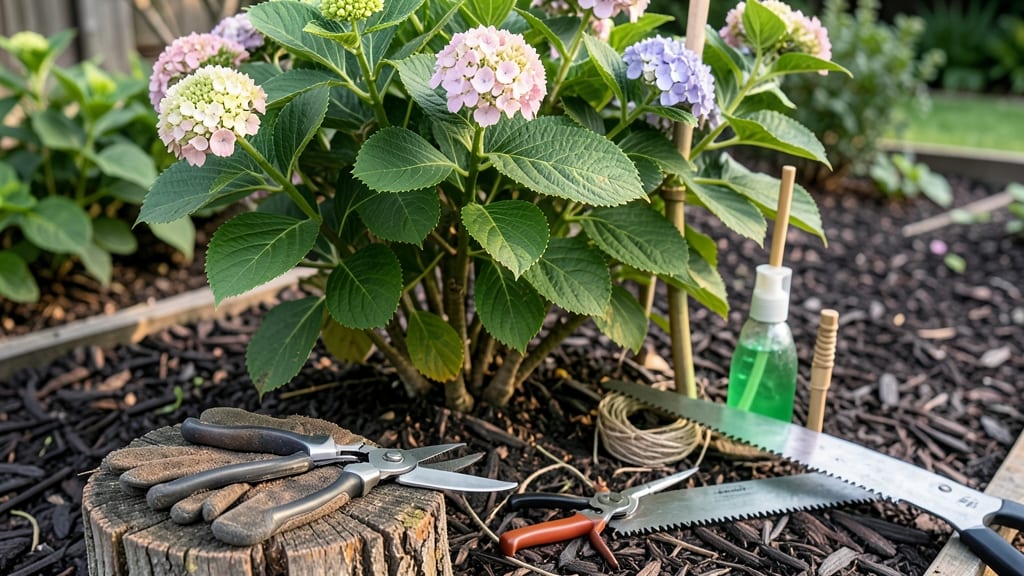
Pruning big leaf hydrangeas in spring can double your blooms—if you do it right. 🌸 The key is timing, technique, and knowing whether your plant is mophead or lacecap, because those two varieties bloom on different wood.
I’ve pruned these beauties for years, and the difference between a thriving bush and a sparse one comes down to these simple steps.
First, grab your pruners and gloves, then wait until late March or early April when the buds swell but before new growth emerges. You’ll cut back one-third of the oldest stems to the ground—these are the woody, thicker branches that bloomed last year.
The rest you’ll trim just above a set of 5-7 leaf buds, which encourages next season’s flowers. This method keeps your plant healthy while maximizing blooms.
After pruning, give your hydrangeas a deep drink of water and a light layer of mulch to protect roots. The first flush of new growth should appear within 2-3 weeks, and by summer, you’ll have fuller, more vibrant blooms than ever.
The secret? Less is more—avoid the urge to prune heavily, as big leaf hydrangeas bloom on old wood, and over-pruning means fewer flowers next year.
This works for both mophead (round blooms) and lacecap (flat, lacy blooms) varieties, though lacecaps respond best to minimal pruning. Once you master the technique, your hydrangeas will reward you with year-round interest, from spring’s fresh foliage to fall’s colorful blooms. Ready to transform your garden’s focal point?
📚 In This Guide
- What you need
- Instructions
- Tips and common mistakes
- Wrapping up and next steps
What you need
- ● Bypass pruners – Sharp, clean, and disinfected (70% isopropyl alcohol works great). Choose a pair with 4- to 6-inch handles for leverage.
- ● Loppers – For thicker stems (up to 2-inch diameter). Opt for long-handled loppers (18-24 inches) for reach.
- ○ Hand pruners (optional but handy) – For smaller cuts and detailed trimming.
- ● Garden gloves – Heavy-duty, cut-resistant (e.g., mechanized or leather) to protect against thorns and sap.
- ● Disinfectant solution – 1 part bleach to 9 parts water (or rubbing alcohol) to sterilize tools between cuts and prevent disease.
- ● Rag or paper towels – For wiping tools and cleaning sap off blades.
- ● Garden twine or plant ties – To secure heavy branches if needed (though big leaf hydrangeas rarely require this).
- ● Pruning saw – For very thick stems (over 2 inches) that loppers can’t handle.
- ● Ladder or step stool – If your hydrangea is taller than 6 feet (safety first!).
- ● Hydrangea bloom booster – A balanced fertilizer (10-10-10 or 20-20-20) to nourish the plant post-pruning.
- ● Mulch (shredded bark or pine straw) – To protect roots and retain moisture after trimming.
Step-by-step instructions for pruning big leaf hydrangeas in spring
Here's the method I use to keep my big leaf hydrangeas blooming beautifully all season—no more sparse clusters or leggy growth.
✂️ Step 1: Identify Last Year's Blooms and Dead Wood
Big leaf hydrangeas produce flowers on old wood, so the key is preserving last year's growth. Look for brown, dried flower clusters from last summer—they're your first clue. These clusters form on stems that grew the previous year, so cutting them off won't hurt your plant.
Next, scan for dead or diseased branches—they'll be brittle, cracked, or covered in black spots. These need to go immediately. Use sharp pruners to make clean cuts just above a bud or leaf node. I always cut at a 45-degree angle to prevent water from pooling on the wound.
🌿 Step 2: Thin Out Crowded Stems for Better Airflow
Hydrangeas thrive when they have good airflow, so aim to remove 10-20% of the oldest stems to open up the center. Focus on stems that are thinner than a pencil—these are the weakest and won't produce strong blooms. Cut these back to the ground to encourage new growth from the base.
If your hydrangea looks overcrowded, prioritize removing stems that cross or rub against each other. You'll see the plant's natural shape emerge as you work. Never remove more than 30% of the plant in one season, or you risk stressing it. Step back occasionally to check your progress.
☀️ Step 3: Shape the Plant for Sunlight Access
After removing dead wood and thinning, shape the plant so all branches receive even sunlight. Start at the outer edges and work inward, trimming back any stems that block light from reaching the center. Big leaf hydrangeas need morning sun and afternoon shade, so avoid heavy pruning on the south or west side if your plant gets intense afternoon sun.
Look for water sprouts—those are the fast-growing, weak stems that shoot up from the base or along branches. These steal energy from your blooms, so cut them off at the base. You'll notice the plant's structure becomes more balanced and open as you go.
💧 Step 4: Clean Up and Encourage New Growth
Once you've finished pruning, clean your tools with rubbing alcohol to prevent spreading disease. Remove all cuttings and debris from the area to keep pests away. Now, give your hydrangea a light feeding with a balanced fertilizer (10-10-10) to support new growth.
Water deeply after pruning to help the plant recover. You'll see fresh, vibrant leaves emerge within 2-3 weeks, signaling that the pruning was successful. Avoid heavy pruning again until next spring—this timing ensures your hydrangea has time to build energy for next year's blooms.
⏰ Step 5: Monitor and Adjust Through the Season
Keep an eye on your hydrangea over the next few months. If you notice leggy growth or stems stretching toward the sun, it's getting too much light. Move it to a slightly shadier spot or provide afternoon shade with a sheer curtain. Big leaf hydrangeas are adaptable, but they reward careful attention.
If flower buds form but don't open, your plant might need more sunlight. Conversely, if leaves scorch or wilt, it's getting too much direct sun. Adjust gradually—hydrangeas hate sudden changes. By late summer, you'll see new flower buds forming, and you'll know your spring pruning paid off.
Tips & tricks for pruning big leaf hydrangeas
Let me save you from the common mistakes I made before I learned these tricks—your hydrangeas will thank you.
Timing is Everything: Prune your big leaf hydrangeas in late winter to early spring, just as new growth begins but before buds swell. This timing ensures you're not cutting off potential blooms that form on old wood. I've seen people prune too early and miss the window, or too late and stress the plant before summer. Aim for February to March in most climates—when you can see the plant's structure but no new leaves have emerged yet.
Tool Prep Makes All the Difference: Before you start, sharpen your pruners and clean them with rubbing alcohol to prevent spreading disease between cuts. I use a small file to keep my pruners sharp, and I always sterilize them between plants. Dull blades crush stems instead of making clean cuts, which can damage the plant and invite pests. For larger branches, use loppers—never prune with scissors or dull tools.
The 45-Degree Angle Secret: When you make cuts, always angle them 45 degrees just above a bud or leaf node. This prevents water from pooling on the cut surface, which can lead to rot. I learned this the hard way when my first hydrangea developed fungal issues from improper cuts. The angle also helps the plant heal faster. If you're cutting larger branches, make the cut about 1/4 inch above a bud that faces outward—this encourages healthy growth in the right direction.
Post-Pruning Care is Critical: After you've finished, give your hydrangea a light feeding with 10-10-10 fertilizer to support new growth. Water deeply right after pruning to help the plant recover. You'll notice fresh leaves emerging within 2-3 weeks—this is your sign that the pruning worked. Avoid heavy pruning again until next spring; this timing gives your plant time to build energy for next year's spectacular blooms.
Pro Tips for Prune Big Leaf Hydrangeas In Spring
- Let me save you from the common mistakes I made before I learned these tricks—your hydrangeas will thank you.
- Timing is Everything: Prune your big leaf hydrangeas in late winter to early spring, just as new growth begins but before buds swell.
- Tool Prep Makes All the Difference: Before you start, sharpen your pruners and clean them with rubbing alcohol to prevent spreading disease between cuts.
Frequently asked questions
Got questions about pruning your big leaf hydrangeas? You’re not alone! Here are answers to the most common concerns—so you can confidently tackle spring pruning like a pro.
When is the exact best time to prune big leaf hydrangeas in spring?
The ideal window is late March to early April—after the last frost but before new growth starts. Pruning too early risks frost damage to fresh cuts, while waiting too long may reduce next year’s blooms. Pro tip: If your hydrangea blooms on old wood (last year’s stems), prune right after flowering instead!
What if I prune at the wrong time and kill my hydrangea?
Don’t panic! Big leaf hydrangeas are hardy and often bounce back. If you prune too late (after buds swell), focus on light shaping—avoid heavy cuts. For severe over-pruning, fertilize with acid-loving plant food and water deeply. New growth may appear slower but will recover with patience.
How much can I cut back? Should I remove entire stems?
For rejuvenation, cut back one-third of the oldest stems to the ground each year. Never remove all stems at once—this can shock the plant. Aim to thin out crowded centers and shape outward for airflow. Deadheading spent blooms in fall/winter also encourages fresh growth!
Will pruning affect my hydrangea’s flower color?
Yes! Big leaf hydrangeas change color based on soil pH. Pruning itself doesn’t alter hue, but fertilizing with aluminum sulfate (for blue) or lime (for pink) after pruning can help. Test your soil first—aim for pH 5.5–6.0 for blue or 6.0–7.0 for pink. Fun fact: Color shifts naturally over time!
What if my hydrangea isn’t blooming after pruning?
Check these 3 culprits:
- Lack of sunlight: Big leaf hydrangeas need 6+ hours of sun.
- Over-fertilizing: Too much nitrogen = leafy growth, no flowers.
- Dormant buds: If stems are woody with no buds, prune just above a leaf node to encourage new growth.
If issues persist, consider replacing the plant—some varieties decline after 10+ years.
Wrapping up and next steps
Pruning your big leaf hydrangeas in spring isn’t just about tidying up—it’s your secret to vibrant, long-lasting blooms all season! By following the right steps, you’ll encourage healthier growth, prevent overcrowding, and even adjust flower colors. Remember: patience and precision pay off with stunning results. 🌸
Now that you’re armed with the know-how, grab those shears and give your hydrangeas the TLC they deserve. Next, why not explore seasonal care tips to keep your blooms thriving year-round? Happy pruning!