
Blooming
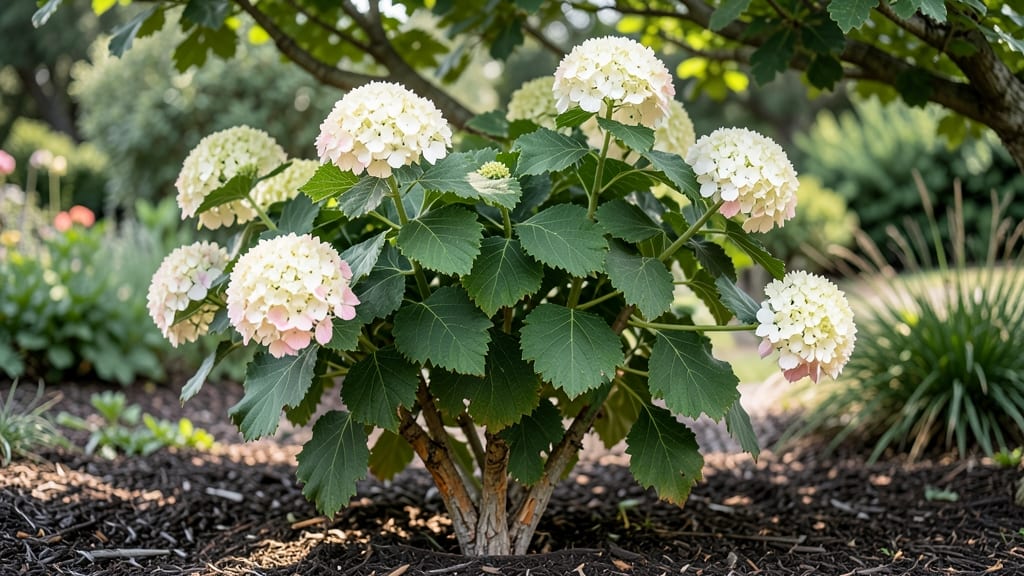
Your oak leaf hydrangea blooms 🌸 will transform your garden when you master its simple yet powerful care secrets.
Picture this: a 6-foot shrub bursting with fragrant white flowers in spring, then turning fiery red in fall—all while demanding less fuss than most annuals. The key? Understanding how sunlight, soil, and timing work together to extend those showstopping blooms from early summer well into autumn.
Too many gardeners overlook the partial shade rule or prune at the wrong time, ending up with sparse flowers. I’ll show you exactly how to avoid those mistakes, from adjusting your pruning schedule to feeding the roots for maximum vibrancy.
By the end, you’ll know the 3 critical steps to keep your oak leaf hydrangea in full bloom year after year—no guesswork, just lush, long-lasting color that turns heads (and maybe even a few green thumbs jealous of your success).
How to maximize oak leaf hydrangea blooms year-round with pruning and care
The oak leaf hydrangea (Hydrangea quercifolia) thrives when you follow a seasonal care routine. Unlike other hydrangeas, it blooms on old and new wood, meaning proper pruning can extend your year-round color.
Start by understanding its natural growth cycle—spring growth fuels summer blooms, while late-season pruning encourages next year’s flowers.
Your first step is late winter pruning (just before buds swell). This removes dead or crossing branches while preserving last year’s blooms. For continuous blooming, focus on light shaping cuts rather than heavy pruning.
Oak leaf hydrangeas reward patience with fragrant flowers and stunning fall foliage if cared for correctly.
🌿 Step-by-Step Guide to Year-Round Blooms
- 📅 Late Winter (Feb-Mar): Prune dead wood and crossing branches using clean, sharp shears. Avoid cutting back old flower stems—they’ll bloom again.
- ☀️ Spring (Apr-May): Feed with balanced fertilizer (10-10-10) and mulch with organic matter to retain moisture. Watch for new growth—this signals healthy blooming.
- 💧 Summer (Jun-Aug): Water deeply 2x/week and prune spent blooms to encourage fall reblooming. Deadhead after flowering to redirect energy.
- 🍂 Fall (Sep-Oct): Add compost and mulch heavily to protect roots. Avoid pruning—let the plant prepare for dormancy naturally.
- ❄️ Winter (Nov-Jan): Prune only dead wood and lightly shape. Use burlap wraps if temps drop below 10°F to prevent winter dieback.
Pruning isn’t just about timing—it’s about technique. Never cut more than 1/3 of the plant in one season, or you’ll sacrifice next year’s blooms. Use sterilized tools to prevent disease spread, and always prune just above a bud facing outward for an open, airy shape.
For extended blooming, focus on soil health. Oak leaf hydrangeas love acidic, well-draining soil with a pH of 5.0–6.0. Amend clay soil with peat moss or compost to improve drainage. A thick mulch layer (3–4 inches) keeps roots cool and retains moisture—critical for summer blooms.
Sunlight plays a pivotal role in bloom quality. While these hydrangeas tolerate partial shade, they need at least 4–6 hours of morning sun for vibrant flowers.
Avoid hot afternoon sun, which can scorch leaves. If your plant looks leggy or sparse, it’s likely not getting enough light.
Watering deeply but infrequently encourages strong root growth. Aim for 1–1.5 inches of water per week, delivered at the base of the plant.
Avoid wetting foliage to prevent fungal diseases like powdery mildew. In containers, check soil moisture daily—potted hydrangeas dry out faster than in-ground plants.
Winter care is often overlooked but essential. Protect young plants with mulch and burlap in Zone 5 or colder. Older shrubs handle cold well, but late winter pruning (after frost) prevents dieback.
If you see brown stems in spring, it’s likely from winter damage—trim carefully to encourage new growth.
To boost bloom intensity, feed with hydrangea-specific fertilizer in early spring and mid-summer. Avoid high-nitrogen fertilizers, which promote leafy growth over flowers. Instead, use a balanced or bloom-boosting formula like 10-10-10 or 12-4-8. Organic options like composted manure or bone meal also work well.
Finally, monitor for pests like aphids or scale, which can weaken your plant. Spray with neem oil or insecticidal soap if you spot sticky residue on leaves. Regular foliar checks help catch issues early, ensuring your hydrangea stays healthy and blooming all season.
Best soil, sunlight, and watering conditions for oak leaf hydrangea flowers
To unlock the vibrant blooms of oak leaf hydrangeas, start with the right soil conditions. These plants thrive in acidic soil with a pH between 5.0 and 6.0.
Test your soil using a simple pH test kit—if it’s too alkaline, amend it with peat moss or sulfur to create the ideal environment. The roots also love well-draining soil rich in organic matter, like compost or aged manure, to support robust growth.
For sunlight exposure, oak leaf hydrangeas are partial shade lovers. Aim for 4 to 6 hours of morning sun with afternoon shade to prevent leaf scorch. In hotter climates, dappled shade from nearby trees works perfectly, while cooler regions can tolerate more direct sunlight.
Avoid placing them in full sun or deep shade, as both can stunt blooms.
Watering is another critical factor for lush hydrangea blooms. These plants prefer consistent moisture, especially during blooming season (spring to summer). Water deeply 1 to 2 times per week, ensuring the top 6 inches of soil stay moist. Mulch around the base with 2 to 3 inches of organic mulch to retain moisture and regulate soil temperature.
| Growing Condition | Ideal Specification |
|---|---|
| Soil Type | Well-draining, acidic (pH 5.0-6.0) |
| Sunlight Needs | 4-6 hours morning sun, afternoon shade |
| Watering Schedule | Deep watering 1-2x/week, mulch to retain moisture |
| Fertilizer Type | Balanced 10-10-10, spring/summer |
| Mulch Depth | 2-3 inches organic mulch |
In spring, as new growth emerges, apply a light fertilizer with a balanced NPK ratio (like 10-10-10) to fuel bloom production. Avoid heavy fertilizers, which can lead to leafy growth over flowers.
During summer, reduce fertilization to every 6 weeks and focus on consistent watering to prevent stress. In fall, taper off watering and let the plant enter dormancy naturally.
One common mistake is overwatering, which can cause root rot. Always check soil moisture by inserting your finger 2 inches deep—water only if it feels dry.
Oak leaf hydrangeas also benefit from occasional pruning to remove dead or crowded branches, which improves airflow and encourages bigger blooms the following season. Prune in late winter or early spring before new growth starts.
By mastering these three key conditions—soil, sunlight, and watering—you’ll transform your oak leaf hydrangea into a year-round beauty with abundant, long-lasting blooms. Start with these basics, and watch your garden shine! 🌸💧☀️