
How To
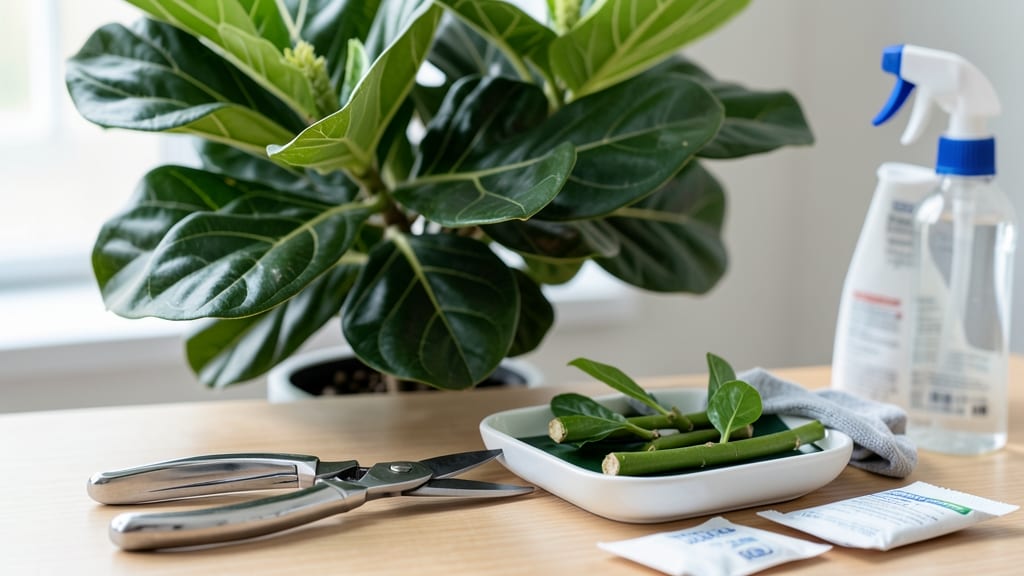
Pruning your fiddle leaf fig isn't about cutting randomly—it's about strategic shaping that keeps it thriving year-round. ✂️ I’ve learned the hard way that fiddle leaf figs (Ficus lyrata) hate unnecessary stress, so timing and technique matter more than you’d think.
The right cut can encourage bushier growth, while the wrong one might send your plant into shock.
Start by gathering sharp pruners (clean is critical!) and rubbing alcohol to sterilize cuts—this prevents bacterial infections. Focus on removing yellow or damaged leaves first, then trim leggy stems just above a leaf node to promote new branches.
After pruning, give your plant a bright, indirect spot and avoid overwatering while it recovers—patience is key.
📚 In This Guide
- What you need
- Instructions
- Tips and common mistakes
- Wrapping up and next steps
What you need
- ● Sharp, clean pruning shears or scissors: Choose sterilized bypass pruners (or clean scissors with rubbing alcohol) to avoid damaging the plant or spreading disease. Size: Small-handled for precision.
- ● Rubbing alcohol (70% isopropyl) or hydrogen peroxide (3%): For sterilizing tools before and after each cut. Quantity: Small bottle (4–8 oz).
- ○ Gloves (optional but recommended): Protect your hands from sap (which can irritate skin) and thorns. Type: Nitrile or latex-free gloves.
- ● Disposable paper towels or cloth: To wipe tools and clean sap spills. Quantity: 2–3 sheets.
- ● Small container or bag: For collecting cuttings (if propagating). Size: 8–16 oz, with drainage holes if repurposing.
- ○ Rooting hormone (optional but helpful): Speeds up root growth for cuttings. Type: Powder or gel (e.g., Clonex or Hormex).
- ● Healthy plant assessment: Prune only if your fig shows signs of overgrowth, yellowing leaves, or leggy stems. Avoid pruning during stress (e.g., repotting or extreme temperature shifts).
- ● Timing: Best done in spring or early summer (active growth phase), but light pruning can happen year-round.
- ● Light source: Ensure your fig gets bright, indirect light (e.g., near an east-facing window) to recover post-prune.
- ● Well-draining potting mix: For repotting cuttings (e.g., 50% perlite, 50% peat or coco coir). Quantity: Small pots (4–6 inches).
- ● Misting bottle: To keep cuttings hydrated while rooting.
- ● Decorative plant ties or clips: For securing leggy stems if you’re shaping the plant.
Step-by-step guide to pruning fiddle leaf figs
Here’s how I keep my fiddle leaf figs thriving year-round with clean, strategic cuts.
✂️ Step 1: Identify the Right Time and Tools
Prune fiddle leaf figs during their active growing season—spring and early summer—when new growth is vigorous. Avoid pruning in winter when the plant is dormant. Use sharp, sterilized pruning shears or scissors to prevent tearing leaves or spreading disease. I always wipe the blades with rubbing alcohol between cuts to keep everything clean.
Look for yellowing leaves, leggy stems, or branches growing away from the center. These are your targets. Healthy fiddle leaf figs should have a balanced shape with leaves evenly spaced along the stems. If you see bare spots or overcrowded growth, that’s your cue to prune.
✂️ Step 2: Make Precision Cuts at the Right Spots
Cut just above a leaf node—where a leaf or branch meets the stem—at a 45-degree angle. This encourages new growth to sprout from the node below. Avoid cutting too close to the base of the plant, as this can damage the main stem and stunt growth. I like to make my cuts about ½ inch above the node for the best results.
If you’re pruning leggy stems, cut back to a lower node to encourage bushier growth. For overcrowded branches, trim back to the nearest healthy leaf node to open up the plant’s center and improve airflow. Never cut more than ⅓ of the plant’s foliage at once—this can stress the plant and lead to shock.
🌱 Step 3: Encourage New Growth and Monitor Recovery
After pruning, place your fiddle leaf fig in a bright, indirect light spot—6-8 hours of filtered sunlight daily—to support new growth. Water lightly, keeping the soil slightly moist but not soggy, and avoid fertilizing for 4-6 weeks to let the plant recover. You’ll notice new leaves emerging from the nodes within 2-4 weeks, signaling that the pruning was successful.
Watch for signs of stress, like drooping leaves or yellowing. If this happens, reduce watering and move the plant to a slightly shadier spot until it stabilizes. A well-pruned fiddle leaf fig should bounce back with stronger, fuller growth within a few months.
🪴 Step 4: Repurpose Pruned Cuttings (Optional)
Don’t toss those pruned cuttings! Fiddle leaf figs root easily from stem cuttings. Take 4-6 inch cuttings with at least 2-3 nodes, remove the lower leaves, and place them in a jar of water. Keep the jar in bright, indirect light and change the water every 3-4 days. Roots should appear in 4-6 weeks, at which point you can transplant them into soil.
This is a great way to propagate new plants or share cuttings with fellow gardeners. Just be patient—fiddle leaf figs take longer to root than some other houseplants, but the results are worth it. I’ve successfully rooted multiple cuttings this way, and they’ve grown into thriving plants.
⏰ Step 5: Maintain Year-Round Health
Prune lightly throughout the year to shape the plant and remove any dead or diseased leaves. In fall and winter, focus on cleaning up the plant rather than heavy pruning. Dust the leaves regularly with a damp cloth to keep them breathing easily—dust buildup can block light and stress the plant.
Keep an eye out for pests like spider mites or scale, which love stressed fiddle leaf figs. If you spot any, isolate the plant and treat it with neem oil or insecticidal soap. With consistent care, your fiddle leaf fig will stay lush, healthy, and full of life for years to come.
Tips & tricks for pruning fiddle leaf figs
Precision pruning transforms your fiddle leaf fig from a leggy mess into a lush, balanced showstopper. Here’s how to avoid common pitfalls and get pro-level results every time.
Timing is Everything: Spring and early summer are your prime windows for pruning—this aligns with the plant’s natural growth surge. I’ve learned the hard way that winter pruning stresses the plant, often leading to leaf drop. If you must prune outside these seasons, limit yourself to removing only dead or diseased foliage. The plant’s dormant state means it won’t recover as vigorously from heavy cuts.
The 45-Degree Angle Secret: That angled cut isn’t just aesthetic—it’s functional. When you cut just above a node at a 45-degree angle, you create a larger surface area for water absorption while preventing water from pooling on the cut. I’ve seen beginners make straight cuts that lead to rot. For best results, use sharp pruning shears and make clean cuts about half an inch above the node. This small detail makes all the difference in recovery time.
Stress Management: Never remove more than one-third of the plant’s foliage at once—this is a cardinal rule I wish I’d known earlier. When I first pruned my fiddle leaf fig aggressively, it took months to recover. The plant needs its leaves to photosynthesize and maintain energy. After pruning, monitor your plant closely for signs of stress like yellowing leaves or wilting. If you see these, adjust your care routine immediately by reducing water and moving to brighter, indirect light.
Propagate with Confidence: Those pruned cuttings are goldmines for new plants! The key to successful propagation lies in selecting healthy cuttings with at least 2-3 nodes and keeping them in bright, indirect light. I’ve found that changing the water every 3-4 days prevents bacterial growth while maintaining oxygen levels. Remember, fiddle leaf figs are patient rooters—don’t expect roots in under 4 weeks. Patience pays off with thriving new plants that can be transplanted into soil once roots appear.
Pro Tips for Prune Fiddle Leaf Fig
- Precision pruning transforms your fiddle leaf fig from a leggy mess into a lush, balanced showstopper.
- Timing is Everything: Spring and early summer are your prime windows for pruning—this aligns with the plant’s natural growth surge.
- The 45-Degree Angle Secret: That angled cut isn’t just aesthetic—it’s functional.
Frequently asked questions
Got questions about pruning your fiddle leaf fig? You’re not alone!
Here are answers to the most common concerns—whether you’re a pruning pro or just starting out.
When is the best time to prune a fiddle leaf fig?
Prune your fiddle leaf fig anytime it needs it—no strict season! However, late winter or early spring (before new growth) is ideal for major cuts to encourage bushier growth. For minor trims (like dusting or shaping), go year-round. Just avoid heavy pruning during stress (e.g., after repotting or extreme temperature shifts).
How do I know if I’m pruning too much?
Over-pruning happens when you remove more than 25-30% of the plant’s foliage at once. Signs include yellowing leaves, stunted growth, or no new leaves for 2+ months. If your fig looks shocked, dial it back—focus on small, strategic cuts to revive it gradually.
Can I propagate the cuttings from pruning?
Fiddle leaf fig cuttings root easily in water or soil. Use 4-6 inch stems with at least 2 nodes (brown bumps). Remove lower leaves, dip in rooting hormone (optional), and place in water or moist soil. Keep humidity high (like a plastic bag tent) and avoid direct sun. Roots usually appear in 4-8 weeks!
My leaves are yellow after pruning—what went wrong?
Yellowing can mean over-pruning, stress, or poor aftercare. Check these fixes:
- Water less—fiddle leaf figs hate soggy roots.
- Move to bright, indirect light (no harsh sun).
- Skip fertilizer for 4-6 weeks to let it recover.
- Wipe leaves with a damp cloth to reduce shock.
How can I prune for a fuller, bushier look?
To encourage density, trim just above a leaf node (where leaves meet the stem) at a 45-degree angle. Focus on:
Patience is key—new leaves may take 4-8 weeks to sprout!
Wrapping up and next steps
Pruning your fiddle leaf fig doesn’t have to be intimidating—it’s all about timing, technique, and confidence! 🌿 By following these steps, you’ll encourage lush growth, maintain shape, and keep your plant thriving year-round.
Remember, even small cuts can make a big difference, so don’t hesitate to grab those shears and get hands-on.
Ready to take the next step? Observe your plant weekly—notice new growth, yellowing leaves, or overcrowding—and act when needed. With practice, you’ll master the art of pruning and watch your fiddle leaf fig flourish like never before!