
Companion Plants
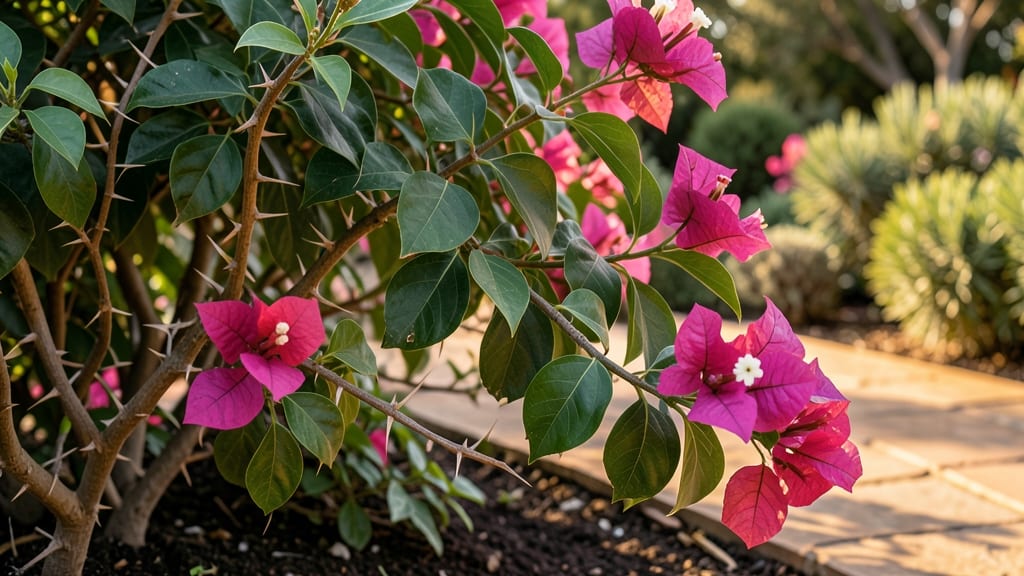
Leaf modifications in plants—such as spines, tendrils, and bracts—serve critical survival functions by conserving moisture, deterring herbivores, or supporting reproduction. These adaptations develop through evolutionary pressure to thrive in specific habitats.
These specialized leaf forms aren't just random quirks—they're nature's problem-solving tools. 🌿 For example, cacti replace leaves with spines to slash water loss in deserts, while pitcher plants modify their leaves into sticky traps to capture insects.
Even colorful bracts (like poinsettia leaves) aren't just pretty—they attract pollinators. The key is understanding how each modification directly addresses environmental stressors, from drought to predation.
What's fascinating is how these adaptations often serve multiple purposes. A thorny leaf might deter animals while simultaneously reducing evaporation—a perfect two-for-one survival strategy. In gardens, recognizing these modifications helps identify plants and predict their care needs, like watering frequency or sunlight requirements.
💡 In This Article
- How Leaf Modifications Improve Plant Survival
- Identifying Common Leaf Modifications in Garden Plants
How leaf modifications improve plant survival
Leaf modifications aren't random—they're evolutionary masterpieces designed to tackle specific survival challenges. Take the spines of cacti, for instance: these aren't true leaves but modified stems covered in waxy coatings that reduce water loss by up to 90% compared to regular leaves.
The spines themselves create a microclimate that deflects sunlight, while their sharpness deters herbivores that might otherwise strip the plant bare. This dual function—water conservation + defense—shows how nature optimizes limited resources through clever design.
The mechanics behind these adaptations often involve trade-offs. For example, succulent leaves in plants like aloe store water in thick, fleshy tissues, but this makes them more vulnerable to fungal infections if humidity rises.
In contrast, pitcher plants modify their leaves into slippery, pitcher-shaped traps that drown insects in digestive enzymes—an adaptation that thrives in nutrient-poor bogs where traditional photosynthesis isn't enough. The key is that each modification directly addresses the plant's most pressing environmental stress, whether it's drought, predation, or poor soil.
Colorful bracts, like those in poinsettias, highlight how leaf modifications can also boost reproduction. These modified leaves aren't just eye-catching—they reflect UV light to attract pollinators while protecting the actual flowers (which are often small and dull).
In forests, drip tips on leaves help shed rainwater quickly, preventing fungal growth that could smother the plant. Even tendrils in peas aren't just for climbing—they're modified leaves that maximize sunlight exposure by positioning the plant higher, increasing photosynthetic efficiency by up to 30% in competitive environments.
Habitat plays a huge role in shaping these adaptations. Desert plants prioritize water retention (e.g., needle-like leaves in juniper trees), while aquatic plants like water lilies develop floating leaves with air pockets to stay buoyant. Forest understory plants often have large, thin leaves to capture dim light efficiently.
The beauty of these modifications is their precision: each one is a tailored solution to a specific problem, proving that evolution doesn't waste energy on unnecessary features.
What's often overlooked is how these adaptations can shift over time. For example, some plants start with spiny leaves as juveniles (to deter herbivores) but develop broader leaves as adults (to maximize photosynthesis). This phenotypic plasticity allows a single species to thrive across different life stages and conditions.
In gardens, recognizing these patterns helps predict a plant's needs—like knowing a cactus's spines mean it craves full sun and minimal water, while a pitcher plant's traps signal it thrives in moist, acidic soil.
One of the most striking examples is the Venus flytrap, where leaves snap shut in 0.1 seconds when triggered by tiny hairs—an adaptation that balances speed and energy use.
The plant only closes its trap when two hairs are touched within 20 seconds, ensuring it doesn't waste energy on false alarms. This level of precision shows how leaf modifications aren't just about survival—they're about efficient survival, where every adaptation is fine-tuned to its environment.