
Pests and Diseases
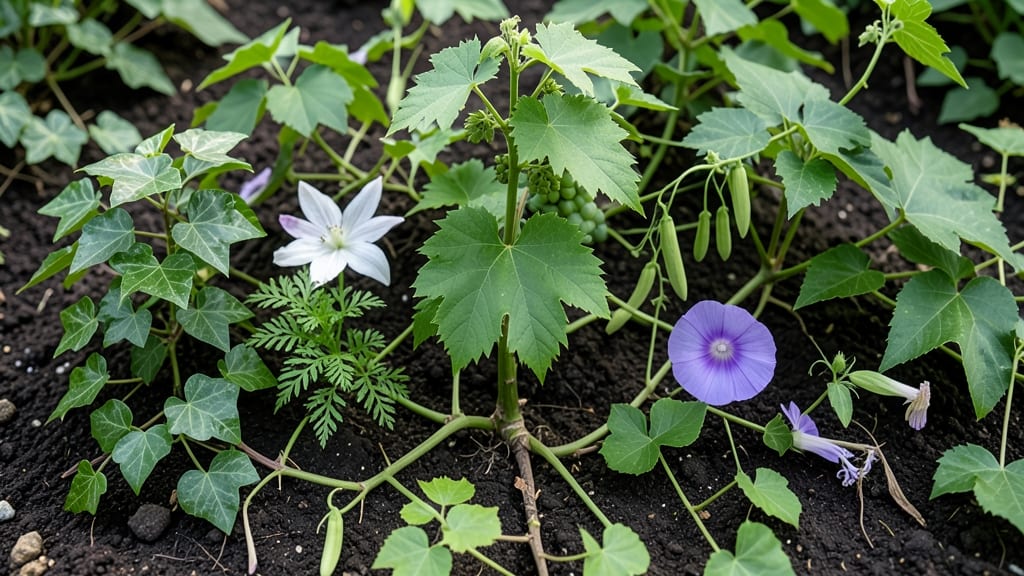
Leaf shape vine identification by leaf is the fastest way to ID what's growing in your yard—no botanist degree required. 🌿 I’ve used this method to spot poison ivy before it spreads, identify wisteria for my trellis, and even track down that mysterious green vine choking my fence. The secret lies in just five key traits: leaf arrangement, margins, veins, size, and shape.
Start with the basics: are leaves opposite (two per node) or alternate (one per node)? Then check the edges—smooth, lobed, or serrated—and count the veins. A simple field guide or app like PlantNet lets you snap a photo and compare your findings to common vines in your region.
For example, Virginia creeper has five leaflets with jagged edges, while Boston ivy has three glossy, toothed leaves.
You’ll quickly learn to spot red flags like poison ivy’s "leaves of three" or honeysuckle’s oval, opposite leaves. Cross-check with your local extension office’s plant database to rule out toxic lookalikes. Once you master these traits, you’ll ID vines faster than pulling weeds—and that’s a game-changer for gardeners.
This works for wild vines, garden escapes, or even houseplants with wandering stems. Grab a magnifying glass (or just your phone) and start matching leaves to plants. The more you practice, the easier it gets—and your garden (and allergies) will thank you.
Genetics And Environmental Triggers
Leaf shape in vines isn’t random—it’s a fascinating blend of genetic programming and environmental responses. Understanding why leaves take on specific shapes helps gardeners and botanists accurately identify plants. Here’s a breakdown of the key factors at play:
Every vine species carries a genetic code that dictates its leaf morphology, much like a blueprint for a building. These traits are passed down through generations and are highly consistent within a species. For example:
- Lobed leaves (e.g., grapevines): Caused by genes that regulate cell division in specific patterns, creating deep indentations.
- Compound leaves (e.g., poison ivy): Result from genetic signals that split the leaf into multiple leaflets while maintaining a single central stem.
- Simple vs. divided shapes: Determined by the presence or absence of genes that suppress or encourage leaflet formation.
Pro Tip: 💡 If you’re identifying a vine, start with its leaf’s basic structure (simple, compound, lobed). This narrows down possibilities before diving into finer details like serration or vein patterns.
While genetics set the foundation, the environment acts like a sculptor, refining leaf shape through stress, nutrients, and growing conditions. Here’s how:
💧 Water Availability: The Thirsty Leaf Effect
Vines in dry conditions often develop:
- Smaller, thicker leaves: A survival tactic to reduce water loss (a process called xeromorphy).
- Deep lobes or serrations: Increases surface area for photosynthesis while minimizing water exposure.
- Curled or rolled edges: Reduces transpiration (water evaporation) from leaf surfaces.
Example: A Virginia creeper vine in a drought-prone area might grow leaves with fewer, more pronounced leaflets compared to its well-watered counterparts.
☀️ Sunlight Exposure: The Light Spectrum Influence
Leaves adjust their shape based on light intensity to optimize photosynthesis:
- Sun-loving vines (heliophytes): Often have thicker, leathery leaves with waxy coatings to reflect excess sunlight (e.g., Boston ivy).
- Shade-tolerant vines (sciophytes): Develop larger, thinner leaves with broader surfaces to capture dim light (e.g., English ivy).
- Variegation or mottling: Sometimes appears in high-light conditions as a protective response to UV damage.
Pro Tip: 🌡️ If a vine’s leaves look unusually pale or bleached, it may be suffering from sun scorch—a sign of too much direct sunlight, not a species trait.
🌡️ Temperature And Seasonal Changes
Temperature fluctuations trigger phenotypic plasticity, where leaves adapt seasonally:
- Cooler climates: Vines may produce smaller, darker leaves with thicker cuticles to retain heat.
- Warm climates: Leaves often grow larger and softer to maximize photosynthesis in abundant sunlight.
- Frost exposure: Some vines develop hairy or downy leaves (e.g., winter creeper) to insulate against cold.
Example: A passionflower vine in tropical regions will have broad, glossy leaves, while the same species in temperate zones may grow smaller, more lobed leaves in response to cooler temperatures.
🌿 Soil Nutrients: The Hidden Leaf Shaper
Soil composition directly impacts leaf development:
- Nitrogen-rich soil: Promotes larger, lusher leaves with darker green pigmentation (chlorophyll boost).
- Phosphorus deficiency: Leads to smaller, purplish leaves (a sign of stress).
- Iron or magnesium shortages: Causes yellowing (chlorosis) between veins, altering leaf shape subtly over time.
- Calcium excess: Can cause crinkled or distorted leaves due to poor cell wall formation.
Pro Tip: ✨ If a vine’s leaves are abnormally shaped but the plant is otherwise healthy, test your soil! Nutrient imbalances can mimic genetic traits.
Diseases and insects don’t just damage leaves—they rewire their growth patterns as the plant fights back. Common culprits include:
- Viruses (e.g., tomato mosaic virus): Cause mosaic patterns, stunted growth, or curled leaves by disrupting cell division.
- Fungal infections (e.g., powdery mildew): Lead to deformed, puckered leaves as the plant overproduces waxy layers for protection.
- Insect feeding (e.g., aphids, spider mites): Triggers gall formation, leaf curling, or excessive serration as a defense mechanism.
- Bacterial leaf spot: Creates irregular holes or blisters, altering the leaf’s natural outline.
Warning: 🚨 If a vine’s leaves are unusually malformed with no clear genetic pattern, inspect the undersides for pests or signs of disease (e.g., spots, webbing, or unusual discoloration).
Quick Fixes for Vine Leaf ID Confusion
Identifying vines by their leaves can feel like solving a puzzle—especially when shapes, textures, and patterns seem too similar. But with the right approach, you can turn frustration into confidence! Below are practical solutions tailored to common challenges, from misidentifying leaves to dealing with tricky vine species.
Problem: Two vines have leaves that seem nearly identical at first glance, leaving you stuck.
Fix It:
- Compare leaf edges first 🌿 – Are they lobed (like a maple), serrated (toothed), or smooth? A magnifying glass helps spot fine details.
- Check the vein pattern 🌱 – Palmate veins (spreading from one point) vs. pinnate (parallel lines) can be a game-changer.
- Look at leaf arrangement 📐 – Alternate, opposite, or whorled? Some vines (like poison ivy) have classic opposite leaf patterns.
- Use a leaf key app 📱 – Tools like iNaturalist or PictureThis let you upload photos for instant matches.
Prevention Tip: 💡 Take photos from multiple angles (top, bottom, side) to compare later. Lighting tricks (backlit leaves) reveal textures better!
Problem: Vines like bittersweet and honeysuckle share similar leaf shapes, making ID a nightmare.
Fix It:
- Smell test 👃 – Honeysuckle leaves often have a sweet fragrance when crushed.
- Stalk the vine 🌿 – Bitter orange scent? Likely bittersweet. Smooth bark? Could be wisteria.
- Check for flowers/fruit 🍇 – If present, they’re the fastest ID clue (e.g., grapevine leaves vs. Virginia creeper’s berries).
- Note leaf size 📏 – A table helps:
| Vine | Leaf Shape | Size (avg.) | Key Feature |
|---|---|---|---|
| Honeysuckle | Oval, pointed | 2–4" | Opposite leaves, fragrant |
| Bittersweet | Lance-shaped | 3–6" | Alternate leaves, bitter smell |
Prevention Tip: ✨ Bookmark a vine ID cheat sheet (like USDA’s Plant Database) for quick reference during hikes or garden walks.
Problem: Leaves change shape due to drought, pests, or seasons, throwing off your ID.
Fix It:
- Young vs. mature leaves 🌱 – New growth is often softer and lighter; compare both if possible.
- Pest damage clues 🐛 – Holes or discoloration? Japanese beetles love rose leaves, while aphids distort new growth.
- Seasonal leaf drop 🍂 – Some vines (like clematis) shed leaves in winter—check stems or buds for ID hints.
Prevention Tip: 🌡️ Track leaf changes monthly in a garden journal. Note dates of flowering, leaf color shifts, and pest appearances.
Problem: You’re tired of guessing and want a foolproof method.
Fix It:
- Leaf rubbings 🖍️ – Place a leaf under paper and rub with a pencil to reveal vein patterns.
- DNA testing kits 🧬 – For rare or invasive vines (e.g., kudzu), services like SmartDNA analyze samples.
- Local expert networks 🌍 – Post photos to Reddit’s r/whatsthisplant or Facebook gardening groups for crowd-sourced help.
Prevention Tip: 🎯 Carry a mini field guide (like National Audubon Society Field Guide to North American Wildflowers) for offline ID when signal drops.
- Assuming all vines are edible 🍄 – Poison ivy and Virginia creeper leaves look alike, but one’s toxic!
- Ignoring leaf undersides 🌙 – Some vines (like English ivy) have fuzzy or hairy backs.
- Relying on color alone 🎨 – Leaf color fades; focus on structure (shape, veins, edges).
Pro Tip: 🔥 When in doubt, wait for flowers or fruit—they’re the ultimate ID trump card!
Frequently asked questions
What’s the fastest way to tell poison ivy from Virginia creeper?
Count the leaflets! Poison ivy has three shiny leaflets with smooth edges, while Virginia creeper has five leaflets with jagged edges. Both have opposite leaf arrangements, but Virginia creeper’s leaflets are more deeply divided. Pro tip: Remember "leaves of three, let it be!" for poison ivy.
Can I use my phone to identify vines by leaf?
Apps like PictureThis or iNaturalist let you upload photos for instant matches. For best results, include the whole vine (leaves, stems, and flowers if present) and snap multiple angles. Free alternatives include the USDA Plants Database or LeafSnap for offline use.
Why do some vine leaves look different in summer vs. spring?
Young leaves often start smaller, lighter green, and softer while mature leaves grow larger and tougher. Environmental factors like sunlight, water, and temperature also play a role—drought-stressed leaves may appear smaller or curled. Compare both young and mature leaves for accurate identification.
Are there any toxic vines with heart-shaped leaves?
Yes! Poison ivy and poison oak both have heart-shaped leaflets (though poison oak’s are lobed like oak leaves). Always double-check for the "leaves of three" rule. Non-toxic lookalikes include Virginia creeper (five leaflets) and grapevine (deeply lobed).
How do I know if a vine is native or invasive?
Check your local invasive species database (like EDDMapS) or consult a regional field guide. Invasive vines often spread aggressively (e.g., kudzu or Japanese honeysuckle) and may lack natural predators in your area. Native vines like wisteria or passionflower usually grow more slowly.