
Trees
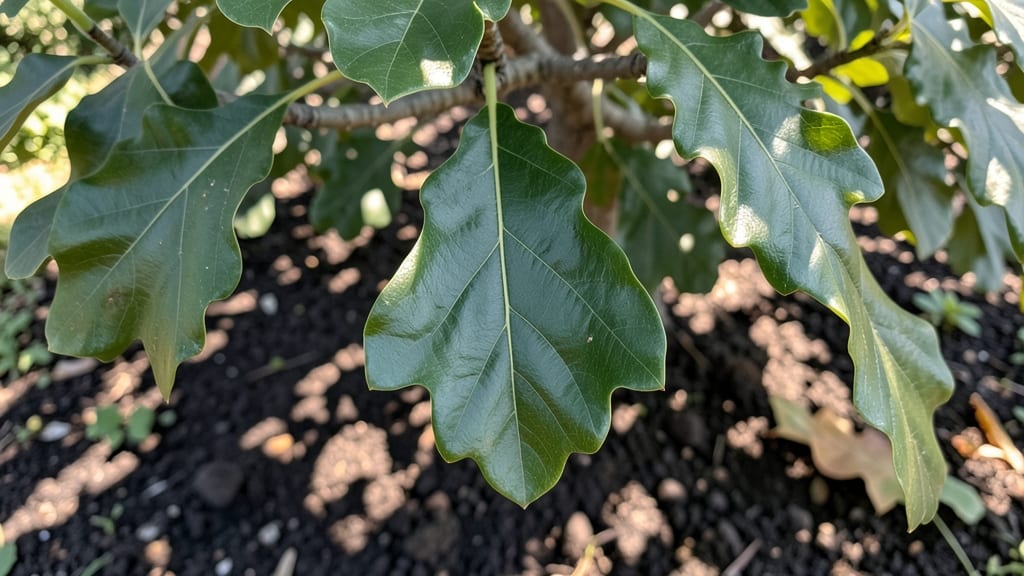
The live oak tree leaf identification starts with those bold, glossy green lobes that look like they were stamped by nature. ✨ The deep, rounded lobes with smooth edges and prominent veins create a signature that sets them apart from other oaks—no other species has this exact combination of shape and sheen.
Live oak leaves typically measure 4-7 inches long, with 3-5 lobes that curve outward like an open hand. The upper surface shines with a rich, waxy finish, while the undersides appear paler and slightly fuzzy.
Compare them to nearby oaks: willow oaks have narrow leaves, and red oaks have pointed lobes with bristly edges.
Healthy leaves should feel firm and vibrant, but watch for brown spots or curled edges—signs of oak wilt or fungal infections. Accurate identification matters because live oaks need specific care: they thrive in well-drained soil and full sun, while other oaks may have different needs.
Once you spot these telltale lobes, you'll recognize them anywhere. This knowledge helps you protect your tree from pests, prune correctly, and even spot early signs of trouble before they spread. The next time you walk under one, you'll see the beauty—and the science—of its leaves.
Understanding Leaf Changes in Live Oaks
Live oak trees (Quercus virginiana) are known for their striking, glossy green leaves and distinctive lobed shape—but sometimes, those leaves don’t look quite right. Whether they’re yellowing, curling, developing spots, or losing their signature sheen, these changes rarely happen by accident.
Below, we break down the most common causes behind leaf abnormalities in live oaks, rooted in science and real-world observations.
Live oaks are tough, but they’re not invincible. Extreme environmental conditions—like drought, heatwaves, or sudden temperature swings—can push them past their comfort zone. Here’s how it happens:
- Drought and Water Scarcity:
Live oaks have deep root systems, but prolonged dry spells force them to conserve water. As a response, leaves may turn brown at the edges or curl inward to reduce water loss. This is a survival tactic, but chronic stress weakens the tree over time.
- Actionable fix: Deep watering (1–2 inches per week) during dry spells, especially for young trees.
- Heat Stress:
Temperatures above 90°F (32°C) for extended periods can cause scorch—leaves develop crispy, brown patches along the edges while staying green near the veins. This happens because the tree’s stomata (pores) close to prevent water loss, trapping heat and damaging cells.
- Actionable fix: Mulch around the base (2–4 inches) to retain moisture and provide shade for roots.
- Cold Damage:
While live oaks are cold-hardy (USDA Zones 7–10), sudden freezes (28°F/-2°C) can cause blackened or mushy leaves. Ice crystals form in leaf cells, rupturing them—a process called freeze-thaw injury.
- Actionable fix: Avoid overhead watering before frost, and protect young trees with burlap wraps in extreme cold snaps.
Pests don’t just nibble—they inject toxins, suck sap, or lay eggs that trigger chemical responses in the tree. Here’s how they mess with live oak leaves:
| Pest | Leaf Symptoms | Why It Happens |
|---|---|---|
| Oak Leaf Gall Wasps | Small, wart-like growths on leaves (galls) that distort shape. | Females lay eggs in leaf tissue; the tree’s overgrowth response creates galls to contain the larvae. Galls don’t kill the tree but weaken it. |
| Spider Mites | Yellow stippling or bronzing on upper leaf surfaces; webbing on undersides. | These tiny arachnids pierce cells to feed on sap, triggering a chlorophyll breakdown that causes discoloration. Severe infestations lead to leaf drop. |
| Oak Leafminers | Blister-like trails or white serpentine lines inside leaves. | Larvae tunnel between leaf layers, causing necrotic (dead) tissue along their path. Heavy feeding defoliates branches. |
| Scale Insects | Sticky residue (honeydew) on leaves; black sooty mold growth. | Scale insects suck sap and excrete honeydew, which fosters mold. The tree diverts energy to fight the infestation, stunting growth. |
Actionable fix: Monitor for early signs (e.g., webbing, stippling) and treat with horticultural oil or neem oil during dormant seasons. For severe cases, consult an arborist.
Fungi and bacteria thrive in moist conditions, often exploiting stress from wounds or poor air circulation. Here’s how they alter live oak leaves:
- Anthracnose (Fungal)
- Symptoms: Dark brown spots with yellow halos; leaves may crinkle or drop prematurely.
- Why it happens: The fungus (Gloeosporium spp.) infects through wet foliage, blocking water transport and causing cell death. Spores spread via rain splash.
- Actionable fix: Prune for airflow, avoid overhead watering, and apply copper fungicide in spring.
- Bacterial Leaf Scorch
- Symptoms: Marginal browning (edges turn crispy) while veins stay green.
- Why it happens: Bacteria (Xylella fastidiosa) clog the tree’s xylem (water-conducting tissue), starving leaves of moisture. Spreads via sap-feeding insects like leafhoppers.
- Actionable fix: No cure exists—focus on removing infected branches and reducing stress (e.g., proper watering).
- Powdery Mildew
- Symptoms: White, powdery coating on leaf undersides; leaves may yellow and drop.
- Why it happens: The fungus (Erysiphe spp.) grows in humid, shady conditions, smothering stomata and blocking photosynthesis.
- Actionable fix: Improve airflow with pruning and apply sulfur-based fungicides.
Live oaks are slow growers, but poor soil nutrition can still show up in their leaves. Here’s how deficiencies manifest:
| Nutrient Deficiency | Leaf Symptoms | Why It Happens |
|---|---|---|
| Iron (Fe) | Yellowing between veins (interveinal chlorosis); leaves may stay small. | Iron is immobile in plants—when soil pH is too high (>7.0), iron becomes unavailable. Common in alkaline soils. |
| Magnesium (Mg) | Yellow patches between veins, starting on older leaves; veins stay green. | Magnesium is a key part of chlorophyll. Poor soil or excessive potassium can displace magnesium. |
| Nitrogen (N) | Overall pale green or yellowing; stunted growth. | Nitrogen fuels leaf production. Deficiencies occur in poor or sandy soils or after heavy
Quick Fixes for Leaf IssuesWhen your live oak tree’s leaves start looking less than vibrant, quick action can make all the difference. Whether it’s yellowing, browning, or unexpected spots, these targeted solutions will help restore your tree’s health—without needing a degree in arboriculture. Yellowing leaves on a live oak often signal a nutrient shortage, especially iron, nitrogen, or magnesium. Here’s how to diagnose and treat it: 🔥 Step 1: Test Your Soil
🍳 Step 2: Apply Organic Fertilizer
👨🍳 Step 3: Improve Drainage
Prevention: ✔ Mulch with 3-4 inches of wood chips to retain moisture and nutrients. ✔ Water deeply 1-2 times per week (avoid shallow watering). Brown, brittle leaves often mean your live oak is thirsty or drowning. Live oaks hate soggy roots! 🔪 Step 1: Check Moisture Levels
⏰ Step 2: Adjust Your Watering Schedule
🌡️ Step 3: Improve Soil Aeration
Prevention: ✔ Install a soil moisture sensor to monitor levels. ✔ Plant in well-draining soil (avoid clay-heavy areas). Dark spots, powdery coatings, or leaf drop? Fungal infections like anthracnose or oak leaf blight are likely culprits. 💡 Step 1: Prune Infected Leaves
🎯 Step 2: Apply Fungicide
🌿 Step 3: Boost Airflow
Prevention: ✔ Space trees 15-20 feet apart to prevent overcrowding. ✔ Mulch 3 feet from the trunk to keep the base dry. Chewed leaves, sticky residue, or tiny tunnels? Pests are likely the problem. 🔥 Step 1: Identify the Pest
🍳 Step 2: Use Natural Repellents
👨🍳 Step 3: Encourage Predators
Prevention: ✔ Inspect leaves weekly during growing season. ✔ Avoid broad-spectrum pesticides—they kill helpful insects too. A healthy live oak starts with basic upkeep:
By tackling issues early, your live oak will stay lush, strong, and full of those iconic glossy leaves for decades. 🌳💚 Frequently asked questions
1
How can I tell if my oak tree is a live oak versus another type?Live oaks have 3-5 rounded lobes with smooth edges and glossy green tops, while other oaks like willow oaks have narrow leaves and red oaks have pointed lobes with bristly edges. The undersides of live oak leaves also appear slightly fuzzy, a key difference from many other species.
2
Why do live oak leaves sometimes look different from what I see in photos?Leaf appearance can change due to environmental stress like drought or disease. Yellowing between veins often signals iron deficiency, while brown edges may mean heat stress. Always check both leaf surfaces and compare with healthy samples from the same tree.
3
Can I use leaf shape alone to identify a live oak?No, you should also check the leaf's size (4-7 inches long), vein pattern, and color. Live oak leaves have prominent veins that create a web-like pattern, and their glossy sheen is distinctive. Always examine multiple leaves for consistency.
4
What should I do if my live oak leaves look unhealthy?First, check for common issues like brown edges (drought), yellow patches (nutrient deficiency), or spots (fungal infection). Start with proper watering (1-2 inches per week) and mulching, then address specific problems with targeted treatments like fungicides or fertilizers.
5
Are there any look-alike trees that could be mistaken for live oaks?Yes, willow oaks have narrow leaves, while water oaks have bristly lobes. Southern red oaks have pointed lobes with bristly edges. The key is the combination of rounded lobes, smooth edges, and glossy texture that live oaks uniquely possess. |