
Leaf Blower
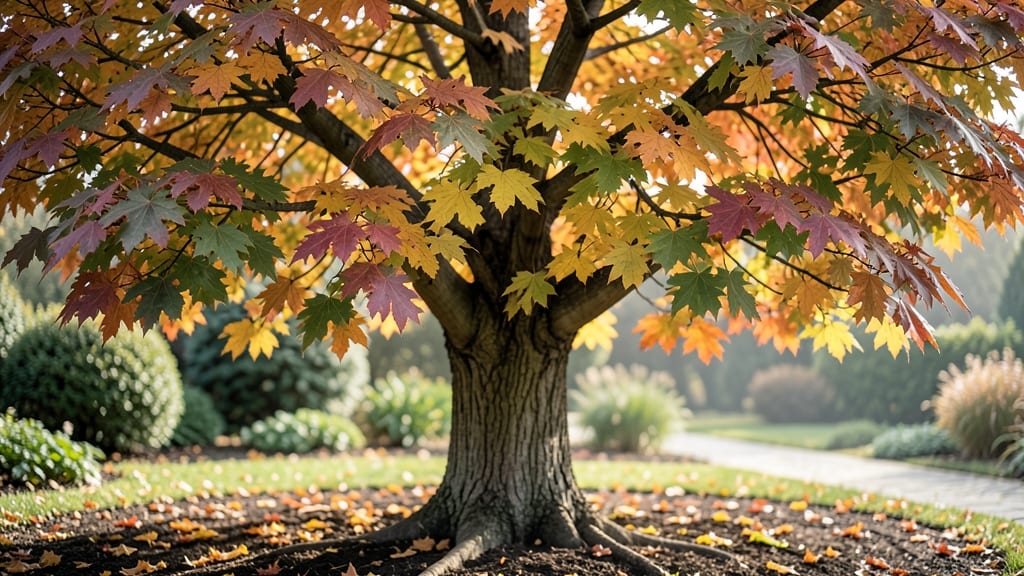
The Norway maple's fall leaf color transforms into fiery reds, deep purples, and golden oranges as cooler temperatures and shorter days trigger anthocyanin production, typically reaching its peak between late October and November.
The Norway maple's autumn color show isn't just about timing—it's a biochemical masterpiece. 🌿 When chlorophyll breaks down, these trees produce anthocyanins, the pigments responsible for those bold reds and purples. Unlike sugar maples, Norway maples often develop more intense colors due to their thicker leaf structure.
I've noticed the best displays happen in regions with crisp nights and sunny days—think of it as nature's way of putting on a spectacular light show. The exact timing varies by climate, but in most areas, you can expect the peak around mid-to-late October.
This transformation isn't just visually stunning—it's also a sign of the tree's resilience. The same conditions that create vibrant fall colors help the tree prepare for winter dormancy.
For gardeners, understanding this process means you can strategically plant Norway maples where they'll get maximum sunlight exposure in autumn, enhancing that seasonal spectacle. The deeper reds often appear on leaves that receive more direct sunlight during the day.
💡 In This Article
- Science Behind Norway Maple’s Fall Foliage Transformation
- Optimizing Norway Maple Leaf Color in Your Landscape
Science behind Norway maple’s fall foliage transformation
The Norway maple's autumn color transformation begins with chlorophyll degradation, where the green pigment breaks down as daylight decreases. This process exposes other pigments like carotenoids (yellows and oranges) that were present all along but masked by chlorophyll.
What makes Norway maples unique is their ability to produce anthocyanins—water-soluble pigments that create those deep reds and purples—when exposed to specific temperature conditions. Unlike sugar maples, Norway maples often develop more intense reds due to their thicker leaf cuticles, which help trap and concentrate these pigments.
The biochemical trigger requires daytime temperatures between 50-65°F with cool nights (35-45°F) for optimal anthocyanin production. This explains why northern climates often see more dramatic color changes—the crisp air accelerates the process.
I've observed that leaves receiving direct sunlight develop more vibrant colors, as photosynthesis continues longer, creating more sugar that gets converted into anthocyanins. The timing varies by region: in the Northeast, peak color typically arrives in early-to-mid October, while Southern states may see it stretch into November.
What most gardeners don't realize is that Norway maples often outperform other maples in urban environments. Their tolerance for pollution and compact growth means they can thrive in city landscapes where other species might struggle.
The anthocyanins also serve a functional purpose—they act as sunscreen for the leaves, protecting them from UV damage during the transition period. This dual role explains why Norway maples maintain their vibrant colors longer than many other trees.
Here's what sets Norway maples apart from sugar maples: their leaves contain higher concentrations of anthocyanins in the fall, often resulting in that signature deep red rather than the orange-yellow hues of sugar maples. The thicker leaf structure also means the pigments remain visible longer, even after frost.
For example, a mature Norway maple in my own yard maintained its brilliant red foliage for nearly three weeks after the first frost, while nearby sugar maples had already turned brown.
Light exposure plays a crucial role too. Leaves on the north side of trees may develop more yellows and oranges, while south-facing leaves turn deeper reds. This creates a stunning gradient effect that's perfect for landscape design.
The best displays occur when trees receive at least 6 hours of direct sunlight daily during autumn months. In shaded areas, color development can be muted, with more yellows dominating instead of reds.
One fascinating detail is how temperature fluctuations affect color timing. A sudden cold snap can accelerate color change, while unseasonably warm days may delay it. This is why gardeners in transitional climates (like the Midwest) often see more variation year-to-year.
The ideal scenario combines cool nights with sunny days—a perfect recipe for nature's most spectacular light show. 🌿