
Trees
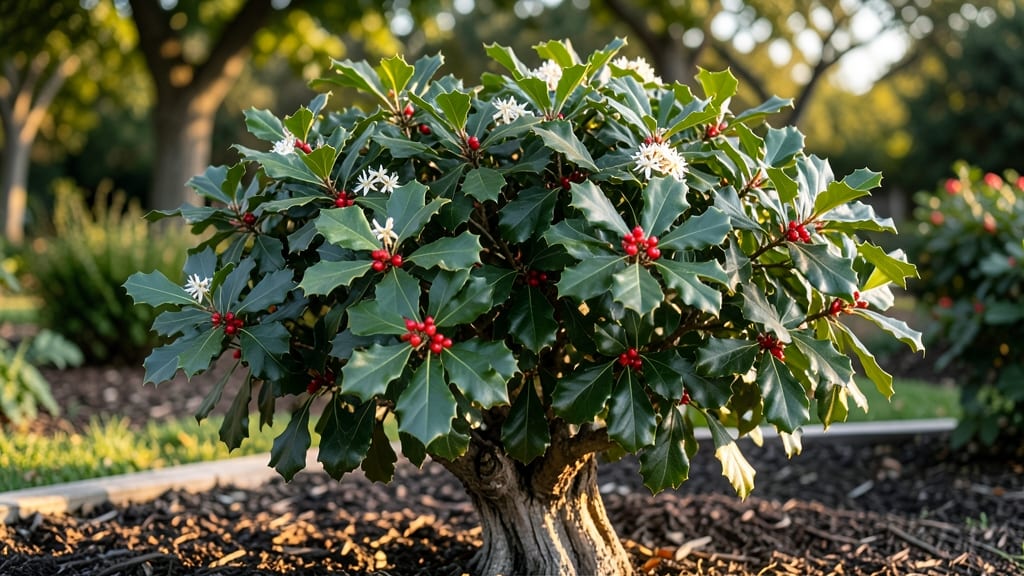
Growing oak leaf holly transforms any yard into a lush, evergreen statement piece. 🌿 Its glossy leaves and striking red berries stay vibrant through winter, making it a standout for cold climates. Unlike fussy evergreens, this plant thrives with minimal fuss once established.
Start with well-draining soil and full sun to partial shade—it handles both urban pollution and rural settings. Plant in early spring or fall, spacing saplings 10-15 feet apart for mature growth. Water deeply after planting, then only during droughts; once settled, it’s drought-tolerant.
Pruning is simple: remove dead branches in late winter and shape lightly in early spring. The berries add winter interest, but they’re toxic to pets—keep that in mind. With proper care, your holly will grow 20-30 feet tall and provide year-round structure.
Common mistakes? Overwatering or planting in heavy clay. Amend soil with compost if needed, and avoid fertilizing—this holly prefers lean conditions. Once established, it’s nearly maintenance-free and pest-resistant, making it a gardener’s dream.
📚 In This Guide
- What you need
- Instructions
- Tips and common mistakes
- Wrapping up and next steps
What you need
- ● Oak Leaf Holly Plant: 1 young sapling (3–5 ft tall, nursery-grown for best results)
- ● OR fresh seeds (if propagating from seed—note: slow process!)
- ● Soil & Amendments: 5–10 lbs of well-draining, acidic soil mix (pH 5.0–6.0)
- ● 2–3 lbs of peat moss or pine bark fines (for moisture retention)
- ● 1 lb of slow-release fertilizer (10-10-10 or 8-3-9 blend)
- ● Planting Tools: 1 garden trowel or spade
- ● 1 hand pruners (sterilized)
- ● 1 watering can or hose with a gentle spray nozzle
- ● Mulch: 3–4 inches of pine straw or shredded bark (to retain moisture and acidity)
- ● Rooting hormone (if propagating from cuttings)
- ● Epsom salt (1 tbsp/month for magnesium boost)
- ● Tree guards or wire cages (to protect young plants from deer/browsing)
- ● Soil pH test kit (to monitor acidity levels)
- ● Slow-release fertilizer spikes (for long-term care)
Step-by-step guide to planting and establishing oak leaf holly
Here's how to grow this stunning evergreen that thrives in cold climates with minimal fuss.
🌱 Step 1: Choose the Perfect Planting Location
Oak leaf holly thrives in full sun to partial shade, with at least 4-6 hours of direct sunlight daily. I always select a spot with morning sun and afternoon shade to prevent leaf scorch while maintaining vibrant foliage. The plant tolerates a wide range of soil types but performs best in well-draining, slightly acidic soil with a pH between 5.0 and 6.5.
Test your soil's pH using a simple kit before planting—amending with peat moss or sulfur can adjust overly alkaline soil. Avoid low-lying areas where cold air collects, as oak leaf holly can suffer winter damage if exposed to prolonged freezing temperatures below -10°F. You'll know you've chosen well when the plant shows steady growth and maintains its glossy leaves year-round.
🌿 Step 2: Prepare the Soil and Plant
Dig a hole twice as wide as the root ball but only as deep as the container's base. This prevents burying the trunk too deeply, which can lead to rot. Gently remove the plant from its container and loosen any circling roots with your fingers—this encourages outward growth rather than a root-bound mass.
Mix the excavated soil with 2-3 inches of organic compost to improve drainage and fertility. Place the plant in the hole, ensuring the top of the root ball sits 1-2 inches above ground level. Backfill with the amended soil, pressing lightly to eliminate air pockets while avoiding compaction. Water deeply to settle the soil and remove any air gaps around the roots.
💧 Step 3: Water and Mulch for Establishment
Water the newly planted oak leaf holly deeply once a week during the first growing season, ensuring the soil is moist to a depth of 6-8 inches. Overwatering is a common mistake—you'll know it's time to water again when the top 2 inches of soil feel dry to the touch. Mulch around the base with 2-3 inches of wood chips or shredded bark, keeping the mulch 6 inches away from the trunk to prevent rot.
Mulching conserves moisture, regulates soil temperature, and suppresses weeds, all of which help the plant establish strong roots. Avoid heavy-handed mulching—too much can suffocate the roots and create an anaerobic environment. After the first year, oak leaf holly becomes more drought-tolerant, but consistent moisture during establishment ensures robust growth.
☀️ Step 4: Prune and Maintain for Year-Round Beauty
Prune oak leaf holly in late winter or early spring before new growth begins. Remove any dead, diseased, or crossing branches with clean, sharp pruners, cutting just outside the branch collar. This evergreen benefits from light shaping but doesn't require heavy pruning—focus on maintaining its natural form while encouraging a full, bushy appearance.
Fertilize lightly in early spring with a balanced, slow-release fertilizer (10-10-10) to support new growth. Avoid heavy fertilization, which can lead to excessive leaf growth at the expense of the plant's hardiness. You'll see the best results when you maintain a consistent care routine—healthy oak leaf holly develops dense foliage and thrives in cold climates with minimal intervention.
⏰ Step 5: Monitor for Pests and Winter Care
Keep an eye out for common pests like spider mites, scale, or holly leaf miners, which can affect oak leaf holly. If you notice yellowing leaves, stippling, or webbing, treat the plant with horticultural oil or insecticidal soap as needed. Prevention is key—regularly inspect the undersides of leaves and spray with water to deter pests.
In winter, ensure the plant receives adequate moisture, especially in windy or dry conditions. If heavy snow accumulates, gently brush it off to prevent branch breakage. Oak leaf holly's cold hardiness makes it a low-maintenance choice, but these small steps ensure it remains healthy and vibrant throughout the seasons. With proper care, your oak leaf holly will provide year-round structure and color in your landscape.
Tips & tricks for perfect oak leaf holly establishment
These little details make all the difference when nurturing your oak leaf holly into a thriving evergreen.
Sunlight Strategy: While the 4-6 hours of daily sun is ideal, pay attention to seasonal shifts. In summer, monitor for afternoon sun intensity—if leaves show brown edges, they're getting too much direct heat. A sheer curtain or dappled shade from nearby trees can work wonders without sacrificing the plant's need for sunlight. I've seen oak leaf holly thrive with morning sun and afternoon shade, especially in hotter climates.
Root Ball Prep: When removing the plant from its container, don't rush the root loosening. Use your fingers to gently separate circling roots—this is where many gardeners cut corners. The goal is to encourage outward growth, not just break up the root mass. Think of it like untangling headphones: patience prevents damage. After planting, press the amended soil firmly but avoid compacting it too much—you're creating a snug fit, not a concrete base.
Mulching Mastery: The 2-3 inches of mulch recommendation is perfect, but placement matters just as much. Create a donut shape around the trunk, keeping mulch 6 inches away to prevent rot. I like to use cedar chips—they naturally repel pests while breaking down slowly. In winter, add an extra inch of mulch to insulate roots from temperature swings, especially if your winter dips below -10°F. This extra layer acts like a cozy blanket for your plant's roots.
Pruning Precision: Late winter pruning is your window to shape the plant, but don't overdo it. Focus on removing only dead or crossing branches—healthy oak leaf holly can handle surprisingly little pruning. I always use clean, sharp pruners and cut just outside the branch collar to prevent unsightly stubs. For shaping, remove no more than 25% of the plant's foliage in one season to maintain its natural form while encouraging bushier growth.
Pro Tips for Oak Leaf Holly
- These little details make all the difference when nurturing your oak leaf holly into a thriving evergreen.
- Sunlight Strategy: While the 4-6 hours of daily sun is ideal, pay attention to seasonal shifts.
- Root Ball Prep: When removing the plant from its container, don't rush the root loosening.
Frequently asked questions
Got questions about growing oak leaf holly? You’re not alone!
Here are the most common queries—plus expert answers to help you cultivate this stunning evergreen with ease.
What’s the best time of year to plant oak leaf holly?
Plant oak leaf holly in early spring or fall (4–6 weeks before the first frost). This timing lets roots establish before extreme heat or cold. Avoid planting in summer—high temps stress young plants.
How cold-hardy is oak leaf holly, really?
Most varieties thrive in USDA Zones 5–9, surviving temps down to -20°F (-29°C). Young plants may need winter mulch (3–4 inches) in colder zones to protect roots. Prune in late winter to avoid frost damage.
Why aren’t my oak leaf holly leaves glossy like I expected?
Dull leaves often signal low humidity or poor air circulation. Boost shine by misting leaves occasionally (especially in dry climates) and pruning to improve airflow. Over-fertilizing with nitrogen can also dull foliage—stick to balanced, slow-release fertilizer.
Can oak leaf holly be used for cooking or crafts?
While edible, oak leaf holly berries are toxic (especially raw). Use sparingly in holiday decorations or wreaths—the glossy leaves add texture without risk. For culinary uses, opt for non-toxic alternatives like English holly (Ilex aquifolium).
What’s a good alternative if oak leaf holly struggles in my climate?
Try these low-maintenance evergreens with similar vibes:
- American Holly (Ilex opaca) – Thicker leaves, bright red berries (Zones 5–9).
- Inkberry Holly (Ilex glabra) – Dark foliage, drought-tolerant (Zones 3–9).
- Dwarf Yaupon Holly (Ilex vomitoria ‘Nana’) – Compact, deer-resistant (Zones 7–10).
Wrapping up and next steps
Growing oak leaf holly is a rewarding journey that brings year-round beauty and resilience to your landscape. With its cold-hardy nature and stunning glossy foliage, this evergreen is perfect for adding structure and elegance to any garden.
Whether you're a seasoned gardener or just starting out, your new oak leaf holly will thrive with the right care and patience—so roll up your sleeves and enjoy the process!
Ready to get started? Head to your local nursery to pick out your plant, then mark your calendar for regular maintenance—like pruning and mulching—to keep it looking its best. Happy planting! 🌱✨