
Size
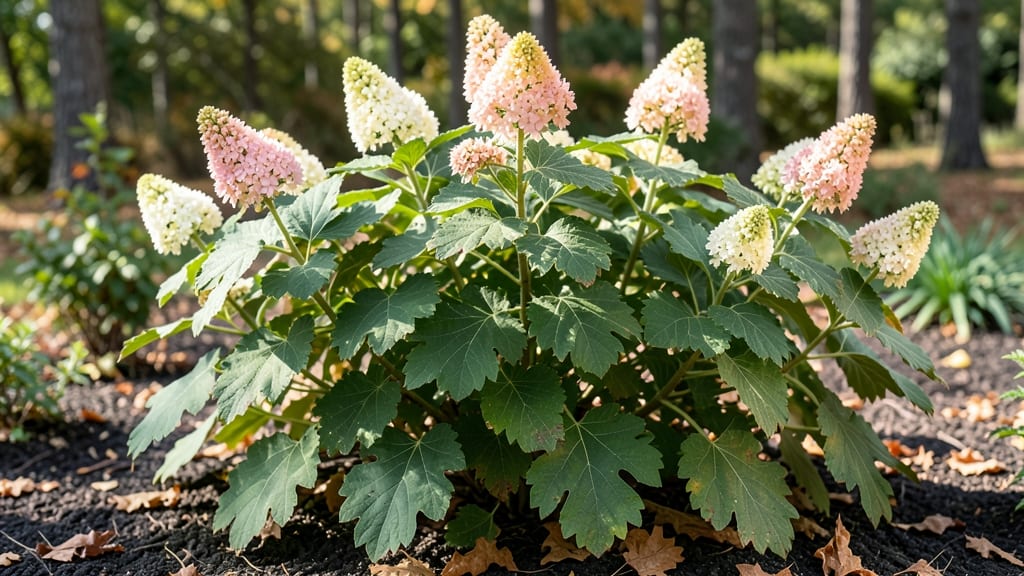
The oak leaf hydrangea size you’re planning for could turn your garden into a stunning focal point—or a crowded mess—if you don’t account for its 6-to-8-foot mature height and 4-to-6-foot spread.
If you're dreaming of a lush, low-maintenance shrub that thrives in full sun and adds bold texture to your garden, the oak leaf hydrangea (Hydrangea quercifolia) could be your perfect match—but first, you need to know how big it really gets.
This medium-sized shrub grows upright in its youth, then gradually rounds out, making it ideal for borders or as a standalone statement plant. But without proper spacing, it can quickly outgrow its welcome, shading out smaller perennials or overwhelming tight garden beds.
In this guide, I’ll break down exactly how tall and wide your oak leaf hydrangea will grow, how to control its size through pruning, and where to place it so it shines without stealing the show from your other plants.


Oak leaf hydrangea mature size: height, spread & growth rate explained
The oak leaf hydrangea (Hydrangea quercifolia) is a stunning shrub known for its bold foliage and seasonal blooms, but its mature size can vary dramatically based on growing conditions.
On average, this shrub reaches 5–7 feet tall and spreads 4–6 feet wide, but these numbers can shift depending on your USDA zone, soil quality, and pruning habits. Understanding these factors will help you plan your garden layout and avoid overcrowding or underutilized space.
In warmer climates (Zones 7–9), oak leaf hydrangeas tend to grow faster and larger, often exceeding 7 feet tall if left unpruned. Meanwhile, in cooler zones (Zones 5–6), growth is slower, with mature sizes typically hovering around 4–6 feet tall.
The key to controlling size lies in pruning techniques and soil amendments, which I’ll cover in detail below.
| Factor | Impact on Size | Notes |
|---|---|---|
| USDA Zone | Zones 5–6: 4–6 ft tall Zones 7–9: 6–8 ft tall |
Warmer zones = faster growth |
| Soil Type | Well-draining: 5–7 ft Clay-heavy: 3–5 ft |
Amend clay with compost |
| Sun Exposure | Full sun: 6–8 ft Partial shade: 4–6 ft |
Morning sun preferred |
| Pruning Habits | Light pruning: 5–7 ft Heavy pruning: 3–4 ft |
Prune in late winter |
One of the most misunderstood aspects of oak leaf hydrangeas is their growth rate. In their first year, these shrubs grow slowly, typically reaching only 1–2 feet tall. By year two, they gain momentum, shooting up to 3–4 feet.
The real size explosion happens in years three to five, where they can add 2–3 feet per year if conditions are ideal. This rapid growth phase is why many gardeners opt to prune young plants to encourage a bushier shape.
If you’re planting an oak leaf hydrangea in a small garden or container, focus on root-bound control. Use a large pot (at least 24 inches wide) and prune back 1/3 of the oldest stems annually to maintain a compact form.
In-ground plantings benefit from mulching to retain moisture and slow root expansion, which helps manage spread in tight spaces.
Another critical factor is soil fertility. Oak leaf hydrangeas thrive in acidic to neutral soil (pH 5.0–6.5). If your soil is alkaline, the plant may grow taller but leggier as it stretches for sunlight. To combat this, amend your soil with peat moss or sulfur before planting.
Over-fertilizing with nitrogen can also promote excessive leaf growth at the expense of blooms, so stick to a balanced 10-10-10 fertilizer applied in early spring.
For gardeners in USDA Zone 6 or colder, winter hardiness plays a role in size control. Younger plants may experience winter dieback, which can stunt growth temporarily. To mitigate this, mulch heavily around the base with 3–4 inches of organic mulch (like shredded bark) after the first frost.
This insulation helps roots survive harsh winters, allowing the plant to recover and grow stronger in subsequent seasons.
When planning your landscape, consider the mature spread of oak leaf hydrangeas. These shrubs develop a rounded, vase-like shape, so they need 4–6 feet of clearance on all sides. If you’re planting near a walkway or patio, leave extra space to avoid blocking foot traffic.
Pairing them with taller perennials (like black-eyed Susans) behind and low-growing ground covers (like ajuga) in front creates a balanced, layered look that highlights their natural form.
To estimate your oak leaf hydrangea’s future size, observe its growth in the first two years. If it’s adding more than 12 inches per year, expect it to reach mature dimensions quickly.
If growth is slower than 6 inches per year, it may stay on the smaller side. Adjust your pruning and fertilizing habits accordingly—light pruning encourages width, while heavy pruning promotes height control.
Remember, oak leaf hydrangeas are notoriously adaptable. With the right care, you can shape them into a small hedge, a statement shrub, or even a container specimen.
The key is to monitor their growth, adjust your approach seasonally, and enjoy the textural beauty they bring to your garden year-round.
How to control oak leaf hydrangea size: pruning tips for compact growth
If your oak leaf hydrangea is reaching for the sky faster than you’d like, don’t panic—pruning is your secret weapon for keeping it at a manageable 3–4 feet tall.
This shrub naturally grows 6–8 feet tall, but with the right techniques, you can shape it into a compact focal point without sacrificing those stunning white summer blooms or vibrant fall foliage.
Timing is everything when pruning Hydrangea quercifolia. The best time to prune is late winter or early spring, just as new growth begins. This ensures you’re not cutting off next year’s flower buds, which form on old wood.
Avoid pruning in fall or winter, as this can leave your plant vulnerable to cold damage and disease.
- 1 Bypass pruners for clean cuts on thin stems (up to ½ inch thick).
- 2 Loppers for thicker branches (up to 1½ inches). Always sterilize blades with rubbing alcohol to prevent disease spread.
- 3 Garden gloves to protect your hands from sharp stems and potential skin irritation from hydrangea sap.
- 4 Disposable pruning saw for any stubborn, overgrown branches too thick for loppers (rare in young plants).
Start by removing any dead, diseased, or crossing branches first. These are easy to spot—they’ll be brown, brittle, or growing inward toward the center of the plant. Cut these back to the main stem or the nearest outward-facing bud.
This step improves airflow and reduces the risk of fungal infections, which can stunt growth.
For shaping, focus on selective pruning rather than shearing. Target branches that are growing too tall or leggy. Cut just above a leaf node (the bump where leaves and buds form) at a 45-degree angle.
This encourages bushier growth and more blooms. Aim to reduce the plant’s height by no more than one-third in a single pruning session to avoid shocking it.
After pruning, give your oak leaf hydrangea a boost with a balanced fertilizer (10-10-10) to support new growth. Water deeply at the base to help it recover, and mulch around the plant with 2–3 inches of organic mulch to retain moisture and regulate soil temperature.
With consistent care, your hydrangea will stay compact, healthy, and ready to dazzle your garden all season.
Remember, patience is key. It may take a few years to see your oak leaf hydrangea at your desired 3–4 foot height, but the effort is worth it for a well-manicured, bloom-filled shrub that fits perfectly in smaller spaces. 🌿✂️🌳