
Propagation
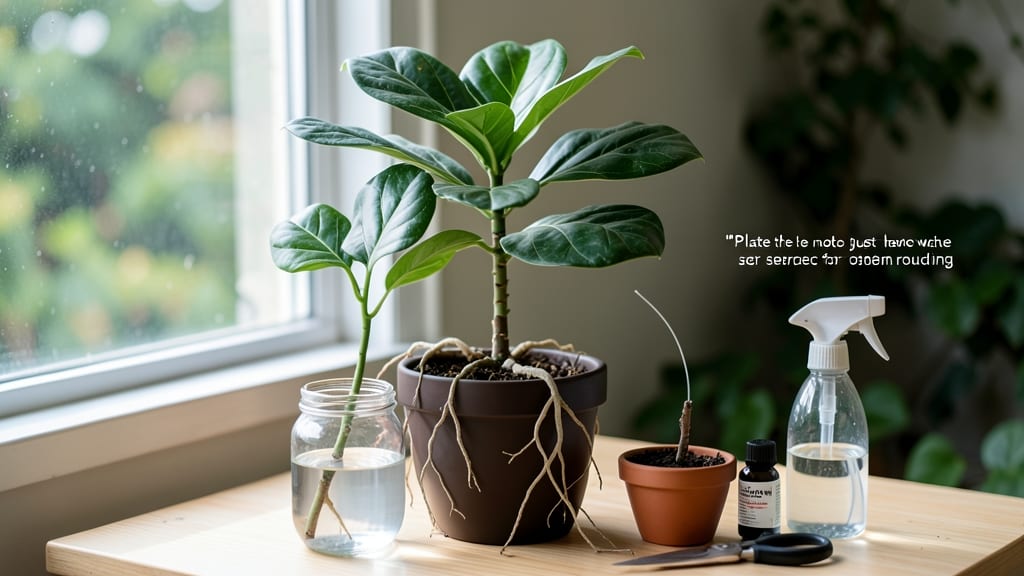
Propagating fiddle leaf figs in water gives you fast roots—sometimes in just 2-3 weeks—without the stress of soil. 🌱 I’ve rooted more than a dozen cuttings this way, and the secret isn’t just patience; it’s matching light, humidity, and water conditions to what fiddle leaf cuttings actually need.
Most people overwater or underlight, and that’s when the cuttings rot or stall. Don’t let that happen to yours.
The magic happens in a simple glass of water—no fancy equipment needed. You’ll need sharp pruners, a healthy mother plant, and a spot with bright, indirect light (no harsh midday sun).
The first few days are critical: keep humidity high with a plastic bag or humidity dome, and change the water every 3-4 days to prevent bacteria. That’s it. No complicated setups, just science-backed basics that work.
By week 3, you’ll see roots 1-2 inches long, and new leaves pushing out on your cutting. The plant stays happy through the process because we’re mimicking its natural environment—moist but not soggy, bright but not scorching.
The best part? Once rooted, you can plant it in soil with 90% success rate, and it’ll grow faster than store-bought cuttings because it’s already established.
This method works year-round, but spring and summer give the fastest results. Even if you’ve killed fiddle leaf cuttings before, this foolproof approach turns failures into thriving plants. Let’s get those roots growing!
📚 In This Guide
- What you need
- Instructions
- Tips and common mistakes
- Wrapping up and next steps
What you need
- ● Healthy Fiddle Leaf Fig cuttings: 3–5 cuttings, each with 4–6 nodes (where leaves grow from the stem)
- ● Stems should be ½–1 inch thick and 4–6 inches long
- ● Clean, room-temperature water: Filtered or distilled water (tap water may contain chlorine/fluoride)
- ● Small glass or jar: Clear container (8–12 oz) to monitor root growth
- ● Sharp pruning shears or knife: Sterilized to avoid damaging the plant
- ○ Rooting hormone (optional but helpful): Powder or gel to boost root development
- ● Newspaper or paper towels: For cleaning and drying cuttings
- ● Bright, indirect light: East or north-facing window (avoid direct sun)
- ● Warmth: 65–75°F (18–24°C)—ideal for rooting
- ○ Humidity tray (optional): Pebbles + water to maintain moisture
- ● 🔥 Trim leaves by ⅓ to reduce water loss and stress.
- ● 🌡️ Change water every 3–5 days to prevent bacteria/fungus.
- ● ✨ Add a splash of cinnamon (natural antifungal) to water for extra protection.
How to propagate fiddle leaf fig cuttings in water
Here's the fast, foolproof method I use to get roots in 2-3 weeks without stressing the plant.
🌱 Step 1: Select Healthy Cuttings
Choose a mature stem with at least 4-5 leaves and 1-2 nodes (those little bumps where leaves grow out). I always pick stems just below a leaf node—this is where roots will sprout fastest. Use clean, sharp scissors to make a 45-degree cut just below the node. A clean cut prevents disease and encourages faster rooting.
Let the cutting sit for 10-15 minutes to let the cut end callous over slightly. This minimizes rot when placed in water. If the stem is too long, trim it to 6-8 inches—longer stems take longer to root and may flop in the water.
💧 Step 2: Prepare the Water and Container
Fill a clean glass or jar with room-temperature water—never cold water, as it shocks the cutting. I use filtered or distilled water to avoid chlorine and other chemicals that can slow root growth. Fill the container only 1-2 inches deep—deeper water can cause the stem to rot before roots form.
Add 1-2 drops of hydrogen peroxide (3%) to the water to prevent bacterial growth. Change the water every 3-5 days to keep it fresh. Place the cutting in the water so only the bottom 1-2 nodes are submerged—the leaves should stay dry. This prevents rot while allowing roots to grow.
☀️ Step 3: Provide Ideal Light and Humidity
Place the container in a spot with bright, indirect light. A north or east-facing window is perfect—direct sun can overheat the water and stress the cutting. You’ll see new roots forming in 10-14 days, but they’ll grow fastest in 70-75°F conditions. If your home runs cooler, a small heat mat under the container can speed things up.
Keep humidity high by placing a clear plastic bag loosely over the top or misting the leaves occasionally. Watch for condensation on the bag—this means the humidity is just right. If the leaves start yellowing or dropping, the cutting is stressed, and you may need to adjust the light or water.
✂️ Step 4: Monitor Root Growth and Transplant
Check the roots every 3-4 days. Healthy roots will be 1-2 inches long and white or pale yellow. If the roots turn brown or mushy, the water is stale or the cutting is rotting—time to change the water or trim the cutting back to healthy tissue. Once roots reach 2-3 inches, it’s time to transplant into soil.
Before transplanting, dip the roots in rooting hormone (optional but helpful) and plant in a pot with well-draining soil. Water lightly and place in bright, indirect light for 1-2 weeks to help it adjust. Avoid direct sun at first—this can shock the new plant.
Tips & tricks for propagating fiddle leaf figs
Real talk: The difference between successful propagation and a sad, rotting stem often comes down to these small but critical details.
Cutting Selection Matters: In Step 1, when choosing your stem, look for ones with at least 4-5 leaves and 1-2 nodes that are plump and green—not shriveled or yellowing. I've learned the hard way that stems with yellow leaves rarely root successfully. Also, cut just below a node at a 45-degree angle—this increases surface area for better root formation.
Water Quality is Non-Negotiable: The instructions mention using filtered or distilled water, but here's what nobody tells you—tap water with chlorine or fluoride can actually inhibit root growth. If you don't have filtered water, let tap water sit out uncovered for 24 hours before using to allow chlorine to evaporate. That extra step can make all the difference in your 2-3 week timeline.
Lighting Secrets: While bright indirect light is ideal, I've found that placing your cutting near a grow light for 12 hours a day can speed up root development by 3-5 days. Position the light so it's 6-12 inches away from the cutting—closer than that can scorch the leaves. This works especially well if your home gets dim light during winter months.
Root Growth Rescue: If you notice brown or mushy roots during your 3-4 day checks in Step 4, don't panic! Trim the affected roots back to healthy white tissue and change the water immediately. I've successfully revived cuttings that looked hopeless by doing this—just make sure your new water has that 1-2 drops of hydrogen peroxide to prevent further bacterial growth.
Pro Tips for Propagating Fiddle Leaf
- Real talk: The difference between successful propagation and a sad, rotting stem often comes down to these small but critical details.
- Cutting Selection Matters: In Step 1, when choosing your stem, look for ones with at least 4-5 leaves and 1-2 nodes that are plump and green—not shriveled or yellowing.
- Water Quality is Non-Negotiable: The instructions mention using filtered or distilled water, but here's what nobody tells you—tap water with chlorine or fluoride can actually inhibit root growth.
Frequently asked questions
Got questions about propagating your fiddle leaf fig?
You’re not alone! Whether you’re a beginner or a seasoned plant parent, these common concerns can help you grow roots faster and keep your plant happy. Let’s dive in:
How long does it take for fiddle leaf cuttings to root in water?
With the right conditions, fiddle leaf fig cuttings typically root in 2–4 weeks. Patience is key—keep the water fresh, provide bright (but indirect) light, and avoid drafts. Roots may start as tiny white nubs before growing into a healthy network. If you don’t see progress after 6 weeks, try adjusting your setup (e.g., warmer spot or cleaner water).
Can I reuse the water from my fiddle leaf cutting?
Nope! Reusing water risks bacterial growth or root rot. Fiddle leaf figs thrive in fresh, room-temperature water changed every 3–5 days. If the water turns cloudy or smells funky, dump it and rinse the jar to keep your cutting healthy. Think of it like a spa day for your plant’s future roots!
Why is my cutting turning yellow or mushy?
Yellowing or mushy stems are red flags for overwatering or rot. If the cutting feels soft or smells off, it’s time to act:
- Trim the mushy part with clean scissors.
- Let the stem dry for 24 hours before re-rooting.
- Use a hydrogen peroxide (3%) rinse to kill bacteria.
Should I root fiddle leaf cuttings in water or soil?
Both work, but water propagation is faster and lets you monitor root growth. Once roots hit 2–3 inches, transplant to soil to avoid overwatering. For soil starters, use a mix of perlite and potting soil to prevent soggy roots. Pro tip: Water propagation builds confidence—great for beginners!
What’s the best time of year to propagate fiddle leaf figs?
Spring and early summer (when plants are actively growing) are ideal. Avoid winter propagation—your cutting may struggle to root due to lower light and slower metabolism. If you must propagate in cooler months, supplement with a grow light and keep the environment warm (around 70°F).
Wrapping up and next steps
Propagating your fiddle leaf fig in water is a rewarding and low-stress way to grow a thriving plant! With the right tools, patience, and care, you’ll soon have a bountiful collection of new plants ready to root in soil. 🌱
Ready to take the next step? Once your cuttings have developed strong roots, transplant them into well-draining soil and give them a cozy spot with bright, indirect light. Watch as your new fiddle leaf figs flourish—you’ve got this! 💪