
Pruning
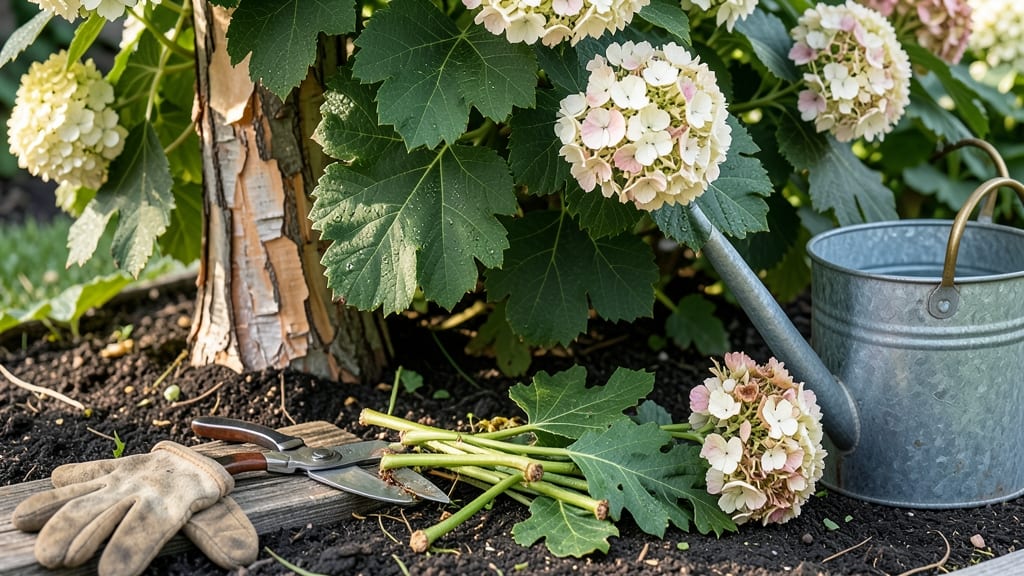
Pruning oakleaf hydrangeas in late winter or early spring unlocks their full potential—vibrant foliage, stunning fall color, and abundant blooms that last all season. 🌿 I’ve watched my oakleaf hydrangeas transform from leggy shadows to showstopping shrubs after mastering this timing, and the difference is night-and-day.
The key is working before new growth starts, cutting back one-third of the oldest stems to the ground. This isn’t about harsh pruning—it’s about encouraging fresh, healthy growth while preserving the plant’s natural shape.
Unlike mophead or panicle hydrangeas, oakleafs bloom on both old and new wood, so you’re not risking missed flowers. What you’ll end up with is a bush that stays compact, produces richer fall foliage, and flowers reliably year after year.
The secret? Patience and a sharp pair of pruners—no fancy tools needed. Just a little strategy goes a long way. Works for both established shrubs and younger plants. Here’s how to do it right the first time.
📚 In This Guide
- What you need
- Instructions
- Tips and common mistakes
- Wrapping up and next steps
What you need
- ● Bypass pruners – Sharp, clean, and disinfected (7-inch blades recommended for thicker stems).
- ● Loppers – For branches ½-inch to 2-inches thick (bypass or anvil type, 8-10 inches long).
- ● Hand saw – For stubborn, thicker-than-2-inch branches (pruning saw with 8-10 teeth per inch).
- ● Gloves – Heavy-duty, gardening-grade (nitrile or leather) to protect from thorns and sap.
- ● Disinfectant – 70% isopropyl alcohol or a 10% bleach solution (1 part bleach to 9 parts water) to sterilize tools.
- ● Rubbing alcohol or hand sanitizer – For cleaning hands before and after pruning.
- ● Bucket or bag – For collecting pruned debris (10-gallon capacity recommended).
- ○ Pruning sealant – Optional for large cuts (>½-inch diameter) to prevent disease (use a latex-based product).
- ● Knee pads or stool – For comfort if your hydrangea is tall or dense.
- ● Label markers – If you’re tagging cuts for tracking growth (waterproof ink recommended).
- ● Hose or spray bottle – To rinse tools between cuts and keep debris damp.
- ● Safety glasses – If pruning in windy conditions or near your face.
- ● Know your hydrangea’s age – Younger plants (under 3 years) need minimal pruning; mature plants benefit from structured trimming.
- ● Check the weather – Prune on a dry, mild day (50–75°F) to reduce stress on the plant.
- ● Review pruning goals – Decide if you’re trimming for shape, size, bloom promotion, or rejuvenation.
- ● Clear the workspace – Remove weeds, debris, or obstacles within a 3-foot radius.
Instructions for pruning oakleaf hydrangeas
Here’s my go-to method for keeping your oakleaf hydrangea blooming beautifully year after year—without sacrificing next season’s flowers.
✂️ Step 1: Time Your Pruning for Peak Health
Prune oakleaf hydrangeas right after they finish blooming—typically late summer to early fall—when the flowers have faded but before new buds form. This timing ensures you don’t cut off next year’s blooms, since oakleaf hydrangeas set buds on old wood but also produce some on new growth. If you missed the window, a light prune in late winter or early spring (before buds swell) is better than nothing.
I know it’s tempting to trim back right after seeing those stunning fall colors, but hold off. Waiting until after the first frost (when the plant is dormant) gives you a clearer view of which stems to remove. Focus on dead, damaged, or crossing branches first—these are easy to spot even when the plant is bare.
✂️ Step 2: Cut Back Strategically for Shape and Airflow
Start by removing any dead or diseased branches—they’ll stand out as dry, brown stems with no leaves. Cut these back to the main trunk or a healthy lateral branch. Next, thin out overcrowded or crossing branches at the base, leaving the strongest, most outward-facing stems. This improves airflow and reduces disease risk.
For shaping, I like to step back and visualize the plant’s natural form. Oakleaf hydrangeas have a lovely, rounded habit, so aim to maintain that silhouette. Cut back overly long stems by about one-third, making your cuts just above a leaf node or outward-facing bud. Avoid cutting into old wood if possible—this keeps the plant’s energy focused on new growth.
☀️ Step 3: Revitalize with a Light Renewal Cut
After removing the obvious candidates, give your hydrangea a renewal cut to encourage bushier growth. Select 3-5 of the oldest, largest stems (usually the ones at the center of the plant) and cut them back harder—by half their length or more. This might seem drastic, but it stimulates new, vigorous shoots from the base, which will produce more blooms next season.
I always avoid cutting back more than one-third of the plant in a single year, though. Oakleaf hydrangeas are tough, but they don’t respond well to aggressive pruning. If your plant is particularly leggy, spread the renewal cuts over two years—this way, the plant can recover without shock. Water deeply after pruning to help it bounce back faster.
⏰ Step 4: Finish with Post-Pruning Care
Once you’ve trimmed, remove all pruned branches from the area to prevent disease from spreading. Rake up any fallen leaves or debris around the base, as these can harbor pests or fungi over winter. A light application of mulch (2-3 inches) around the plant’s base helps protect roots from temperature swings and retains moisture.
Here’s the thing—oakleaf hydrangeas are forgiving, but they hate soggy roots. If your soil drains poorly, consider amending it with compost or organic matter to improve structure. After pruning, keep an eye out for new growth in spring—this is your sign that the plant is recovering well. If you see no new buds by early summer, it might need a little extra phosphorus (like bone meal) to encourage flowering.
Tips & tricks for pruning oakleaf hydrangeas
When it comes to oakleaf hydrangeas, timing and technique make all the difference between a healthy, blooming plant and one that struggles to recover.
Timing is Everything: The late summer to early fall window is critical because oakleaf hydrangeas set buds on old wood. If you prune too early, you risk cutting off next year's flowers. I always wait until after the first frost when the plant is dormant—this makes it easier to identify dead or damaged branches. If you missed the ideal window, a light prune in late winter or early spring (before buds swell) is better than nothing, but it won't give you the same dramatic results.
Visual Cues for Pruning: In Step 2, when you're cutting back overly long stems, look for the leaf nodes—the small bumps where leaves grow. Make your cuts just above these nodes, about one-third of the way back from the tip. This encourages new growth in the right direction. For the renewal cut in Step 3, focus on the oldest stems at the center of the plant—these are the ones that need the hardest pruning to stimulate new, vigorous shoots. Remember, you're aiming to cut back by half their length, not just a little trim.
Post-Pruning Care: After you've finished trimming, don't forget the cleanup. Remove all pruned branches from the area immediately to prevent disease from spreading. I also recommend raking up fallen leaves and debris around the base—they can harbor pests and fungi over winter. A light application of mulch (about 2-3 inches) around the plant's base helps protect the roots from temperature swings and keeps moisture in the soil, which is especially important after pruning when the plant is vulnerable.
Soil Matters: Oakleaf hydrangeas hate soggy roots, so if your soil drains poorly, consider amending it with compost or organic matter. This improves drainage while adding nutrients that encourage healthy growth. After pruning, keep an eye out for new growth in spring—this is your sign that the plant is recovering well. If you don't see new buds by early summer, it might need a little extra phosphorus, like bone meal, to encourage flowering.
Pro Tips for Pruning Oakleaf Hydrangea
- When it comes to oakleaf hydrangeas, timing and technique make all the difference between a healthy, blooming plant and one that struggles to recover.
- Timing is Everything: The late summer to early fall window is critical because oakleaf hydrangeas set buds on old wood.
- Visual Cues for Pruning: In Step 2, when you're cutting back overly long stems, look for the leaf nodes—the small bumps where leaves grow.
Frequently asked questions
Got questions about keeping your oakleaf hydrangea (Hydrangea quercifolia) looking its best? Here are some of the most common concerns—and their answers—to help you prune with confidence!
When is the best time to prune oakleaf hydrangeas?
Prune after flowering (late spring to early summer) to avoid cutting off next year’s blooms. For shaping or light maintenance, you can also trim in early spring before new growth starts—but avoid heavy pruning then. Oakleaf hydrangeas bloom on old wood, so timing matters!
How much can I trim back my oakleaf hydrangea?
Never remove more than 1/3 of the plant’s height in one season. For rejuvenation, trim back old wood (last year’s stems) by about 1/2 to 2/3 in late winter or early spring. Avoid drastic cuts—these hydrangeas thrive with patience and gradual shaping!
Why aren’t my oakleaf hydrangeas blooming after pruning?
If blooms are sparse, you may have pruned too late (after buds formed) or cut back old wood entirely. Oakleaf hydrangeas need last year’s stems to flower. Try light pruning in early spring (removing only dead/diseased wood) and avoid heavy cuts. Patience pays off!
Can I prune oakleaf hydrangeas in fall or winter?
Light pruning in late fall (after leaves drop) is fine for cleanup, but avoid heavy cuts—dormant plants are vulnerable to cold damage. Winter pruning (Dec–Feb) is risky unless your climate is mild. Wait until early spring for major shaping to protect the plant’s energy reserves.
What if my oakleaf hydrangea looks leggy or overgrown?
Leggy growth often means it’s time for a rejuvenation prune in early spring. Cut back 1/2 to 2/3 of the tallest stems to encourage bushier, denser growth. Focus on removing old wood (gray/brown stems) and thinning crowded centers for airflow.
Still unsure? Snap a photo of your hydrangea’s structure and compare it to pruning guides—oakleaf hydrangeas reward strategic (not aggressive) trimming!
Wrapping up and next steps
Pruning your oakleaf hydrangea doesn’t have to be intimidating—it’s all about timing, technique, and a little patience! 🌿 By following the right steps, you’ll encourage vibrant blooms and healthier growth year after year.
Whether you’re a seasoned gardener or just starting out, this guide gives you the confidence to trim like a pro.
Ready to transform your garden? Grab your pruners and get started today—your hydrangea will thank you with stunning, long-lasting flowers! For extra inspiration, check out our pruning timeline to keep your plants thriving all season.