
Planting
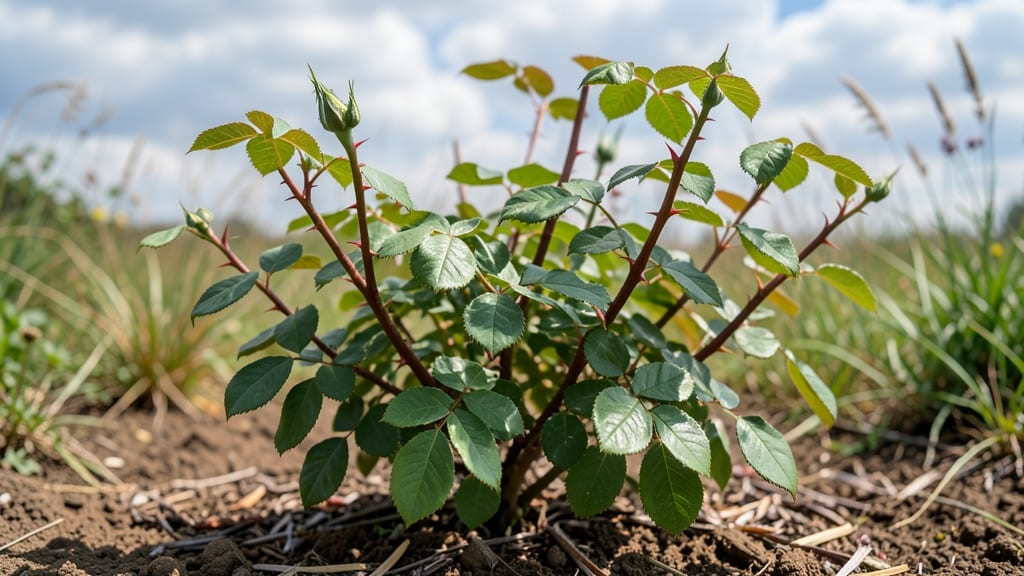
The shape of a rose plant leaf reveals its variety, with most featuring serrated, oval to elliptical leaves and pointed tips. Some hybrids—like climbers or shrubs—show glossy, elongated foliage or deeply lobed edges, making leaf shape a key identifier for species such as Rosa rugosa (wrinkled) versus Rosa gallica (smooth-edged).
Understanding a rose's leaf shape is like reading its botanical fingerprint. 🌿 The serrated edges you see on many garden roses help maximize sunlight absorption, while smoother varieties like Rosa gallica often thrive in denser foliage.
For example, Rosa rugosa leaves are thick and wrinkled, a natural adaptation for coastal climates where wind and salt are common. This isn't just about looks—leaf shape also hints at care needs.
Thicker leaves, like those on Rosa chinensis, suggest drought tolerance, while fine serrations on Rosa centifolia signal higher susceptibility to fungal issues in humid conditions. I always check leaf shape first when troubleshooting plant health—it often points to whether a rose needs more water, sunlight, or pest control.
💡 In This Article
- How Leaf Shape Differentiates Rose Varieties
- Matching Rose Leaf Shapes to Plant Care Needs
How leaf shape differentiates rose varieties
The serrated edges on most rose leaves aren't random—they're an evolutionary adaptation. These jagged margins, called serrations, increase the leaf's surface area by up to 30% compared to smooth-edged varieties. This boosts photosynthesis efficiency, allowing roses to thrive in partial shade where direct sunlight is limited.
For example, Rosa centifolia (the cabbage rose) typically shows fine, needle-like serrations along its 3-5 inch oval leaves, while Rosa rugosa displays broad, coarsely toothed edges on its wrinkled, leathery leaves—a trait that helps channel rainwater away from the leaf surface in stormy coastal environments. 🌊
Leaf shape also reveals a rose's growth habit. Climbing roses like Rosa 'New Dawn' often feature longer, narrower leaves (3-7 inches) with fewer serrations, allowing them to conserve water as they stretch toward sunlight.
In contrast, shrub roses such as Rosa 'Knock Out' have smaller, rounded leaves (1.5-3 inches) with moderate serrations, balancing sunlight capture with compact growth.
The arrangement matters too—most roses display alternate leaf patterns (one leaf per stem node), but some like Rosa multiflora show clustered growth where multiple leaves sprout from a single point, creating a denser canopy.
Color and texture provide additional clues. The deep green, glossy finish on Rosa 'Blaze' leaves signals a hybrid tea rose, while the matte, bluish-green hue of Rosa 'Iceberg' indicates a floribunda type.
Even the leaf undersides hold secrets—some varieties like Rosa 'David Austin' English roses have downy white hairs that reduce water loss, while others remain smooth. These subtle differences help gardeners match roses to microclimates: thick, waxy leaves thrive in dry heat, while thin, delicate leaves prefer consistent moisture. 🌿
Botanists classify rose leaf shapes using three key metrics: length-to-width ratio, serration density (teeth per inch), and margin type (entire, lobed, or serrated).
For instance, Rosa gallica leaves measure 1.5-3 inches long with smooth or slightly wavy margins, while Rosa chinensis shows elliptical leaves (2-4 inches) with moderate serrations.
Hybridizers often cross species to create new shapes—like the deeply lobed leaves of Rosa 'The Fairy', a sport of Rosa 'Fairy' with pronounced finger-like projections that resemble miniature maple leaves.
These variations aren't just aesthetic; they influence how a rose responds to pruning, with thicker leaves requiring less frequent trimming than delicate varieties. 🌸
The science behind these differences lies in phyllotaxis—the pattern of leaf arrangement—which determines how efficiently a rose can photosynthesize. Roses with alternate phyllotaxis (like most garden roses) space leaves 137.5 degrees apart (the "golden angle"), optimizing light capture.
Those with clustered growth (like Rosa multiflora) pack leaves more densely, creating shade that protects flowers from sunburn. Even the leaf venation pattern varies: Rosa rugosa shows prominent secondary veins that create a net-like structure, while Rosa centifolia has parallel venation along the leaf's centerline.
These structural differences explain why some roses handle wind better than others.
For the curious gardener, leaf shape can predict blooming patterns too. Roses with broad, flat leaves (like Rosa 'Peace') often produce larger, single blooms, while those with narrow, elongated leaves (like Rosa 'Iceberg') tend toward clustered florets.
This correlation occurs because leaf surface area directly impacts a rose's energy reserves—more leaf real estate means more sugars for flower production. 🌺 Understanding these relationships lets you select roses that match your garden's conditions: thick-leaved varieties for dry climates, fine-serrated types for humid areas, and glossy-leaved climbers for vertical spaces.