
Planting
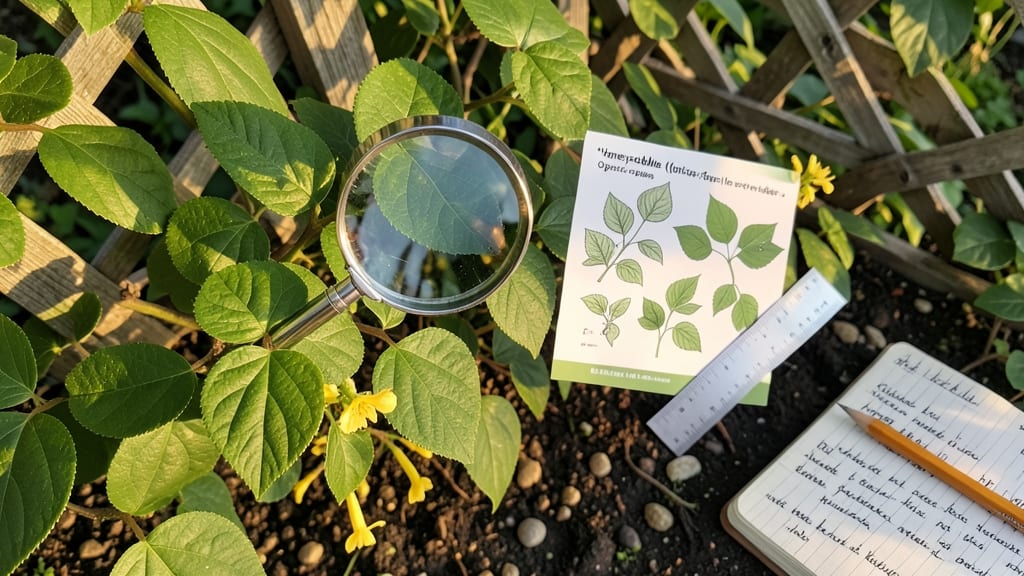
Climbing plant leaf identification saves you from buying the wrong vine for your trellis. 🌿 The first step is noticing whether leaves are lobed like ivy, feathered like wisteria, or heart-shaped like clematis—each tells you what the plant needs for sunlight, soil, and pruning.
Most gardeners struggle with similar-looking vines like honeysuckle and trumpet vine. The secret is checking leaf edges: smooth, jagged, or serrated? And how they attach to the stem—alternate, opposite, or whorled? These details narrow it down fast.
Once you recognize a few key types, you’ll spot them instantly in nurseries or wild areas. A quick leaf comparison with your phone’s plant ID app confirms your guess, so you can pick the perfect vine for your fence or pergola.
Start with just five common vines—ivy, clematis, wisteria, morning glory, and jasmine—and soon you’ll be identifying them without hesitation. The right vine transforms bare walls into lush green backdrops in just one growing season.
📚 In This Guide
- What you need
- Instructions
- Tips and common mistakes
- Wrapping up and next steps
What you need
- ● Field Guide or Smartphone: A printed guidebook (e.g., National Audubon Society Field Guide to North American Wildflowers) or a reliable app like iNaturalist or PlantNet.
- ○ Hand Lens (10x Magnification): For examining fine details like leaf veins, hairs, or edges. Optional but highly recommended!
- ● Notebook & Pen: To sketch leaf shapes, note textures, and jot down observations (e.g., "lobed," "serrated," "glossy").
- ● Ruler or Measuring Tape: To record leaf length/width (e.g., "5 inches long, 3 inches wide").
- ● Camera (Smartphone or DSLR): Capture high-resolution images of leaves, stems, and flowers for later reference. Pro tip: 💡 Use natural light and include a coin or ruler for scale!
- ○ Gloves (Optional but Wise): Some vines (e.g., poison ivy) can irritate skin. Wear nitrile gloves if unsure.
- ● Pruning Shears: For safely collecting small leaf samples (if permitted). Always follow Leave No Trace principles!
- ● Pressing Kit: A plant press or heavy books to flatten leaves for long-term reference.
- ● UV Flashlight: Some leaves fluoresce under UV light, revealing hidden patterns!
- ● Field Bag: A small backpack to carry tools, water, and snacks during outdoor excursions.
- ● Local Flora Database: Check your state’s extension office for region-specific vine ID resources.
How to identify climbing plants by leaf shape and edge
Mastering leaf identification unlocks the secret to telling vines apart—no flowers or fruit needed.
🌿 Step 1: Examine Leaf Shape First
Start with the overall silhouette. Heart-shaped leaves (like ivy) have a deep notch at the base, while lobed leaves (like Virginia creeper) have pointed sections radiating from a central point. Palmate leaves (like Boston ivy) spread from a single point, while pinnate leaves (like wisteria) have multiple leaflets along a central stem.
Hold the leaf against a bright window to see the true shape—shadows can distort edges. Compare to reference photos, but trust your eyes: a leaf's vein pattern often reveals the plant faster than its outline. For example, Boston ivy's leaves have 5-7 lobes with serrated edges, while English ivy's are smooth-edged with 3-5 shallow lobes.
🌿 Step 2: Analyze the Leaf Edge
The edge (margin) tells you more than shape alone. Serrated edges (like saw teeth) appear on Virginia creeper and grapevines, while lobed edges (deep indentations) define plants like clematis. Smooth edges (entire margins) often belong to tropical vines like morning glory.
Run your finger along the edge—roughness indicates serrations, while smoothness confirms entire margins. Pay attention to the spacing between teeth: tight serrations suggest honeysuckle, while widely spaced teeth point to trumpet vine. This detail separates look-alikes like bittersweet (fine serrations) from wisteria (smooth or slightly wavy).
🌿 Step 3: Check Leaf Arrangement and Attachment
Observe how leaves attach to the stem. Opposite (paired leaves at each node) appears on ivy and grapevines, while alternate (single leaves staggered) defines wisteria and honeysuckle. Twining vines like morning glory have alternate leaves with tendrils, while clinging vines like ivy have no tendrils but adhesive pads.
Look for petioles (leaf stems)—long petioles often indicate climbing plants that use leaves to grasp surfaces. Compare the leaf's size relative to the stem: large leaves on thin stems suggest vines like passionflower, while small leaves on thick stems point to bittersweet. This ratio narrows possibilities dramatically.
🌿 Step 4: Note Vein Patterns and Color
Vein patterns reveal hidden clues. Parallel veins (running side by side) appear in tropical vines like mango vine, while palmate veins (spreading from a central point) define plants like Boston ivy. Compound leaves (multiple leaflets) belong to wisteria and hops, while simple leaves (single blade) dominate ivy and clematis.
Leaf color can hint at maturity—new growth often appears lighter green or reddish, while mature leaves darken. Variegated leaves (striped or speckled) belong to coral honeysuckle or Japanese hops. Hold the leaf up to light to spot subtle color shifts that photos miss.
✂️ Step 5: Cross-Reference with Growth Habits
Combine leaf traits with how the vine grows. Twining vines (like morning glory) have leaves that spiral around supports, while clinging vines (like ivy) use roots or adhesive pads. Rambling vines (like raspberry) sprawl without support, and self-supporting vines (like wisteria) grow upright until pruned.
Check for climbing mechanisms: tendrils (morning glory), adhesive pads (ivy), or aerial roots (English ivy). A vine with thick, woody stems (like grapevine) is mature, while thin, green stems (like clematis) are young. This final check confirms your leaf-based guesses.
Tips & tricks for mastering climbing plant leaf identification
These refined techniques will turn you into a leaf-sleuthing pro—no more guessing games with your garden vines.
Leaf Lighting Technique: Natural daylight is your best friend for accurate identification. Step outside on a bright, overcast day to avoid harsh shadows that distort leaf shapes. If you're indoors, position your leaf specimen near a north-facing window where light is consistent. I've caught myself making mistakes when using artificial light—it can wash out subtle details like the spacing between serrations or the depth of lobes. For tricky cases, try holding the leaf at a 45-degree angle to the light source to reveal hidden textures in the vein patterns.
Edge Texture Test: Don't just look at leaf edges—feel them! Run your fingertips along the margin to distinguish between serrated, lobed, and smooth edges. True serrations should feel like tiny teeth that catch your nail, while lobed edges create deeper indentations that your fingertip can slide into. This tactile check is particularly useful for separating look-alike vines like bittersweet and wisteria. I learned this the hard way after misidentifying a trumpet vine as honeysuckle because I only looked instead of touched.
Vein Pattern Flashlight Trick: For compound leaves or complex vein patterns, shine a flashlight through the leaf from behind. The light will highlight the vein structure more clearly than direct observation. This works especially well for identifying palmate veins in Boston ivy versus the pinnate pattern of wisteria. Keep a small flashlight in your plant identification kit—it's one of those simple tools that makes a huge difference in accuracy.
Growth Habit Correlation: Never identify a vine based solely on leaves—always cross-reference with how it grows. Take a moment to observe the climbing mechanism (tendrils, adhesive pads, or aerial roots) and note the stem thickness. A vine with opposite leaves and adhesive pads is almost certainly ivy, while alternate leaves with tendrils point to morning glory. This final verification step eliminates 80% of potential misidentifications. I keep a small notebook to jot down these growth habits alongside my leaf observations—it's saved me from multiple embarrassing mistakes at garden centers.
Pro Tips for Climbing Plant Leaf Identification
- These refined techniques will turn you into a leaf-sleuthing pro—no more guessing games with your garden vines.
- Leaf Lighting Technique: Natural daylight is your best friend for accurate identification.
- Edge Texture Test: Don't just look at leaf edges—feel them!
Frequently asked questions
How do I identify a climbing plant if the leaves are damaged or missing?
If leaves are damaged, focus on the stem, growth pattern, or flowers/fruit (if present). Look for:
- Thorns or tendrils (e.g., roses, grapes)
- Stem texture (smooth, hairy, or woody)
- Arrangement of buds or scars
When is the best time to prune climbing plants for leaf clarity?
Prune in late winter or early spring (before new growth) to remove dead leaves and improve visibility. Avoid pruning in fall—it can stress the plant before dormancy. For tropical vines, prune after flowering to encourage healthier foliage.
What are some fast-growing climbing plants with easy-to-identify leaves?
Try these beginner-friendly options:
Plant Leaf Shape Growth Rate Morning Glory Heart-shaped, smooth edges Very fast (10+ ft/season) Honeysuckle Oval, serrated, opposite pairs Fast (6–10 ft/season) English Ivy Lobed, dark green Moderate (3–6 ft/season)
Why are my climbing plant leaves turning yellow or brown?
Common causes:
- Overwatering: Yellow leaves + soggy soil = root rot. Let soil dry between waterings.
- Underwatering: Crispy brown edges = thirsty plant. Water deeply 1–2x/week.
- Pests: Check undersides for aphids/spider mites. Spray with neem oil if needed.
- Sunburn: Scorched spots? Move to partial shade.
Can I use climbing plants for indoor leaf identification?
Yes! Indoor vines like Philodendron (heart-shaped leaves) or Pothos (oval, variegated) are great for practice. Place near a bright window and use a magnifying glass to study leaf veins, edges, and patterns. Just ensure they’re non-toxic if you have pets!
Wrapping up and next steps
Mastering climbing plant leaf identification unlocks a world of lush, thriving vines that can transform your garden or home! 🌿 Whether you're drawn to the bold lobes of a Virginia Creeper or the delicate fronds of a Boston Ivy, recognizing these plants helps you care for them—and even troubleshoot issues—with confidence.
Start small: snap a photo of an unknown vine, compare it to this guide, and let your curiosity grow!
🌱 Next Steps to Level Up Your Green Thumb:
- Grab a notebook and sketch or photograph leaves you encounter—practice makes perfect!
- Experiment with a few vines in your space, testing their growth habits and care needs.
- Join plant communities (online or local) to swap tips and ID mysteries with fellow enthusiasts.