
Vegetables
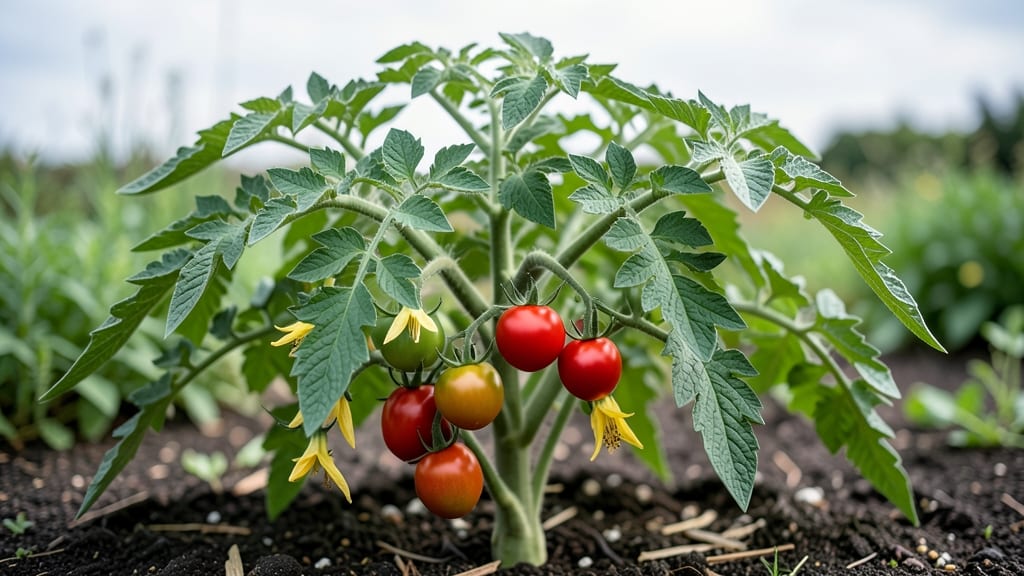
Tomato leaf types reveal everything about your plant’s personality—from disease resistance to flavor potential. 🌿 I’ve learned that the shape, texture, and even color of leaves tell you whether your plant is thriving or fighting an invisible battle.
Heirloom varieties like 'San Marzano' often have broad, deeply lobed leaves, while cherry tomatoes like 'Sweet 100' sport smaller, serrated edges—each type has unique care needs.
Leaf structure isn’t just about looks—it’s a clue to how your tomato handles stress. Thick, waxy leaves (common in hybrids) resist pests better, while delicate heirloom leaves need more protection but reward you with richer flavors.
The key is matching leaf type to your climate: thin leaves wilt faster in heat, while thick ones can handle drought. Start by examining your plants’ leaves up close—you’ll spot early signs of trouble before the fruit even ripens.
You’ll soon notice how leaf health directly impacts your harvest. Strong, vibrant leaves mean robust vines and heavy fruit sets, while yellowing or curling leaves signal problems—often fixable with simple adjustments.
For example, 'Brandywine' heirlooms need consistent moisture to keep their broad leaves lush, while 'Early Girl' hybrids tolerate drier conditions. The right leaf type for your garden can mean the difference between a perfect harvest and a frustrating season.
Once you master leaf identification, you’ll choose varieties that thrive in your space. Whether you’re growing in containers or full sun, the leaf tells the story of what’s to come.
Start with these three types—heirloom, hybrid, and cherry—and let your plants guide your next planting decisions. The best varieties aren’t just about fruit; they’re about the leaves that support it.
📚 In This Guide
- What you need
- Instructions
- Tips and common mistakes
- Wrapping up and next steps
What you need
- ● Tomato plants or seeds: Choose 3–5 varieties (e.g., heirloom, cherry, beefsteak) to compare leaf shapes. Pro tip: Start with disease-resistant types like Early Girl or Sungold for beginners!
- ● Pruning shears or sharp scissors: 1 pair (sterilized with rubbing alcohol to prevent disease spread).
- ○ Magnifying glass (optional but helpful): 1x–3x magnification to examine leaf details like veins and serrations.
- ● Notebook or sketchbook: For recording observations (include a ruler for measuring leaf dimensions).
- ● Pencil or fine-tip markers: Waterproof if drawing outdoors.
- ● Ruler or measuring tape: 12-inch (30 cm) for leaf length/width.
- ● Camera or smartphone: With a macro mode or app like PlantNet for leaf ID.
- ● Gloves (nitrile or cotton): 1 pair to protect hands from thorns or sap.
- ● Containers or garden beds: Containers: 5-gallon pots (minimum) with drainage holes for 1–2 plants each.
- ● Garden beds: Full sun (6–8 hours/day) and well-draining soil (amend with compost if needed).
- ● Potting mix: 1 bag of high-quality, sterile mix (e.g., Miracle-Gro or coco coir-based).
- ● Fertilizer: Balanced 10-10-10 or tomato-specific fertilizer (follow package rates).
- ● Support stakes or cages: 1 per plant (5–6 ft tall for indeterminate varieties).
- ● Mulch: Straw or shredded leaves to retain moisture and suppress weeds.
- ● Watering can or hose with nozzle: For gentle watering (avoid wetting leaves to prevent disease).
- ● Leaf identification guidebook: Such as The Tomato Book by Steve Albert or a Field Guide to Tomato Leaves (digital or print).
- ● Grow lights: LED full-spectrum for indoor seedlings (12–16 hours/day).
- ● pH test kit: To ensure soil pH is 6.0–6.8 (ideal for tomatoes).
- ● Disease-resistant sprays: Copper fungicide or neem oil for prevention.
- ● Journal app: Like Gardenate or PlantSnap to track growth and leaf changes.
How to identify and match tomato leaf types to your growing goals
Here's how to decode leaf shapes and pair them with varieties that thrive in your space and climate.
🌿 Step 1: Learn the Four Key Tomato Leaf Shapes
Start by memorizing these four basic leaf types—each reveals the plant's growth habits and flavor profile. Potato leaves are deeply lobed with jagged edges, while regular leaves have smooth, rounded lobes. The rare "double-trumpet" leaves signal heirloom vigor, and "fern-like" leaves often mean disease resistance. I always flip through seed catalogs first, comparing leaf photos to my garden's conditions.
Hold a leaf up to natural light to see the vein patterns—prominent veins indicate fast growth, while delicate veins suggest slower but sweeter development. This visual clue helps you predict maturity timing. For example, varieties with potato leaves mature faster but produce smaller fruit, while smooth-leaved types take longer but yield larger tomatoes.
🌱 Step 2: Match Leaf Types to Your Climate Zone
Northern gardeners should prioritize varieties with potato leaves—they handle cooler temperatures better and ripen faster in short seasons. I've grown 'Stupice' and 'Glacier' successfully in Zone 5, both featuring those distinctive deep lobes. In warmer zones, look for smooth-leaved varieties like 'Brandywine' or 'Cherokee Purple' that tolerate heat without wilting.
Notice how leaf thickness correlates with drought tolerance. Thick, waxy leaves (common in heirlooms) signal better water retention, while thin leaves need consistent moisture. If your summers are dry, choose varieties with double-trumpet leaves—they often come from desert-adapted strains that thrive with less water.
☀️ Step 3: Pair Leaf Types with Growing Conditions
Container growers need compact varieties with smaller leaves (under 4 inches long) to prevent overcrowding. I've had great success with 'Tiny Tim' and 'Micro Tom' in 5-gallon buckets—their miniature leaves stay proportional to their small stature. For ground covers, select varieties with large, spreading leaves like 'Arkansas Traveler' that shade soil and deter weeds.
Indoor growers should avoid varieties with hairy leaves
Prune potato-leaf varieties aggressively—remove suckers below the first flower cluster to redirect energy to fruit. I use clean pruners to snip at a 45-degree angle just above a leaf node. For smooth-leaved types, prune more conservatively to maintain canopy size. The goal is to keep 3-4 main stems with leaves spaced 12-18 inches apart. Never prune double-trumpet varieties—their unique leaf structure already promotes airflow. Instead, focus on removing only diseased leaves. Watch for yellowing between veins (a sign of early blight) and act immediately. Healthy leaves should stay deep green with no browning, even in hot afternoons. Look for color shifts in leaf veins as your first harvest signal. When the main stem leaves develop yellow-green veins while keeping green centers, nearby fruit is nearly ripe. I always check the undersides of leaves for tiny tomato buds—this hidden clue tells me when to start monitoring fruit development closely. Remove leaves shading fruit clusters to improve air circulation and sun exposure. For potato-leaf varieties, you can be more aggressive with leaf removal since they regrow quickly. With smooth-leaved types, remove only the lowest leaves to preserve the plant's energy reserves for future growth.✂️ Step 4: Prune Based on Leaf Type for Maximum Yield
🌱 Step 5: Harvest When Leaf Color Changes
Tips & tricks for perfect tomato leaf identification
These game-changing insights will help you decode leaf shapes like a pro and grow tomatoes that match your garden's unique conditions.
Leaf Shape is Your First Clue: Hold leaves up to a bright window to spot subtle differences—potato leaves with jagged edges often mean faster ripening, while smooth-leaved varieties typically yield larger fruit. I've found that double-trumpet leaves (those rare heirloom beauties) often indicate varieties with exceptional flavor depth. Pay special attention to the vein patterns: bold veins suggest vigorous growth, while delicate veins often mean sweeter but slower-maturing tomatoes.
Climate Zone Matching: Northern gardeners should prioritize potato-leaf varieties like 'Glacier' that thrive in cooler climates, while warmer zones benefit from smooth-leaved types like 'Brandywine'. Remember that leaf thickness matters too—thick, waxy leaves (common in heirlooms) retain moisture better, making them perfect for dry summers. For container growing, stick to varieties with leaves under 4 inches long to prevent overcrowding in your 5-gallon buckets.
Pruning Secrets: When pruning potato-leaf varieties, use clean pruners to make 45-degree cuts just above leaf nodes—this prevents disease entry. For smooth-leaved types, maintain 3-4 main stems with leaves spaced 12-18 inches apart. And here's a pro tip: never prune double-trumpet varieties—their unique structure already promotes airflow. Always watch for yellowing between veins as your first sign of early blight.
Harvest Timing: Look for yellow-green veins in main stem leaves as your first harvest signal, but keep those green centers. I've learned that checking leaf undersides for tiny tomato buds is the surest way to predict ripening. For potato-leaf varieties, you can be more aggressive with leaf removal since they regrow quickly, but with smooth-leaved types, only remove the lowest leaves to preserve energy.
Pro Tips for Tomato Leaf Types
- These game-changing insights will help you decode leaf shapes like a pro and grow tomatoes that match your garden's unique conditions.
- Leaf Shape is Your First Clue: Hold leaves up to a bright window to spot subtle differences—potato leaves with jagged edges often mean faster ripening, while smooth-leaved varieties typically yield larger fruit.
- Climate Zone Matching: Northern gardeners should prioritize potato-leaf varieties like 'Glacier' that thrive in cooler climates, while warmer zones benefit from smooth-leaved types like 'Brandywine'.
Frequently asked questions
Got questions about tomato leaf types? You’re not alone! Here are some of the most common queries—and their answers—to help you grow with confidence.
What’s the difference between regular and potato leaf tomatoes?
Regular (or typical) leaf tomatoes have smooth, lobed leaves, while potato leaf varieties have deeply divided, jagged foliage resembling potato plants. The latter often grows faster and produces larger fruit but may need more support. Both are great—choose based on your garden’s space and your taste!
Do tomato leaf types affect flavor?
Not directly! Flavor depends more on the variety (e.g., heirloom vs. hybrid) than leaf shape. However, potato leaf types may ripen slightly faster due to their vigorous growth. For best flavor, focus on sun exposure, watering, and soil health—leaf type is just the cherry on top!
My tomato leaves are curling—is it a leaf-type issue?
Curling leaves usually signal pests (like aphids or spider mites) or disease (e.g., early blight), not leaf type. Check the undersides of leaves for tiny bugs or brown spots. Treat with neem oil or organic insecticidal soap, and ensure good airflow. Leaf shape won’t fix this—early action will!
Can I grow heirloom tomatoes with potato leaves in containers?
Potato leaf varieties (like ‘Brandywine’ or ‘Cherokee Purple’) thrive in containers if given enough space (5+ gallons per plant) and sturdy stakes. Their vigorous growth might need pruning to fit smaller pots, but they’ll reward you with huge fruit. Just monitor watering—containers dry out faster!
Where can I find tomato seeds by leaf type?
Specialty seed companies like Baker Creek Heirloom Seeds, Seed Savers Exchange, or even local nurseries carry labeled varieties. Look for keywords like “potato leaf,” “regular leaf,” or “disease-resistant” to narrow your search. Pro tip: Check seed packets for days to maturity to plan your season!
Wrapping up and next steps
Understanding tomato leaf types is your first step toward cultivating a thriving garden! Whether you’re drawn to the bold potato leaves of heirlooms or the delicate lobed foliage of cherry tomatoes, each variety brings its own charm—and growing quirks.
Now that you’re armed with the know-how, roll up your sleeves and experiment!
Ready to take the next step? Start with a single variety that excites you, gather your supplies, and watch your garden flourish. Happy growing—your future harvests will thank you! 🌱✨