
Pests and Diseases
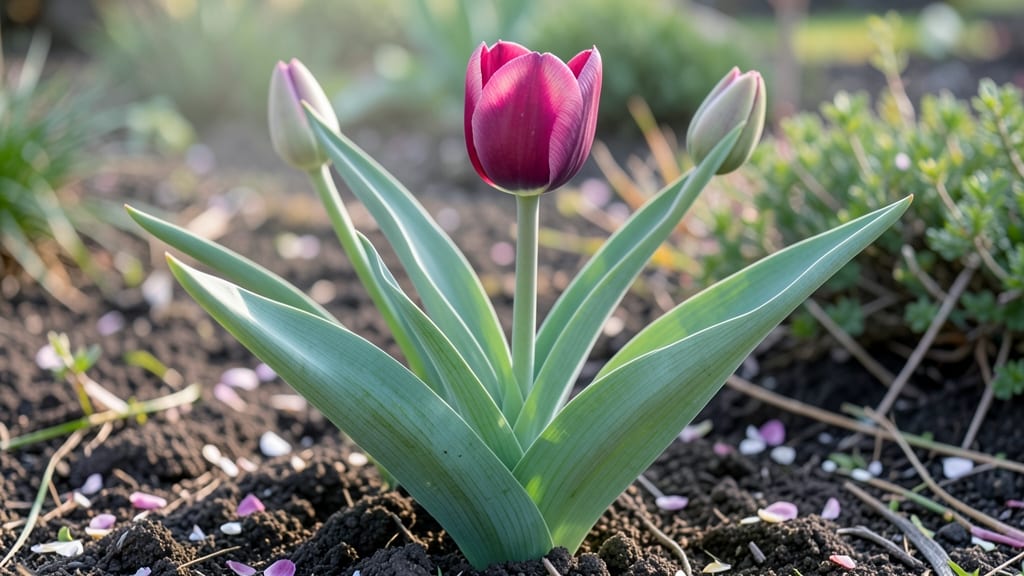
Understanding tulip leaf shape helps identify species, as their foliage ranges from narrow, lance-shaped leaves with serrated edges to broader, straighter forms. Early-season bloomers tend to have thinner leaves, while late varieties develop wider, more rounded foliage as they grow.
Tulip leaves aren't just decorative—they're a key clue to the plant's identity. 🌱 The classic lance-shaped leaves of Tulipa gesneriana (the most common garden tulip) are often mistaken for grass, but their slightly serrated edges and smooth texture set them apart.
Meanwhile, Darwin Hybrid varieties often have broader, straighter leaves that grow taller, sometimes reaching 2 feet in height.
What's fascinating is how leaf shape evolves: early bloomers like Tulipa fosteriana start with narrow foliage, but as the plant matures, the leaves widen significantly, sometimes developing a bluish-green tint that's a dead giveaway for experienced growers.
For gardeners, leaf shape serves as a diagnostic tool—especially when flowers aren't yet visible. The Parrot Tulip group, known for its ruffled petals, often has particularly broad, almost oval-shaped leaves, while species tulips like Tulipa greigii tend to have hairy, linear leaves that clump at the base.
Paying attention to these details can help you distinguish between similar-looking varieties or even spot early signs of disease, like yellowing or curling, which can indicate fungal issues or nutrient deficiencies.
💡 In This Article
- How Tulip Leaf Morphology Differs by Species
- Identifying Tulip Varieties by Leaf Traits
How tulip leaf morphology differs by species
The botanical diversity of tulip leaves begins with their fundamental structure. Most garden tulips (Tulipa gesneriana) produce lance-shaped leaves that are typically 3-6 inches long and ½-1 inch wide, tapering to a point at the tip.
These leaves grow in a basal rosette pattern, meaning they all emerge from the ground in a circular arrangement before the flower stalk appears. The edges are usually smooth or have very fine serrations—almost like a delicate sawtooth pattern—though this can vary based on sunlight exposure and soil conditions.
What sets species tulips apart is their leaf texture and arrangement. For example, Tulipa greigii features hairy, linear leaves that grow in tight clusters at the base, creating a fuzzy appearance that distinguishes it from smoother varieties.
Meanwhile, Tulipa fosteriana—known for its early blooming—develops broader, more leathery leaves that can reach 12 inches in length, often with a distinctive blue-green hue due to higher chlorophyll content.
This color variation occurs because these species evolved in regions with intense sunlight, where deeper pigments help protect the leaves from UV damage.
The growth pattern of tulip leaves also reveals clues about the plant's life cycle. Early-season bloomers like Tulipa tarda produce narrow, grass-like leaves that appear in late winter, while late varieties such as Tulipa clusiana develop wider foliage only after the flower has already bloomed.
This delayed leaf expansion is an adaptation to conserve energy during colder months, ensuring the plant has enough reserves to produce both flowers and foliage in spring. 🌱 The leaf width often correlates with the plant's height—taller varieties like Darwin Hybrids have proportionally broader leaves to support their 2-3 foot stems.
Another fascinating variation lies in the leaf's surface. Some species, like Tulipa turkestanica, have slightly waxy coatings that make their leaves appear slightly glossy, a trait that helps reduce water loss in arid climates. In contrast, garden hybrids often have matte finishes due to selective breeding for ornamental appeal.
These surface differences can also affect how leaves interact with pests—waxy leaves, for instance, are less appealing to aphids, which prefer smoother surfaces for feeding.
Seasonal changes further complicate the picture. Tulip leaves undergo a process called senescence after flowering, where they gradually yellow and wither.
However, the rate of this decline varies by species: Tulipa fosteriana leaves may persist for 6-8 weeks after blooming, while Tulipa gesneriana leaves often die back within 3-4 weeks.
This difference is tied to the plant's energy allocation—species that store more nutrients in their bulbs (like fosteriana) can afford to maintain foliage longer to maximize photosynthesis.
For gardeners, understanding these morphological differences is crucial for identification. A leaf width-to-length ratio of 1:5 or greater often indicates a species tulip, while ratios closer to 1:3 suggest a hybrid.
Additionally, the angle at which leaves emerge from the stem—ranging from 45° to 90°—can further narrow down the variety. For instance, Parrot Tulips often have leaves that spread at wider angles, creating a more open rosette compared to the tighter clusters of Darwin Hybrids.