
Landscaping
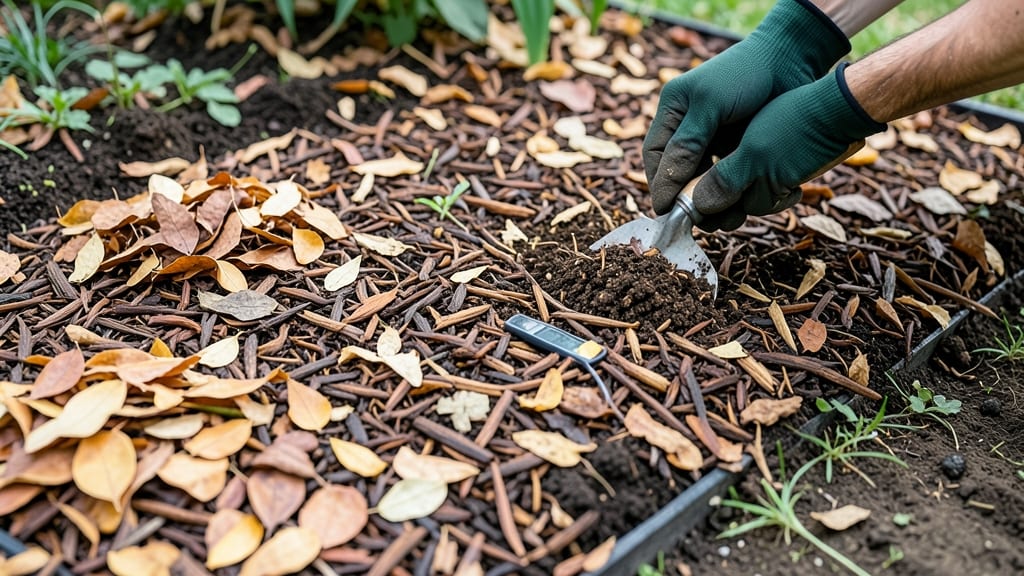
Leaf mulch looks like finely shredded or whole decomposed leaves, ranging from dark brown to black in color, with a soft, crumbly texture that resembles damp soil or wood chips. It breaks down slowly, creating a spongy layer over garden beds.
Leaf mulch transforms from its original leaf form into a rich, earthy material that feels almost like a damp, crumbly sponge. 🌿 When freshly applied, it might still resemble shredded autumn leaves, but as it decomposes, it darkens and softens—almost like compost mixed with soil.
The key difference from other mulches is how it gradually blends into the ground, enriching soil without leaving visible chunks behind.
Think of it as nature's slow-release fertilizer: the breakdown process makes it ideal for garden beds where you want to improve soil health over time. Unlike wood chips or straw, leaf mulch doesn't maintain its original shape—it becomes part of the ecosystem rather than just covering it.
💡 In This Article
- How Leaf Mulch Differs From Other Organic Mulches
- Identifying Quality Leaf Mulch for Your Garden
How leaf mulch differs from other organic mulches
Leaf mulch stands out from other organic mulches like straw or wood chips because of its crumbly, soil-like texture that evolves over time. While straw remains fibrous and straw-like, and wood chips stay chunky, leaf mulch softens into a dark brown to black, almost composty material.
This transformation happens due to microbial activity breaking down cellulose in the leaves, which releases nutrients into the soil.
One key difference is decomposition speed: leaf mulch breaks down 30-50% faster than wood chips but slower than grass clippings. Fresh leaf mulch may still look like shredded leaves, but after 6-12 months, it becomes nearly indistinguishable from soil.
The moisture content also plays a role—damp leaf mulch feels like a sponge, while dry versions become brittle and powdery. 🌱
Color is another telltale sign: aged leaf mulch darkens to near-black due to humification (the process where organic matter turns into humus). Compare this to straw, which stays light tan, or wood chips, which retain their wood color.
The breakdown process also makes leaf mulch less likely to clump than grass clippings, which can mat down tightly.
Texture-wise, leaf mulch creates a fine, almost silty layer when fully decomposed, unlike the coarse texture of wood chips. This makes it ideal for garden beds where you want soil enrichment without visible mulch remnants.
The microbial activity also means it warms up faster in spring, giving plants an early nutrient boost.
Consider this comparison for clarity:
- Leaf mulch: Darkens over time, becomes soil-like, crumbly texture
- Wood chips: Maintains wood color, stays chunky, decomposes slowly
- Straw: Remains fibrous, light color, breaks down quickly
- Grass clippings: Green initially, mats down, decomposes fastest
What most gardeners don't realize is how leaf mulch's porous structure improves soil aeration while retaining moisture—unlike dense mulches that can suffocate roots. This makes it perfect for perennial beds where long-term soil health matters most. 🌿