
Pests and Diseases
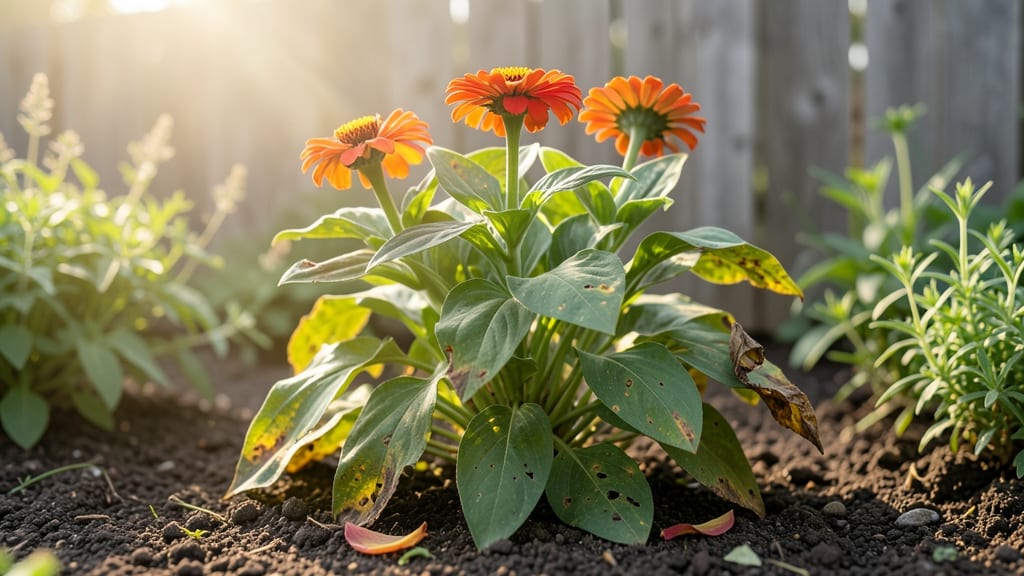
Those black spots causing zinnia leaf damage aren’t just unsightly—they’re fungal spots stealing your plants’ energy. 🌱 I’ve battled this exact problem in my own garden, and copper spray isn’t just a cure—it’s a game-changer for stopping the spread before your blooms fade to brown.
The damage starts small: tiny black or brown dots that grow into larger lesions, often with yellow halos. Overwatering, crowded plants, or humid afternoons create the perfect storm for fungal spores.
But here’s the good news: copper spray disrupts the fungus’s life cycle at the cellular level, giving your zinnias a fighting chance. Within 7-10 days of treatment, you’ll see new growth pushing through unaffected.
The leaves stay vibrant, the stems stay strong, and your zinnias rebound with bold, healthy blooms instead of struggling survivors. The key is catching it early—before the spots merge into a full-blown infection. Works for powdery mildew, rust, and even bacterial spot too.
Let’s get those plants back to their showstopping best before the season slips away.
Root Causes Of Zinnia Leaf Issues
Zinnia leaf damage isn’t just random bad luck—it’s usually a sign your plants are under stress from specific, often preventable, factors. Understanding the why behind the damage is the first step to fixing it.
Below, we break down the most common culprits, from fungal invaders to environmental stressors, with clear explanations of how they attack your zinnias—and what you can do to stop them.
Fungal diseases like Alternaria leaf spot and powdery mildew are the sneakiest zinnia leaf destroyers. These pathogens thrive in warm, humid conditions and spread via spores, often carried by wind, water, or even your gardening tools.
- Alternaria leaf spot: This fungus creates dark, concentric spots with yellow halos on leaves. It attacks through wounds (like from hail or pruning) and spreads rapidly in wet weather. Why it happens: The fungus Alternaria alternata releases enzymes that break down leaf cell walls, causing tissue death and premature leaf drop.
- Powdery mildew: A white, powdery coating on leaves? That’s Erysiphe cichoracearum feasting on your zinnias. It blocks sunlight, stunts growth, and weakens plants. Why it happens: The fungus grows best in temperatures between 60–80°F (15–27°C) and low airflow, creating a cozy environment for spore germination.
💡 Pro Tip: Fungal spores love moisture—water zinnias early in the day so leaves dry quickly. Avoid overhead watering, and space plants for airflow to discourage fungal growth.
Insects like aphids, spider mites, and Japanese beetles don’t just nibble—they inject toxins and transmit viruses while feeding. Their damage often looks like holes, stippling (tiny white dots), or distorted growth.
- Aphids: These sap-sucking pests cluster on undersides of leaves, leaving behind sticky honeydew (which attracts sooty mold). Why it happens: Aphids inject saliva containing enzymes that disrupt plant cell function, causing leaves to curl, yellow, or wilt.
- Spider mites: Too small to see without a magnifier, these arachnids create fine webbing and cause bronzing or silvering on leaves. Why it happens: They thrive in dry, hot conditions (above 85°F/30°C) and pierce cells to suck out chlorophyll, leading to weakened, discolored foliage.
- Japanese beetles: Adults chew irregular, ragged holes in leaves, while larvae (grubs) damage roots. Why it happens: Their mandibles are designed to crush plant tissue, and they target stressed or overwatered zinnias first.
💡 Pro Tip: Inspect leaves daily under bright light. A strong blast of water can knock off aphids, while neem oil or insecticidal soap disrupts spider mite life cycles.
Zinnias are tough, but extreme or inconsistent conditions can push them past their limits. Heat, cold, or poor soil can trigger leaf damage that looks like disease or pest activity—but it’s actually physiological stress.
- Overwatering or poor drainage: Waterlogged soil cuts off oxygen to roots, leading to yellowing leaves (chlorosis) and wilting. Why it happens: Anaerobic conditions trigger root rot (Phytophthora or Pythium fungi), which release toxins that travel upward, damaging foliage.
- Underwatering or drought stress: Edges of leaves turn crispy and brown—a classic sign of desiccation. Why it happens: Plants close stomata (pores) to retain moisture, but this halts nutrient uptake, causing leaf burn and stunted growth.
- Temperature swings: Frost or sudden heat waves cause cold damage (blackened, mushy leaves) or heat stress (bleached or scalded foliage). Why it happens: Cells rupture in cold or denature proteins in heat, disrupting photosynthesis and leading to rapid leaf collapse.
💡 Pro Tip: Use mulch to regulate soil temperature and moisture. For heat stress, provide afternoon shade with shade cloth (30–50% coverage).
Yellowing, stunted, or purplish leaves? Your zinnias might be hungry. Specific nutrient deficiencies manifest in predictable patterns on leaves, often starting with the oldest foliage.
| Deficiency | Leaf Symptoms | Why It Happens |
|---|---|---|
| Nitrogen (N) | Pale yellow leaves (starting at base), stunted growth | Nitrogen is critical for chlorophyll. Without it, leaves can’t produce enough protein or energy, leading to uniform yellowing. |
| Potassium (K) | Brown or yellow edges ("scorch"), weak stems | Potassium regulates water and disease resistance. A deficiency disrupts cell membrane function, causing leaf edges to dry out. |
| Magnesium (Mg) | Interveinal yellowing (between veins), starting on older leaves | Magnesium is central to chlorophyll. Its absence causes leaves to lose green pigment between veins first. |
| Iron (Fe) | Whole-leaf yellowing (chlorosis) with green veins | Iron helps form chlorophyll. In alkaline soils, iron becomes unavailable to roots, even if it’s present. |
💡 Pro Tip: Test your soil every 2–3 years. For quick fixes, use Epsom salt (magnesium sulfate) for Mg deficiencies or chelated iron for chlorosis in alkaline soils.
Now that you know the why, the next step is action. But first—have you checked for Alternaria spots or aphid clusters? A little detective work now saves your zinnias later! 🕵️♂️🌱
Quick Fixes for Zinnia Leaf Issues
Zinnia leaf damage can be frustrating, but with the right approach, your plants can bounce back stronger than ever! Below are targeted solutions for common problems like fungal spots, pests, and environmental stress—plus tips to keep your zinnias thriving. Let’s get your garden back to vibrant health!
If your zinnias are showing dark spots, yellowing, or powdery mildew, fungal infections are likely the culprit. Copper-based fungicides are a powerful, organic solution that disrupts fungal spores without harming your plants.
How to Treat It:
- 🔥 Choose the Right Spray
- Use a copper fungicide (like copper sulfate or copper hydroxide). Look for USDA-approved organic options for a chemical-free approach.
- Pro Tip: 💡 Dilute the spray according to package instructions—too strong can damage leaves!
- 👨🍳 Apply at the Right Time
- Best time: Early morning or late afternoon (avoid direct sunlight to prevent leaf burn).
- Frequency: Spray every 7–10 days until the issue clears, then once monthly as prevention.
- 🌡️ Improve Airflow & Hygiene
- Space plants 12–18 inches apart to reduce humidity buildup.
- Remove infected leaves immediately (don’t compost them—dispose of them in the trash).
- Water at the base (not overhead) to keep foliage dry.
- ✨ Boost Plant Immunity
- Neem oil spray (1 tsp neem oil + 1 tsp mild soap per quart of water) can be alternated with copper spray for extra defense.
- Compost tea (homemade or store-bought) strengthens roots and resistance.
If your zinnias have holes, chewed edges, or sticky residue, pests like aphids, spider mites, or Japanese beetles are likely to blame.
How to Treat It:
- 🔪 Manual Removal (For Small Infestations)
- Aphids/spider mites: Blast them off with a strong stream of water from a hose.
- Japanese beetles: Handpick them (drop them in soapy water to kill them).
- 🍳 Natural Pest Repellents
- Insecticidal soap (mix 1 tbsp mild soap + 1 quart water) – spray directly on pests.
- Neem oil spray (also repels eggs and larvae).
- Diatomaceous earth (food-grade powder) – sprinkle around the base (reapply after rain).
- 🌿 Companion Planting
- Plant marigolds, basil, or nasturtiums nearby to deter pests naturally.
- Garlic or chili pepper spray (blend 2 cloves garlic + 1 tbsp cayenne + 1 quart water; strain and spray) can act as a deterrent.
- 🚫 Prevent Future Attacks
- Row covers (lightweight fabric) can block flying pests like beetles.
- Encourage beneficial insects (ladybugs, lacewings) by planting dill, fennel, or cosmos.
If leaves are bleached, crispy, or wilting despite proper watering, your zinnias might be struggling with heat stress or sun scorch.
How to Fix It:
- 🌳 Provide Shade (Temporarily)
- Use shade cloth (30–50%) during peak afternoon sun (12 PM–4 PM).
- Mulch heavily (2–3 inches) to keep roots cool and moist.
- 💧 Adjust Watering Habits
- Water deeply 2–3 times per week (early morning) instead of daily shallow watering.
- Avoid wetting leaves to prevent fungal growth from excess moisture.
- 🌱 Choose Heat-Tolerant Varieties
- If your area has intense heat, opt for heat-resistant zinnias like ‘Benary’s Giant’ or ‘Profusion.’
- 🎯 Long-Term Solutions
- Plant in partial shade (especially in hot climates).
- Use reflective mulch (like white gravel) to bounce back sunlight.
Even if the damage is severe, don’t give up! These quick recovery steps can help your plants rebound:
- Prune damaged foliage (cut back to healthy growth) to redirect energy.
- Fertilize lightly with a balanced, water-soluble fertilizer (10-10-10) to support regrowth.
- Deadhead spent blooms to encourage new flowers and reduce stress.
- Monitor daily – catch new issues early before they spread!
Remember: 🌟 Prevention is key! Regular checks, proper spacing, and good garden hygiene will keep your zinnias lush, disease-free, and blooming beautifully all season.
Frequently asked questions
What do those tiny black spots on my zinnia leaves mean?
Those are likely Alternaria leaf spot, a common fungal disease that thrives in warm, wet conditions. The spots often have yellow halos and can spread quickly if left untreated. Remove infected leaves immediately and apply copper fungicide every 7-10 days for prevention.
Why are my zinnia leaves turning yellow?
Yellowing leaves usually indicate either a nutrient deficiency (like nitrogen or magnesium) or overwatering. Check the pattern: yellowing between veins suggests magnesium deficiency, while uniform yellowing points to nitrogen. Test your soil and adjust watering—zinnias prefer 1-1.5 inches of water per week.
Can I still save my zinnias if half the leaves are damaged?
Prune away the damaged foliage to redirect energy to healthy growth. Apply a balanced fertilizer (10-10-10) and monitor for pests. With proper care, zinnias often rebound quickly—just keep an eye out for new signs of stress or infection.
How do I tell if my zinnia damage is from pests vs. disease?
Pest damage often shows as holes, chewed edges, or sticky residue (honeydew from aphids). Disease damage appears as spots, powdery coatings, or discoloration. Inspect leaf undersides with a magnifying glass—pests leave behind tiny webs or insects, while diseases show fungal growth.
Will copper spray harm beneficial insects like bees?
When used correctly, copper fungicides are selective and won't harm bees directly. Apply in early morning or late afternoon when bees are less active, and avoid spraying flowers. For extra safety, use neem oil as an alternative treatment that's bee-friendly.