
Diseases
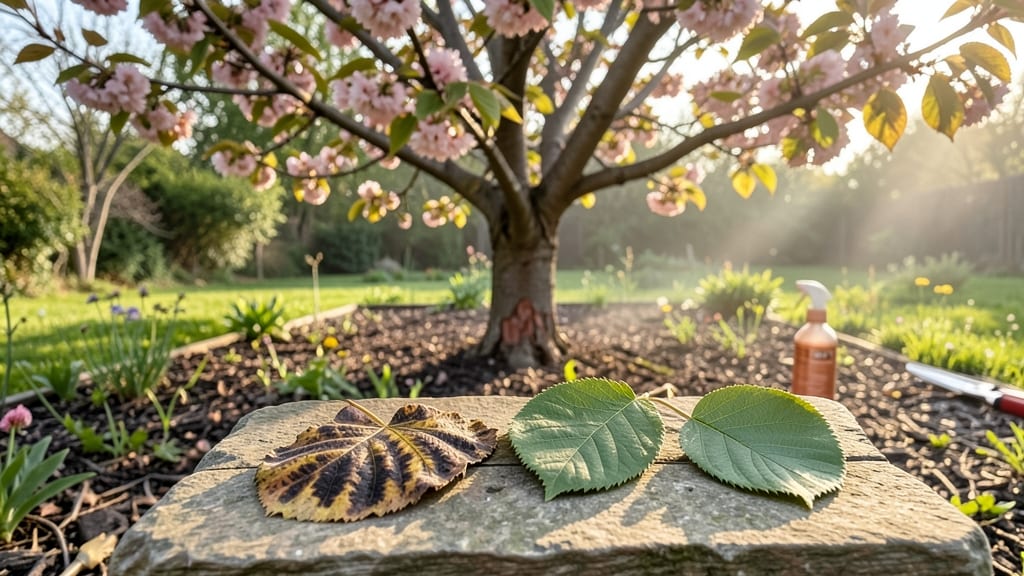
Your cherry tree’s leaves are turning brown and spotted, and you’re staring at what looks like a botanical crime scene. 🌿 Cherry tree leaf diseases like leaf spot, powdery mildew, and bacterial canker don’t just ruin the look—they weaken your tree’s health over time.
The good news? Most can be stopped before they spread, and I’ll walk you through the exact symptoms, causes, and treatments to save your tree.
Leaf spots show up as dark, irregular patches with yellow halos, while powdery mildew coats leaves in a white, flour-like dust. Bacterial canker starts with sunken, oozing cankers on branches and leaves that curl or drop early.
The culprits? Fungal spores, bacteria, or even poor air circulation—often worsened by wet foliage or overcrowded branches. The key to stopping them is acting fast, before the disease moves from leaves to fruit or wood.
You’ll learn how to prune infected branches correctly, apply organic sprays like neem oil or copper fungicide, and prevent future outbreaks with proper spacing and watering habits.
Within weeks, your tree can bounce back with fresh, disease-free foliage—no more wilting or unsightly spots. Let’s get your cherry tree back to its vibrant best.
Whether you’re dealing with a single branch or the whole tree, these steps work for sweet, tart, and ornamental cherries alike. The sooner you act, the easier it is to save your harvest—and your tree’s long-term health. Here’s how to diagnose and treat it right.
Root Causes of Leaf Trouble
Understanding why cherry tree leaves develop diseases is the first step to preventing and treating them effectively. These issues rarely appear out of nowhere—they’re usually the result of environmental stress, microbial invaders, or poor cultural practices.
Let’s break down the key culprits behind cherry tree leaf diseases, so you can address them before they escalate.
🍄 Fungi are the most common cause of cherry tree leaf diseases, thriving in moist, warm conditions. These microscopic organisms exploit weak spots in leaves, stems, or bark to establish infections. Here’s how they strike:
- Overhead Watering or Poor Drainage Fungi like Botrytis (gray mold) and Monilinia (brown rot) spread via water droplets that linger on leaves. When water pools on foliage—especially during late summer or early fall—it creates the perfect breeding ground.
Poor soil drainage exacerbates the problem by keeping roots waterlogged, weakening the tree’s defenses.
- Wet, Humid Weather Prolonged humidity (above 75% for 24+ hours) triggers fungal spores to germinate. Diseases like leaf spot (Cercospora or Alternaria) flourish in these conditions, creating dark, irregular patches on leaves. Rainy springs or summers without airflow (e.g., dense foliage or shaded trees) accelerate outbreaks.
- Weakened Tree Health Stressed trees—due to drought, nutrient deficiencies (especially nitrogen or potassium), or physical damage—are prime targets. Fungi capitalize on the tree’s inability to produce protective compounds like phenolics or chitinases, which normally repel pathogens.
🦠 Bacteria move quickly, often through wounds, splashing water, or even insects. Unlike fungi, bacterial diseases like bacterial leaf spot (Pseudomonas syringae) or canker (Pseudomonas mors-prunorum) can kill tissue in days. Here’s how they gain a foothold:
- Injuries or Pruning Wounds Cuts from pruning, hail, or pest damage create entry points for bacteria. If tools aren’t sterilized (e.g., with 70% isopropyl alcohol), they can transfer pathogens between trees. Always prune during dry weather to minimize bacterial spread.
- High Rainfall or Wind-Driven Rain Bacteria hitchhike on raindrops, splashing from infected leaves to healthy ones. Wind can also disperse bacterial cells over long distances. Trees in low-lying areas or near irrigation systems are at higher risk.
- Excess Nitrogen Fertilizer While nitrogen promotes lush growth, too much softens leaf tissue, making it easier for bacteria to penetrate. Balance is key—use a soil test to guide fertilization and avoid rapid-release fertilizers in late summer.
🌡️ Leaf diseases often arise when cherry trees are pushed beyond their limits. These non-infectious factors weaken defenses, making them vulnerable to secondary infections:
- Extreme Temperature Swings Sudden cold snaps (below 20°F) or heatwaves (above 90°F) shock trees, reducing their ability to produce protective cuticular wax on leaves. This wax layer acts as a barrier against pathogens—when damaged, leaves become susceptible to leaf scorch or anthracnose.
- Poor Air Circulation Dense canopies or trees planted too closely together trap moisture and heat, creating a microclimate ideal for fungal growth. Prune to open the canopy and space trees 15–20 feet apart for airflow.
- Nutrient Imbalances Deficiencies in magnesium (interveinal chlorosis) or iron (yellowing between veins) weaken leaves, making them easier targets. Overwatering can also leach nutrients, while underwatering causes physiological drought stress, both of which suppress immune responses.
🐛 While pests like aphids, mites, or Japanese beetles don’t cause diseases directly, they damage leaves, creating wounds that pathogens exploit. Here’s how they contribute:
- Sap-Sucking Insects (Aphids, Scale) These pests inject toxins and remove plant sap, weakening leaves. Their honeydew secretions create a sticky film that attracts sooty mold (Capnodium), a fungal disease that blocks sunlight and stunts growth.
- Chewing Insects (Caterpillars, Beetles) Larvae from tent caterpillars or borers tear through foliage, leaving ragged edges and entry points for bacteria or fungi. Early intervention (e.g., neem oil or Bacillus thuringiensis) can prevent secondary infections.
- Fungal Vectoring by Insects Some fungi, like powdery mildew, rely on insects (e.g., thrips) to spread their spores. If your tree has white, powdery patches, check for tiny insects crawling on the undersides of leaves.
👨🌾 Sometimes, well-meaning actions backfire. These common gardening mistakes create conditions for leaf diseases:
- Overhead Irrigation Watering from above keeps leaves wet for hours, promoting fungal spores. Switch to drip irrigation or soaker hoses to deliver water at the base.
- Ignoring Leaf Debris Fallen leaves infected with Monilinia (brown rot) or Cercospora (leaf spot) can overwinter in mulch or soil, reinfecting the tree next season. Rake and remove debris in autumn, and avoid thick mulch layers near the trunk.
- Using Contaminated Tools or Soil Reusing pruners, stakes, or pots without cleaning them can spread pathogens. Disinfect tools with 1 part bleach to 9 parts water before and after use. If repurposing soil from another garden, solarize it (cover with plastic for 4–6 weeks) to kill pathogens.
🌳 Not all cherry trees are equally resistant. Sweet cherries (Prunus avium) are more prone to brown rot and leaf spot than sour cherries (Prunus cerasus), which have some natural resistance.
Even within varieties, young trees or those grafted onto susceptible rootstocks (like Mahaleb) may struggle. If you’re planting new trees: - Choose disease-resistant cultivars like ‘Stella’ (sweet cherry) or ‘Montmorency’ (sour cherry). - Avoid planting near susceptible stone fruits (peaches, plums), which share pathogens.
Fixing Fungal and Bacterial Leaf Troubles
Now that you’ve identified the culprit behind your cherry tree’s leaf woes, it’s time to take action! Whether it’s powdery mildew, leaf spot, or bacterial canker, each issue requires a targeted approach to restore your tree’s health.
Below, we’ll break down practical, step-by-step solutions for the most common cherry tree leaf diseases—plus prevention tips to keep future outbreaks at bay.
Fungal infections thrive in damp, shaded conditions, but they’re not invincible. Here’s how to banish them for good:
🔥 Step 1: Prune for Better Airflow
Fungi love crowded, humid spaces—thin out dense branches to improve airflow.
Remove: - Crossing or rubbing branches (use clean, sharp pruners). - Dead or heavily infected leaves (bag and dispose of them—don’t compost!). - Pro tip: 💡 Prune in early morning when fungi are least active, and sterilize tools with rubbing alcohol between cuts.
🍳 Step 2: Apply Fungicidal Sprays (Organic or Chemical)
For powdery mildew or leaf spot, act fast with these effective treatments:
| Treatment | How to Use | Best For |
|---|---|---|
| Neem oil spray | Mix 1 tbsp neem oil + 1 tsp mild soap + 1 quart water. Spray weekly until symptoms fade. | Early-stage mildew, mild infections |
| Baking soda solution | Combine 1 tbsp baking soda + 1 tsp oil + 1 gallon water. Spray every 7–10 days. | Powdery mildew prevention |
| Copper fungicide | Follow label instructions (e.g., Bordeaux mixture or copper sulfate). Apply at first sign of leaf spot. | Severe fungal infections |
| Sulfur dust | Dust lightly on leaves (avoid direct sun for 24 hours). Repeat every 2 weeks. | Powdery mildew in orchards |
⚠️ Warning: Avoid chemical fungicides like chlorothalonil if bees are active—opt for neem or sulfur instead.
🌡️ Step 3: Adjust Care for Fungal Resistance
Fungi return when conditions stay favorable. Break the cycle with these habits:
- Water at the base (not overhead) to keep leaves dry.
- Space trees 6–10 feet apart for optimal sunlight and airflow.
- Mulch properly: Use 2–3 inches of organic mulch (wood chips, straw) but keep it 6 inches away from the trunk to prevent rot.
Bacterial infections like bacterial canker or blight demand aggressive action—once they set in, they’re harder to reverse.
👨🍳 Step 1: Sterilize and Prune Infected Areas
- Cut out infected branches 6–12 inches below the canker (bacteria can hide in the bark).
- Burn or bag infected debris immediately—do not leave it in the yard.
- Sterilize tools between cuts with bleach (1 part bleach : 10 parts water) or rubbing alcohol.
🔪 Step 2: Use Copper-Based Bactericides
Copper disrupts bacterial cell walls—it’s one of the few FDA-approved treatments for bacterial canker:
- Copper fungicide (e.g., Copper Soap or Fixed Copper): Apply every 10–14 days during wet seasons.
- Pro tip: 🌡️ Timing matters—spray at dawn or dusk to avoid leaf burn from UV exposure.
⏰ Step 3: Prevent Recurrence with Sanitation
Bacterial canker spreads via rain splash and tools. Stop it in its tracks with:
- Remove and destroy all infected leaves/branches year-round.
- Avoid overhead watering—use drip irrigation instead.
- Plant resistant varieties (e.g., Montmorency cherries are less prone to canker).
The best defense? A healthy, resilient cherry tree. Follow these long-term strategies to minimize disease risk:
✅ 💡 Fertilize wisely: Use a balanced 10-10-10 fertilizer in early spring—over-fertilizing stresses trees. ✅ 🎯 Monitor regularly: Check leaves weekly for early signs (yellowing, spots, powdery coating). ✅ ✨ Boost immunity: Apply compost tea or kelp meal to strengthen natural defenses. ✅ 🌿 Rotate treatments: Don’t rely on one fungicide—rotate between neem, copper, and sulfur to prevent resistance.
Final Reminder: 🚨 Act fast! The sooner you treat leaf diseases, the less damage your cherry tree will suffer. With proactive care, your tree can bounce back—and stay disease-free for years to come!
Frequently asked questions
What’s the difference between brown spots and powdery mildew on cherry leaves?
Brown spots usually indicate leaf spot diseases (like Cercospora or Alternaria)—they appear as dark, irregular patches often with yellow halos. Powdery mildew, however, looks like a white, flour-like coating on leaf surfaces, usually starting on the undersides. The key difference? Leaf spots cause dead tissue, while mildew smothers leaves but doesn’t kill them immediately.
Can I still harvest fruit from a tree with leaf diseases?
It depends on the disease! For fungal infections like powdery mildew, the fruit may still be safe to eat (just wash thoroughly). But with bacterial canker or brown rot, infected fruit should be removed immediately—these diseases can spread to the fruit and make it unsafe. Always inspect for oozing cankers or mushy spots before harvesting.
How often should I spray fungicides on my cherry tree?
For preventive care, spray every 7–14 days during wet seasons (spring/fall) using neem oil or copper fungicide. If treating an active infection, apply weekly until symptoms disappear, then switch to biweekly maintenance sprays. Always spray in the early morning or evening to avoid leaf burn from UV exposure.
Will pruning my cherry tree help prevent leaf diseases?
Pruning improves airflow (fungi hate dry conditions) and removes infected branches before diseases spread. Focus on thinning dense areas, cutting out crossing branches, and removing dead/diseased leaves. Just remember: sterilize tools between cuts with rubbing alcohol to avoid spreading pathogens.
Are there any organic ways to strengthen my cherry tree’s resistance?
Yes! Boost your tree’s natural defenses with compost tea (applied as a foliar spray), kelp meal (rich in potassium), or mycorrhizal fungi (beneficial soil microbes). Also, ensure your tree gets balanced nutrition—avoid over-fertilizing with nitrogen, which weakens leaves. Healthy soil = healthier tree!