
Pests and Diseases
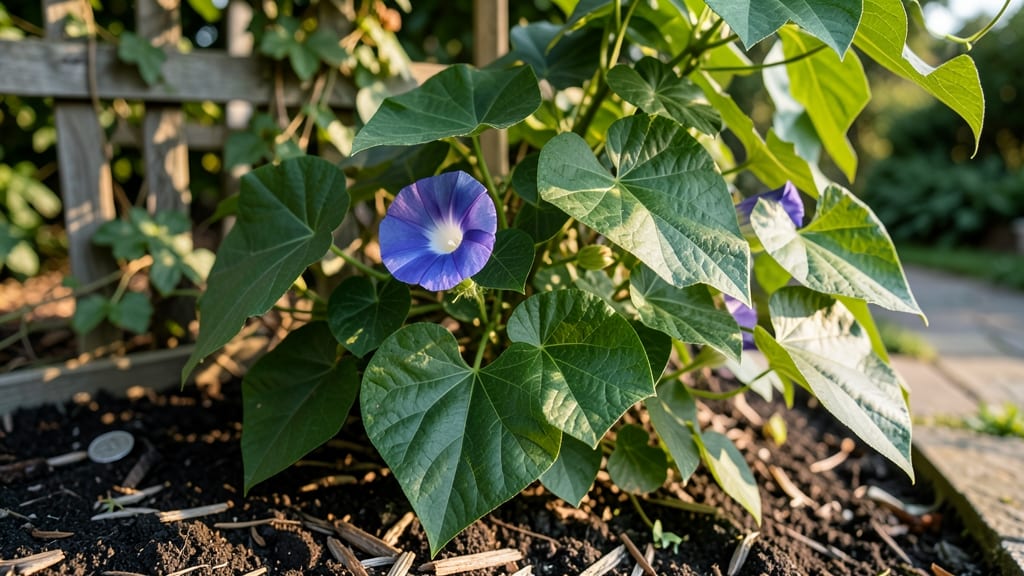
Morning glory leaf identification looks like heart-shaped confetti when everything’s right—but those same leaves can turn into a detective puzzle when discoloration or spots appear. 🌿 The key to saving your vines starts with knowing what’s normal (like the classic deep green, lobed leaves) and what’s not (yellowing, brown patches, or weird textures), because fungal diseases like powdery mildew or downy mildew mimic natural stress.
Most beginners confuse morning glory with bindweed or sweet potato vine, but there’s a tell: morning glory leaves have three to five deep lobes (like a maple leaf’s simpler cousin) and grow in a spiral pattern up the stem.
Snap a photo of the whole plant—stem hairs, leaf arrangement, and flower shape (trumpet-shaped, right?) seal the deal. When you spot yellowing or brown spots, check the underside of leaves first—fungal spores love hiding there.
Natural discoloration (from heat or water stress) usually starts at the edges, while fungal issues spread inward like a creepy vine. The earlier you catch it, the easier it is to treat with neem oil or copper spray.
Why this matters: misdiagnosing morning glory leaves could mean treating the wrong problem (or worse, spreading an invasive species if you’re dealing with bindweed). Grab a magnifying glass, and let’s get identifying!
Understanding Leaf Changes in Morning Glories
Morning glory leaves can develop unusual patterns, discoloration, or spots that often leave gardeners puzzled. To accurately identify whether these changes stem from fungal diseases or natural discoloration, it’s essential to understand the underlying causes. Here’s a breakdown of why these issues occur—and how to tell them apart.
Plants, including morning glories, are sensitive to their surroundings. When conditions stray from ideal, leaves react with visible signs of distress. Common environmental triggers include:
- Extreme Temperature Fluctuations Morning glories thrive in warm, consistent temperatures (60–85°F).
Sudden cold snaps or heatwaves can shock the plant, leading to: - Yellowing (chlorosis) – Reduced chlorophyll production due to stress. - Brown or blackened edges – Cell damage from rapid temperature shifts. - Wilting or drooping – Temporary water imbalance in response to heat.
Actionable Tip: 🌡️ Mulch around the base to regulate soil temperature and protect roots from extreme swings.
- Poor Watering Practices Overwatering or underwatering disrupts nutrient uptake and oxygen flow to roots, causing:
- Yellow patches (underwatering) – Nutrient deficiency symptoms.
- Dark, mushy spots (overwatering) – Root rot spreading to leaves.
- Crispy, curled edges – Leaf tissue drying out from inconsistent moisture.
Pro Tip: ✨ Water deeply but infrequently—morning glories prefer 1–1.5 inches of water per week, including rainfall.
- High Humidity Without Airflow Stagnant, humid air creates a breeding ground for benign discoloration (e.g., anthocyanin buildup) or fungal spores.
Look for: - Purple or red tinges – Natural pigment changes in response to light stress (common in shade). - Powdery white residue – Early-stage fungal growth (e.g., powdery mildew).
Fix It: 💨 Prune nearby foliage to improve airflow and avoid overhead watering.
Fungal diseases thrive in moist, warm conditions and often mimic environmental stress symptoms. Key differences include:
| Symptom | Environmental Stress | Fungal Disease |
|---|---|---|
| Spot Shape | Irregular, often on edges | Circular, with defined borders |
| Spread Pattern | Starts at leaf tips/edges | Centers outward, often with a "target" look |
| Underside of Leaf | Usually clean | Fuzzy, powdery, or slimy spores |
| Plant System Impact | Affects only stressed leaves | Spreads to stems, buds, or entire plant |
Common Fungal Culprits:
- Powdery Mildew 🍄
- Cause: Erysiphe or Sphaerotheca fungi in high humidity (75%+).
- Signs: White, powdery patches (like dust) on upper leaf surfaces.
- Red Flag: Leaves may yellow and drop prematurely if untreated.
- Alternaria Leaf Spot
- Cause: Alternaria fungus from splashing water or poor drainage.
- Signs: Dark brown/black concentric rings (like a bullseye) with yellow halos.
- Red Flag: Spots merge into large necrotic areas if conditions persist.
- Downy Mildew
- Cause: Peronospora fungi in cool, wet conditions (50–75°F).
- Signs: Purple-gray fuzz on leaf undersides; yellowing on top.
- Red Flag: Affects young leaves first, stunting growth.
Prevention Tip: 🛡️ Apply copper fungicide preventatively if your area has a history of fungal outbreaks. Space plants 12–18 inches apart for airflow.
Not all leaf changes are cause for alarm! Morning glories may develop harmless (but unsightly) discoloration due to:
- Anthocyanin Pigmentation
- Why? Purple/red hues appear when leaves produce antioxidant pigments in response to:
- Low light (etiolation).
- Cold nights (below 50°F).
- Nutrient imbalances (e.g., too much phosphorus).
- How to Tell: No spots, no spores—just even coloring across the leaf.
- Why? Purple/red hues appear when leaves produce antioxidant pigments in response to:
- Nutrient Deficiencies
- Yellow between veins? → Nitrogen deficiency (common in fast-growing vines).
- Purple stems/veins? → Phosphorus or potassium lack (often in alkaline soils).
- Solution: 💡 Test soil pH (ideal: 6.0–7.0) and amend with compost or balanced fertilizer.
- Aging Leaves
- Older morning glory leaves may yellow and crisp naturally as the plant redirects energy to new growth. Check for:
- No new spots forming.
- Healthy lower leaves (disease starts at the top).
- Older morning glory leaves may yellow and crisp naturally as the plant redirects energy to new growth. Check for:
Key Takeaway: If the discoloration is spotted, spreading, or accompanied by wilting, lean toward fungal disease. If it’s even, purple, or localized to older leaves, it’s likely environmental or natural. Act fast for fungal issues—prevention (like proper spacing and fungicides) is easier than treatment!
Fixing Morning Glory Leaf Issues
If your morning glory vines are showing signs of distress—whether it’s suspicious spots, unusual discoloration, or chewed edges—don’t panic! Most problems have simple, effective fixes. Below, we break down the most common causes and the steps you can take to restore your plants to their vibrant best.
Prevention tips are included to keep future issues at bay.
If you’ve spotted yellowing, brown patches, or powdery white growth on your morning glory leaves, a fungal infection is likely the culprit. Here’s how to tackle it:
🔥 Remove Infected Leaves Immediately
- Snip off any leaves showing signs of disease (spots, mold, or discoloration) using clean, sharp scissors or pruning shears.
- Dispose of them in the trash—not your compost bin—to prevent reinfection.
🌡️ Apply Fungicide (Organic or Chemical)
- Organic options:
- Neem oil spray (1 tsp neem oil + 1 tsp mild soap + 1 quart water). Spray early in the morning or late evening to avoid burning leaves. 🌿
- Baking soda solution (1 tbsp baking soda + 1 quart water + a few drops of dish soap). Reapply every 7–10 days.
- Chemical options:
- Use a copper-based fungicide (like Bordeaux mixture) for severe infections. Follow label instructions carefully.
✨ Improve Airflow & Reduce Moisture
- Prune nearby plants to allow better airflow around your morning glory.
- Avoid overhead watering—water at the base instead to keep leaves dry.
- Space vines properly (3–4 feet apart) to prevent overcrowding.
If leaves are yellowing between veins (chlorosis), purpling, or stunted, your morning glory may be lacking essential nutrients. Here’s how to fix it:
💡 Soil Test First (If Possible)
- Grab a DIY soil test kit (available at garden centers) to check pH and nutrient levels. Morning glories prefer slightly acidic to neutral soil (pH 6.0–7.0).
🌱 Amend the Soil
- For nitrogen deficiency (pale yellow leaves):
- Add compost or well-rotted manure to the soil.
- Use a balanced fertilizer (10-10-10) or a fish emulsion for a quick boost.
- For phosphorus deficiency (dark green leaves with purple stems):
- Mix in bone meal or rock phosphate at planting time.
- For potassium deficiency (weak stems, yellow edges):
- Use a potassium-rich fertilizer (like greensand) or wood ash (sparingly).
🍎 Foliar Feed for Fast Results
- Mix 1 tbsp Epsom salt in 1 gallon of water (for magnesium deficiency) and spray on leaves.
- For iron deficiency (yellow new growth), use a chelated iron supplement.
Holes in leaves, sticky residue, or tiny webs? Pests like aphids, spider mites, or Japanese beetles are likely the problem. Here’s how to evict them:
🔪 Manual Removal (For Small Infestations)
- Handpick aphids or beetles and drop them into soapy water.
- Blast off spider mites with a strong stream of water from a hose.
🌿 Natural Pest Control
- Introduce beneficial insects:
- Ladybugs (eat aphids), lacewings (devour mites), or praying mantises (hunt beetles).
- Spray with insecticidal soap (mix 1 tbsp mild castile soap + 1 quart water) or neem oil (as above).
- Use diatomaceous earth (food-grade only) around the base of plants to deter crawling pests.
🛡️ Prevent Future Visits
- Install row covers early in the season to block beetles and other pests.
- Plant companion flowers like marigolds or nasturtiums nearby—they repel many garden pests.
- Rotate crops if you’re growing morning glories in containers or raised beds.
Once you’ve addressed the issue, these preventive measures will help your morning glory stay lush and disease-free:
- 💧 Water consistently—keep soil evenly moist but not soggy. Morning glories hate drought stress.
- ☀️ Provide partial shade in hot climates to prevent leaf scorch.
- 🌱 Mulch around the base with straw or shredded leaves to retain moisture and deter weeds.
- 🔄 Prune regularly to improve airflow and remove dead or diseased foliage.
With these solutions, your morning glory should bounce back in no time! 🌿💚 Most issues are reversible with quick action—so grab your shears, spray bottle, and a little patience, and get those leaves thriving again.
Frequently asked questions
How do I tell morning glory leaves apart from bindweed?
Morning glory leaves have 3-5 deep lobes (like a simplified maple leaf) with a spiral arrangement along the stem. Bindweed leaves are arrow-shaped with parallel veins and grow in pairs with a heart-shaped base. Another key difference: morning glory flowers are trumpet-shaped, while bindweed has small, white, pea-like blooms.
Why are my morning glory leaves turning yellow?
Yellowing can mean nitrogen deficiency (pale yellow between veins), overwatering (mushy yellow spots), or fungal disease (yellow with brown spots). Check the undersides of leaves for powdery white growth (powdery mildew) or dark rings (Alternaria). Start by adjusting watering and improving airflow.
Can morning glory leaves be toxic?
While morning glory leaves aren't highly toxic, some species contain lysergic acid amide (a mild hallucinogen) and may cause stomach upset if ingested in large amounts. The seeds are more dangerous. Always wear gloves when handling plants and keep them away from pets/children.
What's the best time of day to examine morning glory leaves?
Morning is ideal! Leaves are fully hydrated and any fungal spores or pest activity will be most visible. Check between 8-10am when dew has evaporated but before midday heat causes wilting. Use a magnifying glass for close inspection of leaf undersides.
How do I preserve morning glory leaves for identification?
Press leaves between absorbent paper with a heavy book for 1-2 weeks, then store in a herbarium sheet or sealed envelope. Include a note about leaf position (top/bottom of plant) and any visible damage. For digital records, take photos with a white background and include a scale reference (like a coin).