
Pests and Diseases
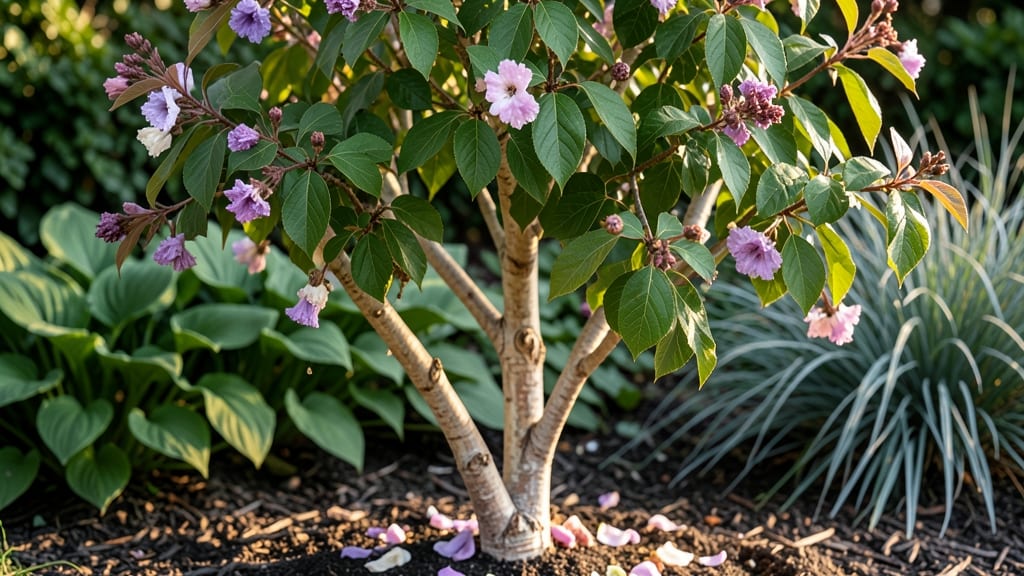
The identification of a crepe myrtle leaf is like reading nature’s own handiwork—long, lance-shaped, and covered in fine hairs that catch the light just right. 🌿 But when something’s wrong, those leaves tell the story: powdery white dust for mildew, dark spots for target spot disease, or sticky residue from aphids.
I’ve spent years comparing healthy foliage to troubled leaves, and the differences are striking once you know what to look for.
Healthy leaves are deep green, glossy on top, and have prominent parallel veins that run the length of the leaf. But watch for yellowing edges (nutrient issues), crinkled or curled leaves (pests like spider mites), or blackened veins (fungal infections).
The key is catching these early—before the whole tree looks like it’s been through a war.
Once you recognize the symptoms, solutions get easier. Powdery mildew? A baking soda spray works wonders. Target spot? Remove infected leaves and improve airflow. Aphids? A strong spray of water usually knocks them off. The goal is to save the leaves before the tree’s health takes a permanent hit.
This isn’t just about spotting problems—it’s about understanding the patterns. A crepe myrtle’s leaves are its voice, and learning to listen means you’ll keep your tree thriving for decades. Let’s break down what each symptom really means and how to fix it.
Understanding crepe myrtle leaf stressors
Crepe myrtles (Lagerstroemia spp.) are prized for their vibrant blooms and glossy foliage, but their leaves can reveal a lot about the plant’s health. When leaves develop unusual patterns, spots, or discoloration, it’s often a sign of underlying issues. Here’s why these problems occur—and what’s triggering them.
Crepe myrtles thrive in specific conditions, and when those needs aren’t met, their leaves react visibly.
- ❄️ Temperature Extremes Crepe myrtles are sensitive to frost damage (below 25°F) and heat stress (prolonged temperatures above 95°F). Cold snaps cause brown, crispy edges or blackened leaves, while extreme heat leads to yellowing (chlorosis) or premature leaf drop.
Young trees are especially vulnerable, as their root systems haven’t fully established.
- ☀️ Sunburn or Light Scorch While crepe myrtles love sunlight, intense afternoon sun without acclimation can scorch leaves, creating white or yellow patches (similar to sunburn on human skin).
This often happens when newly planted trees aren’t gradually introduced to full sun or when they’re planted in reflective surfaces (like light-colored pavement).
- 💧 Water Woes: Too Much or Too Little - Overwatering suffocates roots, leading to yellowing leaves, wilting, or fungal infections (like root rot). Poor drainage or compacted soil worsens this. - Underwatering causes brown, crispy leaf edges and leaf curl as the plant conserves moisture.
Deep watering (1–2 inches per week) is key, especially during droughts.
Fungi and bacteria exploit weak crepe myrtles, often entering through wounds or stressed foliage.
- 🍄 Powdery Mildew A white, powdery coating on leaves signals this common fungal disease, thriving in humid, shaded conditions. It weakens the plant by blocking sunlight, leading to yellowing and leaf drop. Overhead watering and dense foliage encourage its spread.
- 🍃 Leaf Spot Diseases Target spot (dark concentric rings) or anthracnose (irregular brown spots with yellow halos) appear when leaves stay wet for long periods. Fungal spores splash onto foliage during rain or irrigation, causing premature defoliation if untreated.
- 🔥 Bacterial Leaf Scorch Bacterial leaf scorch causes brown, crinkled edges and vein clearing (yellow veins). Bacteria (Xylella fastidiosa) clog the plant’s water-conducting vessels, disrupting nutrient flow. This disease spreads via insects (like spittlebugs) or contaminated tools.
Insects don’t just eat leaves—they inject toxins, spread diseases, and stress the plant.
- 🐛 Scale Insects and Mealybugs These sap-sucking pests cluster on leaf undersides, excreting sticky honeydew that attracts sooty mold (a black fungal growth). Infested leaves yellow, curl, or drop prematurely. Heavy infestations weaken the tree, making it susceptible to secondary infections.
- 🐞 Japanese Beetles These voracious chewers skeletonize leaves, leaving a lace-like pattern. Their feeding triggers stress responses, including leaf drop and stunted growth. Adult beetles emerge in late June–August, targeting healthy, lush foliage.
- 🕷️ Spider Mites Tiny but destructive, spider mites pierce cells to feed, causing stippling (tiny white/yellow dots) and webbing on leaf undersides. Severe infestations lead to bronzing (reddish leaves) and premature leaf fall, especially in hot, dry conditions.
Soil imbalances starve crepe myrtles, manifesting as specific leaf symptoms.
- 🟡 Chlorosis (Yellowing Leaves)
- Iron deficiency: Young leaves turn pale yellow while veins stay green (common in alkaline soils).
- Magnesium deficiency: Yellow patches between veins (older leaves first), leading to necrosis (dead tissue).
- Nitrogen deficiency: Overall pale green or yellow leaves, stunted growth, and fewer blooms.
- 🔴 Purple or Red Leaves Phosphorus deficiency causes deep purple or red hues, especially on undersides. This often occurs in cool soils or when organic matter is lacking.
- 🟢 Copper or Zinc Toxicity Over-fertilization with micronutrients can cause dark green, thickened leaves or interveinal chlorosis. Test soil before amending—crepe myrtles typically need low-maintenance, well-draining soil.
Pro Tip: 💡 Always inspect the undersides of leaves and new growth first—pests and early disease signs often hide there!
Fixing Crepe Myrtle Leaf Issues
Now that you’ve identified the culprit behind your crepe myrtle’s leaf troubles, it’s time to take action! Below are practical, step-by-step solutions tailored to common problems—from fungal infections to pest invasions—plus tips to keep your tree thriving long-term.
If your crepe myrtle leaves show powdery mildew, leaf spot, or tar spot, these fungi thrive in damp, shaded conditions. Here’s how to combat them:
🔥 Remove Infected Leaves
- 🍳 Step 1: Snip off yellowed, spotted, or moldy leaves with clean pruners.
Dispose of them in the trash (not compost)—fungi can spread through organic matter. - 👨🍳 Step 2: Prune for better airflow: Thin out dense branches to reduce humidity near the foliage. Aim for an open canopy that lets sunlight and air circulate.
🥘 Apply Fungicide (If Needed)
- 🔪 Option 1: Use a copper-based fungicide (like Bordeaux mixture) for severe infections.
Follow label instructions for application timing (usually spring or early summer). - 🔪 Option 2: For powdery mildew, try a baking soda spray (1 tsp baking soda + 1 quart water + a drop of dish soap). Spray undersides of leaves where spores hide.
⏰ Prevention Tips
- 💡 Water at the base (avoid wetting leaves) and early in the day so foliage dries quickly.
- ✨ Space plants properly (3–6 feet apart) to prevent overcrowding.
- 🌡️ Improve drainage—fungi love soggy soil. Amend clay soil with compost or sand.
Crepe myrtles often fall prey to aphids, scale, lace bugs, or spider mites. Here’s how to evict them:
🍳 Step 1: Inspect & Isolate
- 👨🍳 Check leaves/stems for sticky residue (aphids), white cottony masses (scale), or tiny black speckles (lace bug frass). Isolate heavily infested trees if possible.
🥘 Blast Off Pests (Non-Toxic First)
- 🔪 Spray with soapy water (1 tsp mild dish soap + 1 quart water). Test on a small area first—some trees are sensitive.
- 🔪 Introduce beneficial insects: Ladybugs and lacewing larvae devour aphids and mites.
Buy them online or attract them with neem oil sprays (repels pests but won’t harm predators).
⏰ Chemical Control (Last Resort)
- For severe infestations, use horticultural oil or insecticidal soap (like Neem Oil or Safer’s Insect Killing Soap). Reapply every 7–10 days until pests vanish.
- ⚠️ Avoid broad-spectrum pesticides—they kill beneficial bugs too!
🎯 Prevention Tips
- 💡 Prune regularly to remove pest hiding spots (like thick, tangled growth).
- 🌡️ Mulch properly—a 2–3 inch layer of wood chips deters some soil-dwelling pests.
- ✨ Encourage natural predators by planting marigolds or dill nearby (they attract pest-eating insects).
If leaves are yellowing, curling, or dropping due to overwatering, underwatering, or nutrient deficiency, adjust care immediately:
🍳 Step 1: Check Soil & Water
- 👨🍳 Stick your finger 2 inches into soil:
- Too wet? Let soil dry out between waterings. Crepe myrtles hate soggy roots—they’re drought-tolerant once established!
- Too dry? Water deeply 1–2 times per week (depending on climate).
Use a soaker hose to avoid wetting leaves.
🥘 Feed & Fortify
- 🔪 Fertilize in early spring with a balanced, slow-release fertilizer (10-10-10 or similar). Avoid high-nitrogen fertilizers—they promote leafy growth over flowers.
- 🔪 For chlorotic (yellow) leaves, test soil pH. Crepe myrtles prefer slightly acidic to neutral (6.0–7.0).
Amend with lime (to raise pH) or sulfur (to lower it) if needed.
⏰ Prevention Tips
- 💡 Plant in full sun (6+ hours daily)—shady spots weaken trees.
- 🌡️ Mulch with pine straw or shredded bark to retain moisture and regulate soil temp.
- ✨ Avoid compacting soil around the base—crepe myrtles have sensitive root systems.
If your tree shows sudden wilting, oozing sap, or large dead patches, it may have a systemic disease (like bacterial leaf scorch) or root rot.
In these cases: - 🔥 Contact a local arborist for diagnosis and treatment. - 🌱 Consider replacement if the tree is beyond saving—some diseases (like crepe myrtle bark scale) can spread to other plants.
Pro Tip: 🌟 Monitor your crepe myrtle weekly during growing season. Early intervention = happier leaves and more stunning blooms!
Frequently asked questions
How can I tell if my crepe myrtle leaves are healthy?
Healthy crepe myrtle leaves are deep green, smooth with fine hairs, and have prominent parallel veins. The edges should be smooth and slightly curled at the tips. Look for no spots, yellowing, or curling—these are early signs of stress or disease.
What do powdery mildew spots look like on crepe myrtle leaves?
Powdery mildew appears as a white, powdery coating on leaf surfaces, often starting on the undersides. As it spreads, leaves may yellow and drop prematurely. The fungus thrives in humid, shaded conditions, so check areas with poor airflow first.
Why are my crepe myrtle leaves turning yellow between the veins?
This is likely a magnesium deficiency, common in alkaline soils. Yellow patches between veins (while veins stay green) appear first on older leaves and progress to brown, dead spots. Test your soil pH—crepe myrtles prefer 6.0–7.0—and amend with Epsom salt (1 tbsp per gallon of water) for quick relief.
Are the small black dots on my leaves crepe myrtle lace bugs?
Yes! Lace bugs leave tiny black frass (fecal) dots on leaf surfaces and silver stippling on undersides. Heavy infestations cause yellowing and leaf drop. Check for adults (lacy-winged, 1/8-inch long) on leaf undersides. Blast them off with water or use neem oil for control.
Can I prune crepe myrtle leaves with spots or holes?
Always remove spotted, curled, or heavily damaged leaves to prevent disease spread. Use sterilized pruners and dispose of infected leaves in the trash (not compost). Prune for airflow—thin dense branches to reduce humidity, which fungal diseases love.