
Plants
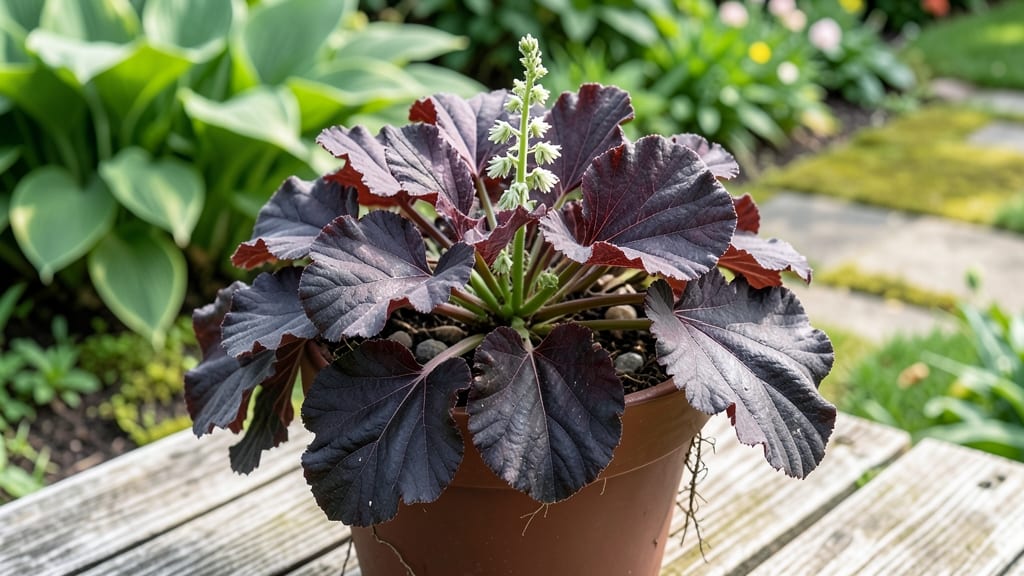
Dark leaf perennials turn your garden into a moody masterpiece with almost no effort. 🌿 These plants—like Heuchera and Carex—bring rich, velvety foliage that thrives in shade or sun, creating contrast that makes other plants pop. Their deep burgundy, black, or chocolate hues add drama without demanding constant attention.
The best part? They’re low-maintenance. Most need just moderate water and well-draining soil, and they come back year after year with the same striking color. Whether you’re designing a cottage garden, a modern border, or a shade garden, these perennials anchor the space with texture and depth.
Pair them with lighter foliage like ferns or silver-leafed plants to make them stand out even more. A single Oenothera (evening primrose) with its deep green-black leaves can become a focal point, while Heuchera spills beautifully over container edges.
They’re perfect for adding sophistication to any garden style—no fancy skills required. Start with just one or two to see how they transform your space before diving into a full dark-leaf collection.
📚 In This Guide
- What you need
- Instructions
- Tips and common mistakes
- Wrapping up and next steps
What you need
- ● Dark leaf perennials: Choose from 3–5 varieties like Heuchera (coral bells), Hosta (plantain lily), Ophiopogon (mondo grass), or Carex (sedges). Aim for 3–5 plants per square foot for a lush look.
- ● High-quality potting soil or garden soil: 50 lbs (or enough to fill your planting area). Opt for well-draining, organic-rich soil with a pH of 5.5–7.0 (test kits available at garden centers).
- ● Compost or aged manure: 10–20 lbs to amend soil for better fertility.
- ○ Mulch (optional but recommended): 2–3 inches of shredded bark, pine straw, or cocoa hulls to retain moisture and suppress weeds.
- ● Garden trowel or hand shovel (for precise planting).
- ● Garden fork or spade (to loosen soil in larger areas).
- ● Pruners or shears (for trimming dead foliage or dividing plants).
- ● Watering can or hose with a gentle spray nozzle (for post-planting hydration).
- ● Gloves (to protect your hands from thorns or soil-borne pathogens).
- ● Measuring tape or ruler (to space plants 12–24 inches apart, depending on variety).
- ● 💡 Location scouting: Pick a spot with partial to full shade (most dark leaf perennials thrive here). Avoid areas with direct afternoon sun, which can scorch leaves.
- ● 🌡️ Best planting time: Early spring or fall (when soil is workable but not freezing). Avoid extreme heat or cold.
- ● ✨ Soil prep hack: Mix in 1 tbsp of Epsom salt per plant at planting time to boost magnesium (great for deep green hues!).
- ● 🚫 Avoid overwatering: Dark leaf perennials prefer consistently moist (not soggy) soil. Water deeply 1–2 times per week unless rain does the work.
How to design a stunning dark leaf perennial garden
Here's my go-to approach for creating a bold, low-maintenance garden that thrives year-round.
🌱 Step 1: Select the Right Dark Leaf Varieties
Start with 4-6 varieties of dark foliage perennials to create visual depth. My top picks include Ophiopogon planiscapus 'Nigrescens' (black mondo grass), Carex oshimensis 'Evergold' (golden-edged sedge), Hosta 'Blue Angel' (deep blue-black leaves), and Heuchera 'Palace Purple' (velvety burgundy foliage). These plants offer contrasting textures and shades of purple, black, and deep green.
For maximum impact, pair them with silver or chartreuse foliage plants like Lamium maculatum 'White Nancy' or Ajuga reptans 'Chocolate Chip'. The contrast makes the dark leaves pop even more. I always include at least one variegated dark leaf plant like Hosta 'Francee' to add movement and interest.
☀️ Step 2: Plan Your Planting Layout
Design your garden in layers, starting with the tallest plants in the back and gradually decreasing height toward the front. Tall dark leaf perennials like Cimicifuga racemosa 'Hillside Black Beauty' (black bugbane) belong at the back, while low-growing varieties like Sedum 'Dragon's Blood' should go in the front. This creates a natural progression that draws the eye through the garden.
Space plants 12-24 inches apart depending on their mature size. Group plants with similar water needs together to simplify maintenance. I like to create 3-5 focal points using larger dark leaf plants like Hosta 'Guacamole' surrounded by smaller companions. This adds structure while keeping the look natural.
💧 Step 3: Prepare the Soil for Optimal Growth
Dark leaf perennials thrive in well-draining, rich soil with a pH between 6.0 and 7.0. Amend your native soil with 2-3 inches of compost and a 1-inch layer of organic mulch (like shredded bark) to retain moisture and suppress weeds. I always work in a slow-release fertilizer at planting time to give these plants a strong start.
For containers, use a high-quality potting mix blended with 20% perlite or pumice for improved drainage. Dark leaf plants in pots dry out faster than those in the ground, so I add water-retaining crystals to the mix. Water thoroughly after planting to settle the soil and remove any air pockets around the roots.
✂️ Step 4: Maintain Year-Round Beauty
Dark leaf perennials require minimal pruning, but I do remove any dead or damaged foliage in early spring before new growth appears. For plants like Heuchera and Hosta, I cut back any unsightly stems to the ground while leaving the basal leaves intact. This keeps the garden looking tidy without sacrificing next year's growth.
In late winter or early spring, I apply a 2-inch layer of fresh mulch to protect roots from temperature fluctuations and retain moisture. This is especially important in containers where roots are more exposed. I also check for any overly leggy growth and trim it back to encourage bushier, more compact plants.
🌿 Step 5: Extend the Season with Strategic Planting
To keep your dark leaf garden looking dramatic year-round, I plant evergreen perennials alongside deciduous ones. Liriope muscari 'Big Blue' and Carex 'Ice Dance' provide winter interest, while Helleborus niger 'Jacob' (Christmas rose) adds early spring color. This layered approach ensures there's always something captivating in your garden.
I also incorporate seasonal interest plants like Crocus vernus for early spring blooms and Sedum 'Autumn Joy' for fall color. These plants complement the dark foliage without competing with it. The key is to choose companions that enhance the drama of your dark leaf perennials rather than overpowering them.
Tips & tricks for perfect dark leaf perennial gardens
Creating a stunning dark leaf garden isn't just about choosing the right plants—it's about understanding how to make them thrive while minimizing effort. Here's what I've learned after years of perfecting these dramatic designs.
Plant Selection Strategy: When selecting your 4-6 varieties of dark leaf perennials, prioritize plants with different textures and growth habits. For example, pair the velvety foliage of Heuchera 'Palace Purple' with the fine texture of Ophiopogon planiscapus 'Nigrescens' to create visual contrast. I always include at least one plant with variegation like Hosta 'Francee'—this adds movement and prevents the garden from looking too uniform. The key is to think about how light reflects differently off each leaf type.
Layering Technique: In Step 2, when planning your layout, remember that the human eye naturally follows the tallest elements first. Place your Cimicifuga racemosa 'Hillside Black Beauty' (which can reach 5-6 feet) at the back, then work your way down to mid-height plants like Hosta 'Blue Angel' (2-3 feet), and finally low-growing varieties like Sedum 'Dragon's Blood' (6-12 inches) in the front. This creates a natural progression that guides visitors through your garden. I like to sketch a simple elevation view before planting to visualize this flow.
Soil Preparation Insight: The 2-3 inches of compost mentioned in Step 3 is non-negotiable for dark leaf perennials—they're heavy feeders that need consistent nutrients. I always test my soil pH first (aiming for 6.0-7.0) because dark foliage plants are particularly sensitive to alkaline conditions. For containers, that 20% perlite or pumice blend is crucial—it prevents root rot while allowing the rich potting mix to retain moisture. Pro tip: Add a handful of worm castings to your planting hole for an extra nutrient boost.
Maintenance Shortcut: When it comes to pruning in Step 4, focus on quality over quantity. Instead of cutting back all foliage at once, I remove only the truly damaged leaves in early spring. For Heuchera and Hosta, I leave the basal leaves intact—they'll provide immediate ground cover while new growth emerges. The 2-inch layer of fresh mulch you apply in late winter serves double duty: it insulates roots while suppressing weeds, which means less work for you throughout the growing season.
Pro Tips for Dark Leaf Perennials
- Creating a stunning dark leaf garden isn't just about choosing the right plants—it's about understanding how to make them thrive while minimizing effort.
- Plant Selection Strategy: When selecting your 4-6 varieties of dark leaf perennials, prioritize plants with different textures and growth habits.
- Layering Technique: In Step 2, when planning your layout, remember that the human eye naturally follows the tallest elements first.
Frequently asked questions
Got questions about dark leaf perennials? You’re not alone! Here are some of the most common queries—plus straightforward answers to help you dive in with confidence.
What are the best dark leaf perennials for full sun exposure?
If your garden basks in full sun, opt for Heuchera ‘Palace Purple’ or Coral Bells ‘Obsidian’. These varieties thrive in bright light while maintaining their deep, velvety foliage. Pair them with shade-tolerant perennials like Hosta ‘Blue Angel’ for contrast. Just ensure they get consistent moisture—sun-loving dark leaf plants can scorch without proper hydration!
How cold-hardy are dark leaf perennials, and do they die back in winter?
Most dark leaf perennials, like Hellebores or Lamium, are surprisingly tough, surviving USDA zones 3–9. They often die back in winter but regrow from their roots in spring. For extra protection, mulch around the base with shredded leaves or bark. Never prune dead foliage until early spring—it shields roots from freezing temps!
Can I grow dark leaf perennials in containers?
Containers are perfect for dark leaf perennials like Plectranthus ‘Mona Lavender’ or Sweet Potato Vine. Use well-draining soil mixed with compost, and choose pots with drainage holes. For larger varieties (e.g., Hosta), go for at least 12-inch-wide containers. Pro tip: Place containers in partial shade to prevent leaf scorch and water regularly—containers dry out faster!
What pests or diseases should I watch for with dark leaf perennials?
Dark leaf perennials are generally pest-resistant, but keep an eye out for slugs (they love tender new growth) and aphids (check undersides of leaves). Fungal issues like powdery mildew can occur in humid climates—improve airflow and avoid overhead watering. If you spot problems, treat with neem oil or insecticidal soap. Prevention tip: Healthy soil = strong plants!
How can I mix dark leaf perennials with bright flowers for contrast?
Pair deep foliage with popping colors like white (e.g., Hellebore ‘White Lady’), pink (e.g., Geranium ‘Rozanne’), or yellow (e.g., Coreopsis) for drama. For a moody vibe, try black or purple flowers like Lobelia ‘Crystal Palace’ against Heuchera ‘Plum Pudding’. Design hack: Use odd-numbered groupings (3 or 5 plants) for visual balance!
Wrapping up and next steps
Dark leaf perennials are the unsung heroes of the garden—offering bold, rich foliage that thrives with minimal fuss. Whether you’re drawn to the deep purples of Heuchera or the velvety blacks of Ophiopogon, these plants bring drama and texture to your landscape year-round.
With the right placement and a little care, you’ll enjoy a low-maintenance yet stunning garden that turns heads.
Ready to transform your space? Start small—pick one or two of these showstoppers and plant them today! 🌿 Before you know it, your garden will be the talk of the neighborhood, and you’ll be the secret behind its magic.