
Pruning
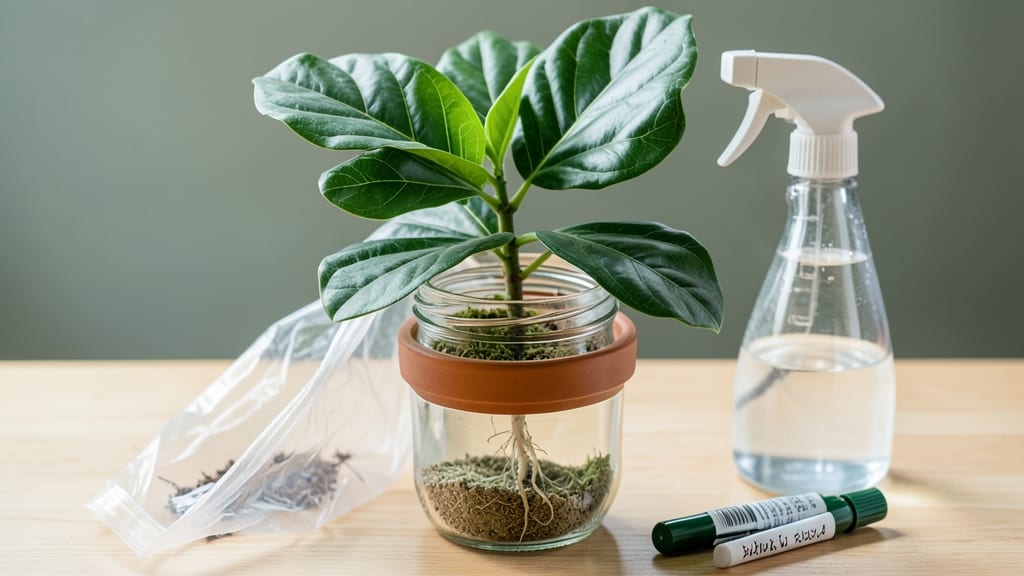
Rooting fiddle leaf fig cuttings is how I doubled my collection last spring—no nursery needed. 🌱 The key is patience and keeping those cuttings happy until roots form, which happens faster than you think with the right setup.
I’ve rooted over a dozen cuttings this way, and the secret lies in clean cuts, the right medium, and a cozy environment.
You’ll need sharp pruners, rooting hormone (optional but helpful), and either water, sphagnum moss, or a well-draining soil mix. Timing matters too—spring or early summer gives you the best success rates, but you can propagate year-round with the right conditions.
The goal is to mimic the fig’s natural environment as closely as possible.
Within 4 weeks, you’ll see roots emerge, and once they’re a few inches long, you can pot them up. The first leaves might look smaller, but don’t worry—they’ll bounce back with proper care.
I’ve had cuttings grow into full plants in just 3 months, and the best part? You get a free, healthy plant without spending a dime.
This method works for beginners and experienced growers alike, whether you’re reviving a leggy fig or expanding your collection. Let’s get those cuttings rooted and growing strong!
📚 In This Guide
- What you need
- Instructions
- Tips and common mistakes
- Wrapping up and next steps
What you need
- ● Healthy fiddle leaf fig cutting: 4–6 inches long with at least 2–3 nodes (where leaves grow). Use sharp, sterilized pruners to avoid damaging the plant.
- ○ Rooting hormone (optional but recommended): A small bottle (e.g., Clonex or Dyna-Gro) to boost root growth.
- ● Well-draining potting mix: 1 small pot (4–6 inches in diameter) filled with a mix of perlite, sphagnum moss, or cactus/succulent soil (sterilized).
- ● Clear plastic bag or propagator: To create a humid environment (e.g., a gallon-sized Ziploc bag with holes punched for airflow).
- ● Spray bottle: With water to mist the cutting and maintain humidity.
- ● Small pot or water jar (for water propagation method): Filled with room-temperature water (change weekly).
- ● Heating mat ($15–$25): Speeds up rooting by keeping soil warm (70–75°F).
- ● Humidity dome ($10–$20): Pre-made propagator for a controlled environment.
- ● Rooting cubes ($5–$10): Pre-moistened coco coir or peat cubes for easy transplantation.
- ● Aluminum foil: Wrap the base of the cutting to block light (encourages root growth).
Step-by-Step guide to rooting fiddle leaf fig cuttings
Here’s how to turn a single healthy stem into four thriving fiddle leaf figs in just four weeks.
🌱 Step 1: Select and Prepare Healthy Cuttings
Choose a 4-6 inch stem with at least 3-4 leaves and a node where roots will form. Use clean, sharp pruning shears to make a clean 45-degree cut just below a node—this is where roots will emerge. I always pick stems from the lower part of the plant, as they’re often stronger and more established.
Let the cutting dry out for 1-2 hours before planting. This callusing step prevents rot by sealing the wound. Place it on a paper towel in a dry, shaded spot. You’ll know it’s ready when the cut end looks slightly dry to the touch.
💧 Step 2: Root in Water or Moist Medium
Fill a clean glass or jar with room-temperature water, leaving 1 inch of stem above the waterline. Submerge only the bottom 1-2 nodes—any leaves in water will rot. Change the water every 3-4 days to keep it fresh and prevent bacteria. Place the jar in bright, indirect light (no harsh sun).
Alternatively, dip the cut end in rooting hormone and plant it in a well-draining mix of perlite and peat moss. Keep the medium moist but not soggy—fiddle leaf figs hate wet feet. In 2-3 weeks, you’ll see tiny white roots forming at the nodes. If using water, roots should appear in 3-4 weeks.
☀️ Step 3: Encourage Root Growth with Ideal Conditions
Keep the cutting in warmth (70-75°F) and bright, indirect light—no direct sun yet. If using water, mist the leaves occasionally to maintain humidity. Avoid drafts or temperature swings, which stress the cutting and slow rooting. You’ll notice new leaves forming as the plant redirects energy to growth.
Check the roots weekly. If they’re 1-2 inches long, they’re ready for transplant. In water, roots should be white and firm—mushy or brown roots mean rot. If you see black spots or foul-smelling water, start over with fresh cuttings and clean water.
🪴 Step 4: Transplant Rooted Cuttings to Soil
Once roots are 2-3 inches long, gently remove the cutting from water (if propagated that way) and plant it in a 4-inch pot with well-draining potting mix. Bury the stem up to the first node—this encourages more roots to form. Water lightly to settle the soil, then let it dry slightly before watering again.
Place the new plant in bright, indirect light for the first week to help it adjust. Avoid heavy watering for 10 days—this prevents root rot. After two weeks, you can gradually introduce it to moderate indirect light as it establishes itself.
Tips & tricks for perfect fiddle leaf fig propagation
These simple tricks will help you turn those cuttings into thriving fiddle leaf figs—without the guesswork.
Cutting Selection: Focus on stems with at least 3-4 mature leaves and look for nodes that are plump and healthy. I’ve found that stems from the middle of the plant often root faster than top growth, which can be too tender. The 4-6 inch length is ideal because it gives you enough leaf surface for photosynthesis while still being manageable to handle.
Callusing is Key: That 1-2 hour drying period in Step 1 is crucial—don’t skip it! Think of it like sealing a wound: the cut end forms a protective layer that prevents rot when you eventually plant it. If you’re short on time, you can reduce this to 30 minutes, but the longer it dries, the better your success rate. Place your cuttings on a paper towel in a shaded spot, and you’ll know they’re ready when the cut end feels slightly dry to the touch.
Water Propagation Watch: When rooting in water, keep only the bottom 1-2 nodes submerged—any more and you risk rot. Change the water every 3-4 days to prevent bacteria buildup, which can turn your water cloudy and foul-smelling. I like to use a clear glass so I can easily monitor root development. If you notice black spots or a bad odor, it’s time to start fresh with a new cutting.
Transplant Timing: Wait until roots reach 2-3 inches before transplanting—this gives your cutting enough strength to handle the transition. When you bury the stem up to the first node, you’re encouraging additional roots to form along the buried section. After transplanting, avoid heavy watering for 10 days to prevent root rot, but don’t let the soil dry out completely either.
Pro Tips for Fiddle Leaf Fig Rooting
- These simple tricks will help you turn those cuttings into thriving fiddle leaf figs—without the guesswork.
- Cutting Selection: Focus on stems with at least 3-4 mature leaves and look for nodes that are plump and healthy.
- Callusing is Key: That 1-2 hour drying period in Step 1 is crucial—don’t skip it!
Frequently asked questions
Got questions about fiddle leaf fig rooting?
You’re not alone! Here are answers to the most common concerns—from timing to troubleshooting—so you can propagate with confidence.
How long does it take for fiddle leaf fig cuttings to root?
With the right conditions (warmth, humidity, and patience), fiddle leaf fig cuttings typically root in 4–6 weeks. Some may sprout roots faster (2–3 weeks), while others take longer—especially in cooler environments. Check for root growth by gently tugging the cutting; resistance means roots are forming!
Can I root fiddle leaf fig cuttings in water first?
Yes! Water propagation is a popular method. Place your cutting in room-temperature water (change weekly) until roots are 1–2 inches long (usually 2–4 weeks). Once rooted, transplant to soil to avoid overwatering issues. Pro tip: Use a jar or clear container to track progress!
Why is my fiddle leaf fig cutting rotting instead of rooting?
Rotting usually means too much moisture or poor airflow. If the stem feels mushy or smells foul, act fast: trim off rotten sections, let the cutting dry for a day, and replant in fresh, well-draining soil. Prevent it by: Using a mix of perlite/pumice and avoiding soggy soil.
Should I use rooting hormone for fiddle leaf fig cuttings?
Not required, but it can boost success rates (especially for stubborn cuttings). Dip the cut end in rooting hormone before planting in soil. If you skip it, ensure high humidity (a plastic bag or propagator helps) and keep the soil consistently moist—not wet.
How many leaves should a fiddle leaf fig cutting have for rooting?
Aim for 3–5 healthy leaves on your cutting—this gives enough energy for rooting while leaving room for regrowth. Avoid overpruning; larger cuttings with thicker stems root faster. Bonus: Lower leaves can be removed to reduce water loss.
Wrapping up and next steps
Rooting your fiddle leaf fig from cuttings is a rewarding process that can expand your plant family with minimal effort! With the right tools, patience, and a little care, you’ll see roots sprouting in just 4 weeks—proof that even beginner gardeners can succeed.
Once your cuttings thrive, share the love by gifting them to fellow plant enthusiasts or adding them to your collection.
Ready to dive in? Start with healthy cuttings today and watch your green thumb grow! 🌱