
Pruning
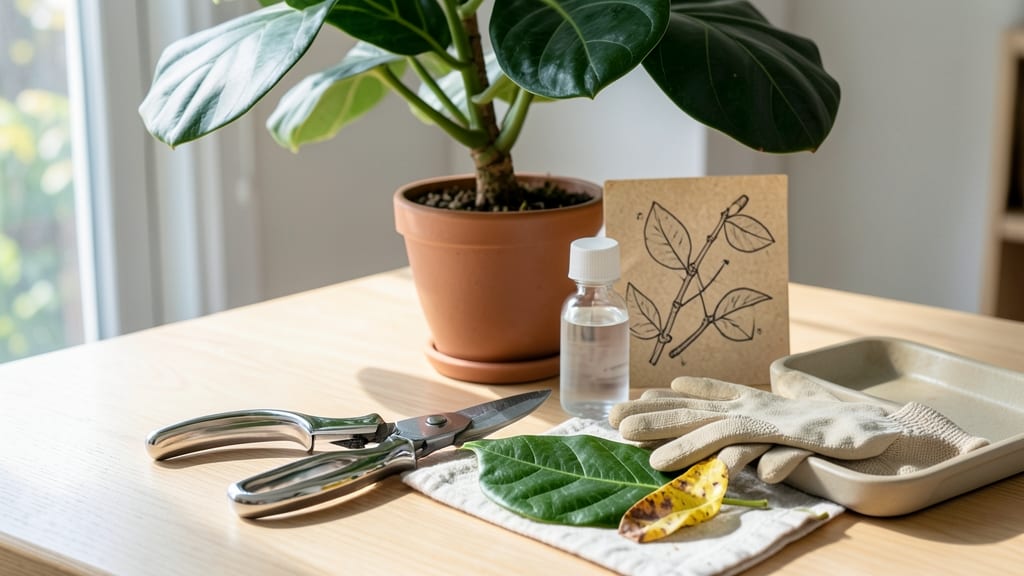
Pruning a fiddle leaf fig plant turns that leggy, sad-looking specimen into a thriving, bushier beauty—if you do it right. 🌿 I learned the hard way that cutting at the wrong time or place can stress the plant, but mastering this skill means more leaves, stronger stems, and a plant that actually looks like the showstopper you bought it to be.
The key is timing: prune in spring or early summer when the plant is actively growing, never in fall or winter. You’ll need sharp pruners, rubbing alcohol to sterilize them, and a plan—because fiddle leaf figs don’t like random snips.
Start by trimming the longest stems just above a leaf node (where leaves grow out), and avoid cutting into the woody stem unless you’re shaping for size.
After pruning, your plant will reward you with fresh, vibrant growth within 4-6 weeks. The new leaves will be smaller at first but fill out quickly, and those bare stems will disappear under a lush canopy.
Just keep the soil consistently moist (not soggy) and place it in bright, indirect light to speed up recovery.
This method works for fiddle leaf figs of any size—whether you’re dealing with a tiny 1-foot sapling or a 6-foot giant. The same principles apply, so you’ll get healthy results every time. Let’s get those shears ready!
📚 In This Guide
- What you need
- Instructions
- Tips and common mistakes
- Wrapping up and next steps
What you need
- ● Sharp, clean pruning shears – Bypass pruners (4-6 inch blades) are ideal for clean cuts. Sterilize with rubbing alcohol before and after use!
- ● Rubbing alcohol (70% or higher) – 1 small bottle (2 oz) for disinfecting tools and cuts.
- ● Hydrogen peroxide (3%) or cinnamon powder – 1 small bottle or 1 tbsp to prevent infection on pruning wounds.
- ○ Glove (optional but recommended) – 1 pair of gardening gloves to protect your hands from sap and thorns.
- ● Newspaper or drop cloth – 1-2 sheets to contain leaf debris and sap spills.
- ● Rooting hormone – 1 small container if you plan to propagate cuttings.
- ● Small pots with well-draining soil – 1-2 pots (4-6 inches wide) for propagating new plants.
- ● Plant tie or twine – 1 roll to secure large branches if needed.
- ● Spray bottle with water – 1 small bottle to mist cuttings and reduce stress.
Step-by-Step guide for pruning a fiddle leaf fig plant
Here's how I keep my fiddle leaf fig thriving year after year—no over-pruning, no stress, just healthy growth.
✂️ Step 1: Identify What to Prune
Start by examining your plant for yellow leaves, brown leaf tips, or stems with no leaves. These are your targets. Healthy leaves have a deep green color and firm texture—anything less is ready to go. I also look for overly leggy stems that stretch too far between leaves, which weakens the plant.
Never prune more than 25% of the plant at once. Fiddle leaf figs are sensitive, and aggressive pruning can shock them. Focus on removing only the damaged or problematic areas first. This ensures you maintain the plant's energy balance while encouraging new growth in the right places.
✂️ Step 2: Gather Tools and Sanitize
Use only sterilized pruning shears or sharp scissors—never your hands. I clean my tools with rubbing alcohol before and after pruning to prevent spreading disease. Dirty tools introduce bacteria that can rot stems or cause leaf spot issues.
Wear gloves if you're sensitive to sap or handling rough leaves. Fiddle leaf figs have a milky sap that can irritate skin. Have a small container ready to collect cuttings—you can propagate them later. I also keep a spray bottle with water nearby to mist any exposed cuts immediately after pruning.
✂️ Step 3: Make Clean Cuts at the Right Spots
Cut just above a leaf node (the bump where a leaf or branch grows out). This is where new growth will sprout. Angle your cut slightly downward, about ¼ inch above the node, to prevent water from pooling and rotting the stem. If you're pruning a leggy stem, cut it back to a lower node to encourage bushier growth.
For large stems, make the cut in one smooth motion—don't saw back and forth. A jagged cut slows healing and invites infection. After cutting, wipe any sap from the blade with a damp cloth to keep it clean for the next cut. This step is where precision matters most.
💧 Step 4: Care for the Plant After Pruning
Water the plant lightly within 24 hours of pruning to help it recover. Avoid heavy watering immediately after—wait until the top 1-2 inches of soil feel dry. Overwatering after pruning stresses the plant further as it heals. Place the plant in bright, indirect light for the next few weeks to support new growth.
Watch for new leaves emerging from the nodes you cut above. This is your sign the plant is healing well. If you notice yellowing on remaining leaves, reduce watering slightly—fiddle leaf figs often drop leaves when they're adjusting to changes. Keep humidity around 40-50% with a pebble tray if your home is dry.
🌿 Step 5: Propagate Cuttings (Optional)
If you collected cuttings, place them in a jar of water with just the nodes submerged. Keep them in bright, indirect light and change the water every 3-5 days. Roots should appear in 2-4 weeks. Once roots are 2 inches long, transplant into small pots with well-draining soil.
I always propagate a few cuttings when pruning—it's a great way to expand your collection without cost. Just be patient; fiddle leaf figs are slow to root compared to other plants. If a cutting doesn't root after 8 weeks, it likely won't, so don't force it.
Tips & tricks for pruning fiddle leaf fig plants
Real talk: I've pruned fiddle leaf figs for years, and these are the tricks that saved mine from looking like a sad, overgrown mess.
Leaf Health Check: Before you cut anything, run your fingers along the stems. If you feel a leaf that's limp or has crispy edges, that's your sign to remove it. The 25% rule is non-negotiable—this plant is delicate, and you're not doing it a favor by hacking off half its foliage at once. Think of it like giving your plant a haircut: you wouldn't shave your head bald, would you?
The Node Secret: When you're making those precise cuts above the leaf nodes in Step 3, here's what nobody tells you—look for the smallest node that still has a tiny leaf bud. That's where your plant will put its energy into new growth. I've seen people cut right at the node, and those stems just sit there looking sad. Always leave that ¼-inch gap to prevent rot.
Post-Prune Recovery Hack: After you've done your pruning, here's my little trick: give the plant a quick mist with water right after you finish. This helps seal those cuts and prevents the sap from drying out too fast. Then, wait those full 24 hours before watering again. I've seen people rush to water immediately, and it just stresses the plant out even more.
Lighting Matters: That bright, indirect light in Step 4 isn't just about growth—it's about healing. If your home has fluorescent lighting, consider moving the plant closer for the first week after pruning. I've noticed my fiddle leaf figs recover faster when they get that extra light boost during their vulnerable period. Just don't put it in direct sun—those leaves will fry.
Pro Tips for Prune Fiddle Leaf Fig Plant
- Real talk: I've pruned fiddle leaf figs for years, and these are the tricks that saved mine from looking like a sad, overgrown mess.
- Leaf Health Check: Before you cut anything, run your fingers along the stems.
- The Node Secret: When you're making those precise cuts above the leaf nodes in Step 3, here's what nobody tells you—look for the smallest node that still has a tiny leaf bud.
Frequently asked questions
Pruning a fiddle leaf fig can feel tricky, but these common questions will help you navigate the process with confidence! Whether you're a beginner or just need a quick refresher, here’s what you need to know:
When is the best time to prune a fiddle leaf fig?
The ideal time to prune your fiddle leaf fig is during its active growing season (spring or early summer). Avoid pruning in fall or winter, as the plant needs energy to recover. If you must trim for health reasons (like dead leaves), do it anytime—but prioritize growth-friendly timing for best results!
Can I prune a fiddle leaf fig too much?
Yes! Over-pruning can stress your plant, leading to stunted growth or even shock. Stick to removing only 10-20% of the foliage at once. If your fig looks leggy, focus on cutting back long stems to encourage bushier growth. When in doubt, less is more—your plant will thank you!
What should I do with the cuttings after pruning?
Don’t toss those cuttings! Fiddle leaf figs root easily in water. Place 4-6 inch cuttings in a jar of water, keeping them in bright, indirect light. Change the water every few days, and in 2-4 weeks, you’ll have new baby plants ready to pot up. It’s a great way to propagate and expand your collection!
Why are my fiddle leaf fig leaves turning yellow after pruning?
Yellowing leaves post-pruning are usually normal as the plant adjusts, but if it’s excessive, check for overwatering or underwatering. Ensure the soil is slightly moist (not soggy) and avoid placing the plant in drafty areas. If yellowing persists, trim the affected leaves to redirect energy to healthier growth.
How do I know if my fiddle leaf fig needs pruning?
Watch for these signs:
- Leggy stems (stretching too tall with sparse leaves)
- Dead, brown, or yellowing leaves that won’t revive
- Overcrowded branches blocking light
- Uneven growth or bare spots
Wrapping up and next steps
Pruning your fiddle leaf fig doesn’t have to be intimidating—it’s all about confidence and consistency! 🌿 With the right tools, timing, and technique, you’ll encourage lush growth, stronger branches, and a fuller, healthier plant.
Remember: less is more—focus on shaping, not drastic cuts, and always reward yourself with a well-earned pat on the back (or a celebratory plant selfie!).
Now that you’re armed with knowledge, take the next step: Grab those sterilized shears and give your fiddle leaf fig the TLC it deserves. Watch it thrive, and soon, you’ll be the proud gardener of a showstopping green centerpiece! 🌟