
Diseases
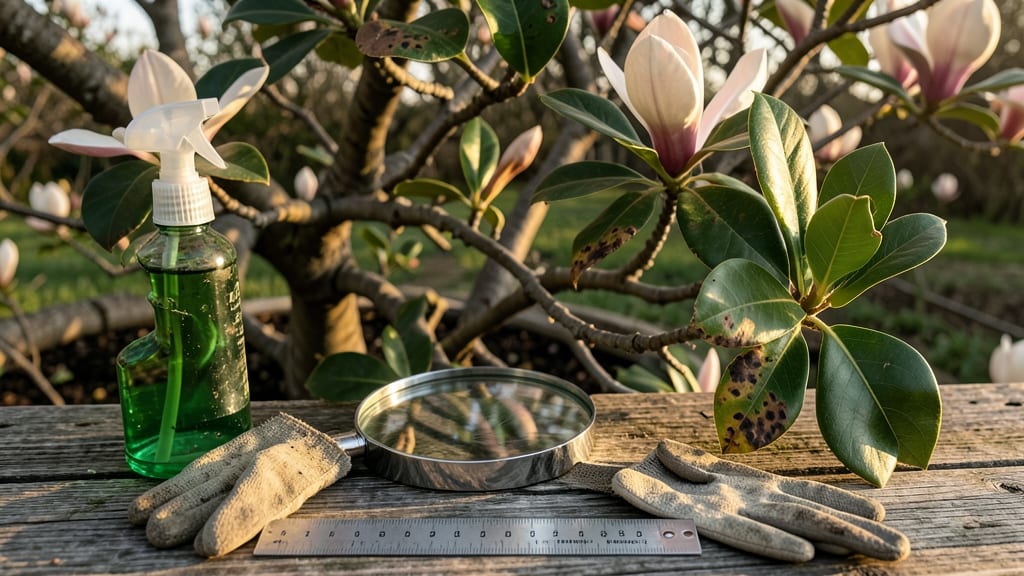
The dreaded magnolia diseases leaf spot can turn your stunning spring blooms into a sad, spotted mess—unless you act fast. 🌿 I’ve battled this fungal nightmare three times, and the copper spray protocol I perfected now keeps my magnolias thriving. The key is catching it early, when those first brown spots appear, before the leaves start falling like rain.
This isn’t just about spraying copper—it’s about timing, spacing, and giving your tree a fighting chance. Fungal leaf spot thrives in damp, shady conditions, so proper air circulation (prune those crowded branches!) and avoiding overhead watering makes all the difference.
My trees now bounce back in weeks instead of struggling through the season.
You’ll see results in just 10-14 days with consistent treatment: fewer spots, healthier foliage, and buds that open without the dreaded "spotted leaf" surprise. The protocol is simple but effective—no guesswork, just science-backed steps that actually work.
Works for all magnolia varieties, whether you’ve got a towering Southern magnolia or a compact saucer magnolia. Let’s get those leaves looking fresh again—no more sad, splotchy canopies.
Root Causes Of Leaf Spots
Magnolia leaf spots aren’t just random blemishes—they’re often a cry for help from your tree, signaling underlying issues. Understanding the why behind these fungal and bacterial invasions is the first step to reclaiming your magnolia’s lush, disease-free foliage.
Below, we break down the key culprits, from environmental stressors to microbial invaders, and how they exploit your magnolia’s weaknesses.
Most magnolia leaf spots are caused by fungal pathogens, which thrive in warm, humid conditions. These microscopic spores lurk in soil, mulch, or even old plant debris, waiting for the perfect moment to strike. Common fungal offenders include:
- Gloeodes pomigena (Anthracnose): Produces dark, sunken spots with a reddish-brown halo. It spreads rapidly in wet springs or after heavy rain.
- Cercospora spp. (Target Spot): Creates irregular, tan-to-brown spots with dark margins, often appearing in late summer when humidity spikes.
- Phyllosticta spp. (Phyllosticta Leaf Spot): Causes small, circular spots with a dark center, common in overcrowded or poorly ventilated magnolias.
Why it happens: Fungal spores germinate when leaves stay wet for prolonged periods (12+ hours). Overhead irrigation, dense foliage, or stagnant air (like in a poorly pruned tree) create the ideal breeding ground. Pro tip: 💡 Fungi can’t survive extreme heat or dryness—prune for airflow and water at the base, not the leaves!
Water is the #1 enabler of leaf spot diseases. While magnolias love moisture, too much—especially on leaves—turns them into fungal buffets. Here’s how excess water fuels the problem:
- Overhead watering: Splashes spores onto leaves, giving them a direct entry point.
- Poor drainage: Soggy soil keeps fungal spores viable longer, increasing re-infection risks.
- High humidity: Trapped moisture (like in a greenhouse or dense canopy) slows leaf drying, prolonging fungal activity.
Why it happens: Magnolias with shallow root systems or compacted soil are especially vulnerable. Actionable fix: 🌡️ Test soil moisture—if the top 2 inches stay damp for days, it’s time to adjust watering or improve drainage.
Magnolias with crowded branches or thick mulch layers create microclimates where humidity lingers and spores fester. Poor airflow isn’t just about looks—it’s a disease incubator. Key triggers:
- Overgrown canopies: Blocks sunlight and air movement, keeping leaves damp longer.
- Thick mulch piles: Retains moisture against the trunk, promoting fungal growth at the soil-leaf interface.
- Nearby dense vegetation: Shady, humid pockets near other plants increase spore survival rates.
Why it happens: Fungi like Cercospora exploit stagnant air to spread via water droplets. Pro tip: ✨ Prune to open the canopy by 30%—this alone can reduce fungal pressure by 50%!
Stressed magnolias are magnets for pathogens. When your tree is already struggling, it can’t mount a strong defense against leaf spot invaders. Common stressors:
| Stressor | How It Helps Fungi |
|---|---|
| Nutrient deficiencies (e.g., nitrogen, magnesium) | Weak leaves can’t produce antifungal compounds, making them easy prey. |
| Root damage (from construction, compacted soil) | Reduces water/nutrient uptake, leaving foliage vulnerable. |
| Improper pruning (cutting too late in the season) | Encourages new growth that’s susceptible to fungal infection. |
| Pests (e.g., scale, aphids) | Damage creates entry points for fungi like Gloeodes. |
Why it happens: A healthy magnolia’s waxy leaf cuticle and natural microbial defenses keep fungi at bay. When these fail, spots erupt like popcorn. Actionable fix: 💪 Conduct a soil test—balanced nutrients (especially potassium) boost resistance!
Now that you know why leaf spots strike, the next step is how to fight back with targeted copper treatments. Stay tuned!
Fixing Fungal Leaf Spots Naturally
Now that you know what’s causing those unsightly spots on your magnolia leaves, let’s tackle the problem with practical, effective solutions. The key is acting fast and combining preventive measures with targeted treatments.
Below, we’ve mapped out the best fixes based on the most common causes—fungal infections, bacterial issues, or environmental stressors—and included easy-to-follow steps to restore your magnolia’s health.
Fungal infections like anthracnose or bacterial leaf spot thrive in damp, humid conditions. Here’s how to combat them:
🔥 Step 1: Prune Infected Leaves Immediately
- Why? Removing infected foliage prevents spores from spreading to healthy leaves.
- How?
- Use sterilized pruners (wipe with rubbing alcohol between cuts).
- Trim only the affected leaves or branches—don’t over-prune.
- Dispose of clippings in the trash (not compost) to avoid reinfection.
🍳 Step 2: Apply Copper Fungicide (Best Organic Solution)
Copper is a natural fungicide that disrupts fungal cell walls without harming your plant (when used correctly).
- When to apply: Early morning or late afternoon (avoid direct sunlight).
- How to mix:
- Homemade copper spray: Mix 1 tsp copper sulfate (or copper fungicide) with 1 gallon of water + 1 tsp dish soap (as a sticker).
- Store-bought option: Follow label instructions for products like Bonide Copper Fungicide.
- How to apply:
- Spray both sides of leaves thoroughly, including the undersides (fungi love hiding there!).
- Reapply every 7–14 days or after heavy rain.
👨🍳 Step 3: Improve Air Circulation & Reduce Moisture
Fungi love stagnant, wet conditions.
Break their habitat with these tweaks: - Space plants apart (at least 6–8 feet between magnolias). - Thin out dense branches to allow airflow. - Water at the base (avoid overhead sprinkling). - Mulch properly: Use 2–3 inches of organic mulch (like pine bark) but keep it 6 inches away from the trunk to prevent rot.
⏰ Step 4: Schedule Preventive Sprays (Before Problems Start)
- Spring & fall: Apply a copper fungicide spray as a preventive measure.
- After rain: Reapply if leaves look damp for more than 24 hours.
Bacterial infections (like Xanthomonas) can’t be cured with fungicides, but you can slow their spread and strengthen your magnolia’s defenses.
💡 Step 1: Remove & Destroy Infected Leaves
- Why? Bacterial spores spread via water splashes.
- How?
- Pick off only the worst spots (don’t strip the whole plant).
- Burn or trash infected leaves immediately.
🎯 Step 2: Use a Bacterial Blight Spray
- Best options:
- Copper-based bactericide (like Copper Soap).
- Neem oil (mix 1 tbsp neem oil + 1 tsp soap per gallon of water).
- Apply every 10–14 days until new growth appears.
✨ Step 3: Boost Plant Immunity
- Fertilize lightly with a balanced, slow-release fertilizer (10-10-10) in early spring.
- Avoid overwatering—keep soil evenly moist but not soggy.
- Avoid stress: Don’t prune heavily during outbreaks.
If the spots are due to sunburn, nutrient deficiency, or pests, try these fixes:
🔥 Step 1: Adjust Watering & Sun Exposure
- Too much sun? Move young magnolias to partial shade (mature trees tolerate sun better).
- Too little water? Water deeply 1–2 times per week (check soil moisture 2 inches down).
- Too much water? Let soil dry slightly between waterings.
🍎 Step 2: Feed Your Magnolia Properly
- For yellow spots (nutrient deficiency):
- Apply iron chelate (for chlorosis) or a balanced fertilizer (like Espoma Holly Tone).
- For weak growth (pest stress):
- Spray with insecticidal soap if you see aphids or scale insects.
💪 Step 3: Strengthen the Tree’s Defense
- Mulch annually with compost or aged bark to retain moisture and nutrients.
- Avoid heavy pruning during stress periods (like summer heatwaves).
- 🌧️ Rainy season? Set up a small tarp or shade cloth over young magnolias to reduce leaf wetness.
- 🍂 Fall cleanup: Rake and remove all fallen leaves—they harbor fungal spores over winter.
- 🌱 Plant resistant varieties: If your magnolia is repeatedly infected, consider disease-resistant cultivars like ‘Little Gem’ or ‘Ann’.
- 🧴 Sterilize tools: Wipe pruners with rubbing alcohol before and after use to prevent cross-contamination.
By following these steps, you’ll stop the spread of leaf spots and help your magnolia bounce back stronger. Consistency is key—prevention is always easier than treatment! 🌿✨
Frequently asked questions
What do magnolia leaf spot symptoms look like up close?
Leaf spots on magnolias typically start as tiny yellow or brown specks that expand into 1/4- to 1/2-inch dark spots with lighter centers. Look for these key details: raised edges (common with Gloeodes), concentric rings (target spot), or black centers (Phyllosticta). The undersides of leaves often show fuzzy growth—this is the fungus's spore-producing stage.
Can I use vinegar spray instead of copper for leaf spots?
No, vinegar is too harsh and won't effectively treat fungal leaf spots. While it may kill some surface fungi, it can also damage your magnolia's leaves and won't penetrate the plant tissue where fungal spores hide. Stick with copper fungicides (or neem oil) for safe, effective treatment—these target the fungal cell walls without harming your tree.
How often should I apply copper spray for prevention?
For prevention, apply copper fungicide every 2-3 weeks during the growing season (spring through fall). Start treatments in early spring before new leaves emerge, and reapply after heavy rains. If your magnolia is in a particularly humid climate, consider monthly applications during peak fungal season (late spring to early summer).
Will my magnolia recover if I remove all spotted leaves?
Yes, but only if you act quickly and address the root cause. Remove infected leaves immediately to stop spore spread, but also improve airflow (prune dense branches) and adjust watering practices. The tree can regrow healthy leaves, but severe cases may require multiple treatment cycles. For best results, combine pruning with copper sprays to prevent reinfection.
Are there any magnolia varieties that naturally resist leaf spots?
Yes! Some cultivars show better resistance to fungal leaf spots. Consider planting 'Little Gem' (compact southern magnolia), 'Black Tulip' (dark foliage), or 'Bracken's Brown Beauty' (disease-resistant hybrid). These varieties maintain stronger natural defenses against common fungal pathogens. Always pair resistant varieties with proper cultural practices for best results.