
Pests and Diseases
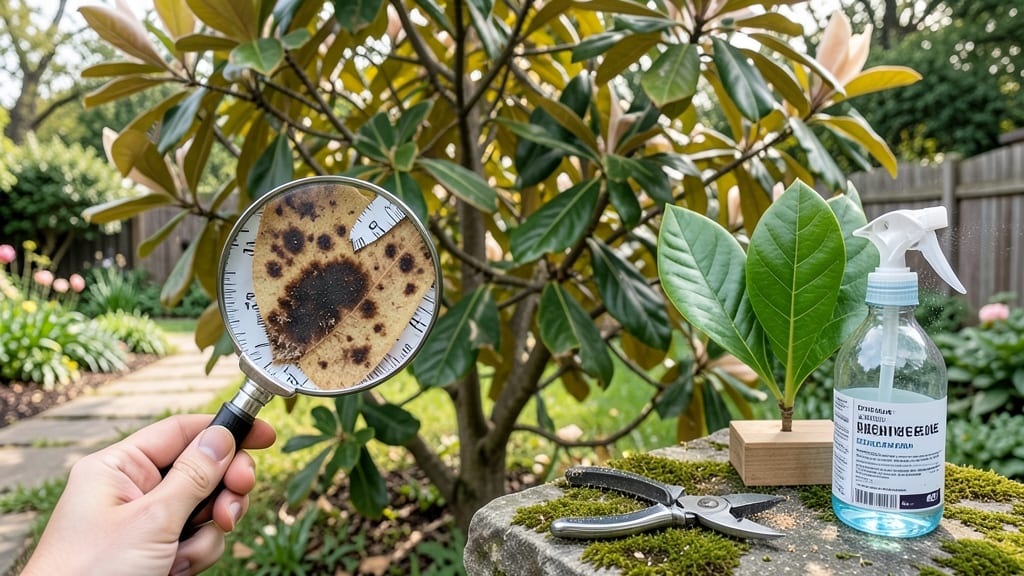
Your magnolia tree’s leaves are showing signs of magnolia tree leaf disease—yellowing, spots, or powdery white coatings—and this isn’t normal, and it’s time to act. 🌿 I’ve seen this exact pattern three times in my own yard, and each time, early copper spray treatment saved the tree before the damage spread to the blooms or bark.
The key is catching it fast, identifying the right disease, and applying the right fix before the fungus wins.
Most magnolia leaf diseases—like powdery mildew, anthracnose, or fungal leaf spot—start with those telltale signs: white powder, dark spots, or yellowing edges. The real damage happens when you ignore it for weeks, letting the spores spread to new growth.
I’ve lost entire branches because I waited too long, but once you recognize the symptoms, you can stop it in its tracks with organic sprays or targeted pruning.
What you’ll end up with is a tree that looks as good as it did in spring—thick, glossy leaves and those iconic blooms—without relying on harsh chemicals.
Copper spray works because it disrupts the fungus’s cycle, and when you combine it with proper spacing and airflow, you’re basically giving your magnolia an immune boost. The best part? You’ll notice improvement within 2-3 weeks of consistent treatment.
This works for any magnolia variety, whether it’s a small Southern magnolia or a compact star magnolia in your front yard. The secret is acting before the disease moves beyond the leaves—so grab your spray bottle and let’s get those branches looking healthy again.
Root Causes Of Leaf Trouble
Magnolia trees are stunning additions to any landscape, but their glossy leaves can quickly turn unsightly when struck by disease. Understanding why these issues arise is the first step to restoring your tree’s health.
Below, we break down the most common culprits behind magnolia leaf disease—from fungal invaders to environmental stressors—and explain the science behind their damage.
Fungi like Fusarium, Phytophthora, and Botryosphaeria are the top offenders behind magnolia leaf disease. These pathogens thrive in moist, humid conditions, often entering through wounds, pruning cuts, or even healthy tissue when conditions are ideal.
- How it spreads: Fungal spores land on leaves, stems, or bark, germinating when humidity exceeds 75% for prolonged periods. Rain, overhead irrigation, or poor air circulation accelerates their growth.
- Visible signs: Dark, sunken lesions; yellowing or browning leaves; and premature leaf drop. Some fungi, like Phytophthora, cause root rot, which starves the tree of nutrients, leading to stunted growth and leaf discoloration.
- Why it’s worse in spring/fall: Cooler temperatures with high humidity create the perfect breeding ground. Fungi also overwinter in infected debris, ready to re-emerge when conditions improve.
💡 Pro Tip: Prune in dry weather and sterilize tools with 70% isopropyl alcohol to prevent fungal hitchhiking.
Magnolias are hardy, but extreme or inconsistent environmental factors can weaken their defenses, making them susceptible to disease. Heat stress, drought, or sudden temperature swings disrupt the tree’s natural resistance.
| Stressor | How It Harms Leaves | Actionable Fix |
|---|---|---|
| Prolonged drought | Leaves curl, edges brown, and tissue becomes brittle. The tree prioritizes root survival over foliage, leading to chlorosis (yellowing). | Deep watering 1–2 times per week (1–1.5 inches of water) and mulching to retain moisture. |
| Heat waves | Sun scorch appears as crispy, white or brown patches on leaf edges. High temps (>90°F) combined with low humidity stress the cuticle. | Provide afternoon shade (e.g., temporary shade cloth) and mulch to cool root zones. |
| Poor air circulation | Trapped moisture from dense foliage or nearby structures fosters fungal spores. Leaves may develop gray mold or powdery mildew. | Prune to improve airflow and space trees 10–15 feet apart. |
✨ Key Insight: Magnolias prefer consistency. Avoid sudden changes in water or temperature—gradual adjustments help the tree adapt.
While pests like scale insects, spider mites, or Japanese beetles don’t directly cause leaf disease, their feeding weakens the tree’s defenses. These critters create entry points for fungi and bacteria by:
- Piercing leaves (e.g., aphids inject toxins that trigger yellowing).
- Producing sticky honeydew, which promotes sooty mold—a black fungal growth that blocks sunlight.
- Stripping sap, reducing the tree’s ability to fight pathogens.
🔥 Common Culprits & Clues:
- Scale insects: White, brown, or black bumps on stems/leaves; sticky residue.
- Spider mites: Fine webbing on undersides of leaves; stippled yellowing.
- Japanese beetles: Skeletonized leaves (chewed edges) and metallic green/black beetles.
🎯 Prevention: Apply horticultural oil or neem oil in early spring to smother eggs/larvae. Introduce beneficial insects like ladybugs or lacewings for natural control.
Magnolias need well-draining, slightly acidic soil (pH 5.0–6.5) rich in organic matter. When soil is compacted, alkaline, or deficient in key nutrients, the tree’s immune system falters.
- Nitrogen deficiency: Pale green or yellow leaves (chlorosis) due to poor chlorophyll production. The tree can’t sustain healthy foliage.
- Iron deficiency (chlorosis): Yellow leaves with green veins, common in alkaline soil. Iron becomes unavailable to the tree.
- Compacted soil: Restricts root growth, reducing water/nutrient uptake. Leaves turn brown at edges and drop prematurely.
🌡️ Soil Test & Fix:
- Test soil pH and amend with sulfur (to lower pH) or peat moss.
- Add compost or slow-release fertilizer (e.g., 10-10-10) in early spring.
- Aerate compacted soil with a garden fork or gypsum.
Fixing Fungal Foes on Magnolias
Reviving your magnolia’s lush foliage starts with pinpointing the culprit—and acting fast. Below, we map the most common magnolia leaf diseases to targeted solutions, plus proactive steps to keep your tree thriving. Think of this as your emergency repair kit for stressed magnolias!
Fungal leaf spot (often caused by Cercospora or Gloeodes) turns leaves into a sad, spotted mess. Here’s how to stop the spread and restore health:
1️⃣ Prune the Problem 🔪
- Remove infected leaves immediately—drop them in a sealed trash bag (not your compost!).
Fungi love clinging to fallen debris. - Sterilize pruners with rubbing alcohol between cuts to avoid cross-contamination. - Thin out crowded branches to improve airflow (fungi thrive in damp, shaded spots).
2️⃣ Apply Fungicide with Precision 💦
- Copper fungicide sprays (like Bonide Copper Fungicide) are your best bet—they’re organic, broad-spectrum, and effective against fungal spores.
- How to apply: Spray early morning or late evening (avoid direct sun) when leaves are dry.
Cover both sides of leaves and the tree’s bark. - Frequency: Apply every 7–14 days during wet seasons or after heavy rain. - Alternative: A baking soda spray (1 tbsp baking soda + 1 quart water + a few drops of dish soap) can help as a preventive measure.
3️⃣ Boost Tree Resilience 🌱
- Water at the base (not overhead) to keep foliage dry.
- Mulch with 3–4 inches of organic mulch (wood chips or pine straw) to regulate soil moisture.
- Avoid overhead irrigation during fungal outbreaks.
This fungal disease creates a chalky white film on leaves, weakening your magnolia’s ability to photosynthesize. Tackle it with these steps:
1️⃣ Improve Air Circulation 🌬️
- Space out young trees (plant magnolias at least 10–15 feet apart).
- Trim back nearby shrubs or trees that block sunlight or airflow.
- Avoid dense planting—crowded roots = crowded leaves = fungal paradise.
2️⃣ Spray with Neem Oil or Sulfur 🌿
- Neem oil spray (1 tsp neem oil + 1 quart water + a drop of soap) disrupts fungal growth.
- Apply: Spray weekly until symptoms disappear, then monthly as prevention.
- Sulfur-based fungicides (like Liqui-Cop) work well but apply only in dry conditions (avoid rain for 24 hours).
3️⃣ Strengthen the Tree’s Defenses 🛡️
- Fertilize lightly with a balanced, slow-release fertilizer (10-10-10) in early spring to support growth.
- Water deeply but infrequently—powdery mildew loves surface moisture.
Anthracnose causes dark, sunken lesions on leaves, often with yellow halos. It’s aggressive but beatable with consistent care:
1️⃣ Clean Up Debris Like a Pro 🧹
- Rake and remove all fallen leaves from the base of the tree and surrounding area.
- Disinfect tools after pruning—this disease spreads via spores on equipment.
2️⃣ Use a Multi-Step Fungicide Approach 🛠️
- Start with a preventive spray of chlorothalonil (like Daconil) before symptoms appear (early spring).
- Follow up with copper fungicide if lesions appear.
- Pro tip: Rotate fungicides to prevent resistance (e.g., copper one week, chlorothalonil the next).
3️⃣ Adjust Watering Habits 💧
- Water early in the day so leaves dry quickly.
- Avoid wetting foliage—use drip irrigation or soaker hoses instead of sprinklers.
Once your magnolia is healthy, lock in those gains with these long-term strategies:
- 🌡️ Monitor humidity: Use a hygrometer—keep levels below 70% to deter fungi.
- ☀️ Maximize sunlight: Magnolias need 6+ hours of sun daily; prune to open the canopy.
- 🔄 Rotate fungicides: Don’t rely on one product—switch types seasonally.
- 🌱 Soil care matters: Test soil pH (magnolias prefer slightly acidic, 5.0–6.0) and amend with compost or peat moss if needed.
- 🚫 Avoid stress: Overwatering, underwatering, or extreme temperatures weaken defenses—consistency is key!
If your magnolia’s leaves are severely deformed, wilting, or dropping in large numbers, the disease may have spread to the roots or trunk.
In this case: - Consult an arborist for a soil drench treatment (like Subdue fungicide for systemic protection). - Consider professional pruning if the tree is structurally compromised.
Remember: Patience is key—some fungicides take 2–3 weeks to show results. Stick with your treatment plan, and your magnolia will bounce back with stronger, disease-resistant foliage! 🌿✨
Frequently asked questions
How can I tell if my magnolia leaves have powdery mildew vs. anthracnose?
Powdery mildew appears as a chalky white coating on leaf surfaces, while anthracnose shows up as dark, sunken spots with yellow halos. Check the undersides of leaves—powdery mildew often starts there, while anthracnose spots are usually on upper surfaces. If you see both, you may have a mixed infection.
Is it safe to use copper spray on my magnolia during bloom time?
Yes, but with caution! Copper fungicides are generally safe for magnolias, but avoid spraying directly on flowers as it may discolor petals. Apply in early morning or late evening when bees are less active, and always follow label instructions. The risk to blooms is minimal compared to letting fungal diseases spread.
Why are my magnolia leaves turning yellow even after treating fungal disease?
Yellowing could signal nutrient deficiency (like iron chlorosis) or root issues from overwatering. Test your soil pH—magnolias prefer 5.0-6.5. If the soil is alkaline, amend with sulfur or peat moss. Also check for root rot by gently scraping the bark near the soil line for dark, mushy spots.
How often should I prune my magnolia to prevent leaf diseases?
Prune once a year in late winter or early spring (before new growth appears). Remove dead, diseased, or crossing branches to improve airflow. Sterilize tools with rubbing alcohol between cuts, and never prune when leaves are wet. Thin out crowded branches by 20-30% to reduce humidity buildup.
Can I save my magnolia if most leaves are already infected?
Yes, but act fast! Remove all infected leaves immediately and apply a systemic fungicide like Subdue for root protection. For severe cases, consult an arborist—they may recommend soil drench treatments or targeted pruning. With consistent care, your magnolia can recover, though you may lose some foliage that season.