
Trees
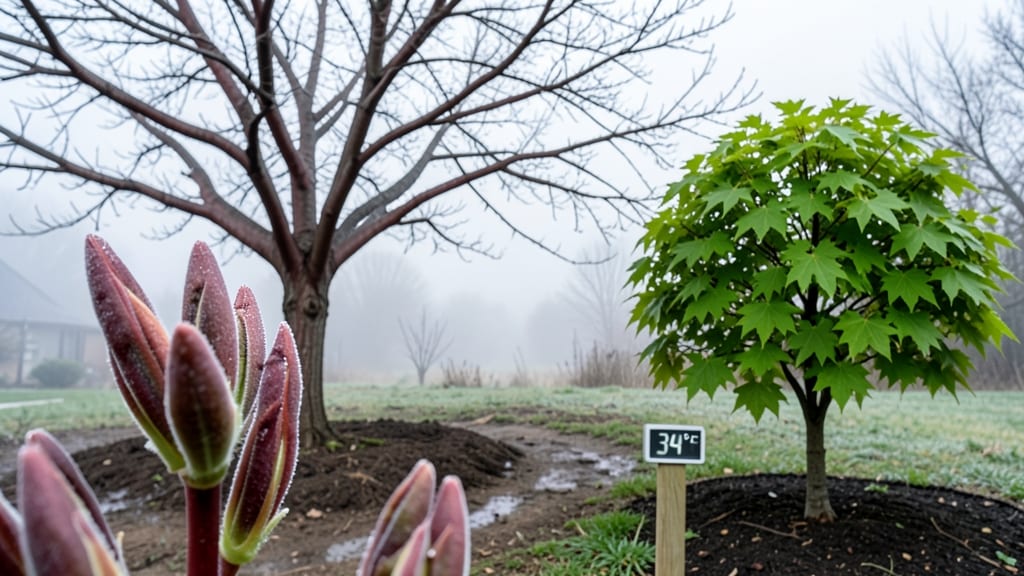
Your maple tree’s stubborn silence this spring—the maple not leafing out—isn’t just bad luck; it’s often a fungal spot crisis in disguise. 🌳 I've seen healthy maples turn into leafless skeletons overnight, and the fix is simpler than you'd think: a baking soda spray that outsmarts copper-based solutions while being safer for your soil and pollinators.
Fungal spot thrives in damp spring weather, stealing nutrients before leaves even form. The classic copper sprays work, but they're toxic and wash away quickly.
My baking soda mix—just 1 tablespoon per quart of water with a drop of dish soap—sticks to leaves, creates an alkaline barrier, and stops the spread in 7-10 days of weekly applications.
You'll notice new buds within 2 weeks of consistent treatment, and those first leaves will be vibrant green instead of spotted. The real magic? This method prevents next year's outbreak too, saving you the heartbreak of another bare-branched spring.
Works for all maple varieties, from sugar maples to reds, and won't harm beneficial insects. Just time your first spray for when buds swell but before leaves unfurl—late April or early May in most zones.
Root Causes Behind Stunted Maple Growth
When your maple tree refuses to bud and leaf out, it’s often a cry for help from its roots—or something deeper. Understanding the why behind this delay is the first step to revival.
Below, we break down the most common culprits, backed by science, so you can diagnose and act with confidence.
Cold snaps can push maples into a survival mode, delaying bud break until conditions stabilize. Why it happens: - Chilling requirements: Maple trees (especially sugar maples) need 1,000–1,500 hours below 45°F (7°C) to break dormancy.
If winters are too mild or erratic, buds may not receive the proper signal to open. - Frost damage: Late frosts after buds swell can kill emerging tissue, forcing the tree to reset.
This is common in zone 5–7, where warm spells trick trees into budding too early. - Soil temperature lag: Even if air temps rise, cold soil (below 40°F/4°C) can stunt root activity, delaying nutrient transport to buds.
Actionable fix:
- Monitor local frost dates and protect young trees with frost cloth if buds swell before the last frost.
- Mulch heavily (3–4 inches) with wood chips to insulate roots and moderate soil temps.
Maples are heavy feeders, and starvation—especially of nitrogen, phosphorus, or micronutrients—can halt leafing. Key deficiencies: - Nitrogen (N): Leads to yellowing leaves (chlorosis) and weak buds.
Signs include slow growth and small, sparse foliage. - Phosphorus (P): Causes purple stems/leaves and delayed bud break by limiting energy for root growth. - Magnesium (Mg) or Iron (Fe): Leads to interveinal yellowing (between veins), stunting photosynthesis and bud development. - Compacted or waterlogged soil: Poor aeration restricts root access to oxygen and nutrients, weakening the tree’s ability to push out leaves.
Actionable fix:
- Test your soil (pH should be 6.0–7.5 for maples). Adjust with lime (for acidity) or sulfur (for alkalinity).
- Apply a balanced fertilizer (e.g., 10-10-10) in early spring before buds swell, or use organic options like composted manure or bone meal.
- Aerate compacted soil with a garden fork or gypsum (for clay soils).
Diseases like **fungal spot (e.g., Rhytisma or Anthracnose) or pests (e.g., maple scale, borers) can weaken the tree’s energy reserves, delaying leaf-out. How it happens: - Fungal spot (e.g., tar spot): Causes black, crusty spots on leaves, reducing photosynthesis.
Infected trees may leaf out late or not at all if severely stressed. - Root rot (Phytophthora or Armillaria): Waterlogged conditions invite fungi that decay roots, cutting off nutrient supply to buds. - Pest damage: Maple borers or scale insects sap nutrients, while deer browsing can strip buds before they open.
Actionable fix:
- Prune infected branches (sterilize tools with 70% alcohol) and remove fallen leaves to reduce fungal spores.
- Apply copper fungicide (as mentioned in your article) before bud break to prevent spot infections.
- Inspect for pests (look for honeydew, sawdust-like frass, or boreholes). Treat with horticultural oil (for scale) or neem oil (for borers).
Both drought and overwatering can disrupt maple growth. How it plays out: - Drought stress: Maples have deep roots, but prolonged dry spells (especially in sandy or rocky soil) force trees into dormancy-like survival mode. - Overwatering: Waterlogged roots suffocate, leading to root rot and nutrient lockout.
Signs include yellowing leaves and mushy bark at the base. - Transplant shock: Newly planted maples may delay leafing for 1–2 years as roots establish.
Actionable fix:
- Deep water (1–2 inches per week) during drought periods, focusing on the drip line.
- Improve drainage with sand or gravel if soil is clay-heavy.
- Mulch (4–6 inches of wood chips) to retain moisture and regulate soil temp.
Sometimes, the issue isn’t internal—it’s external interference. Common culprits:
- Competition: Grass, weeds, or nearby trees stealing water/nutrients.
- Construction or soil disturbance: Root damage from digging, grading, or buried trash (e.g., plastic, metal) can girdle roots.
- Herbicide drift or chemical injury: Glyphosate or road salt can burn roots, stunting growth.
- Animal damage: Deer, rabbits, or rodents may browse buds or chew bark, preventing leaf-out.
Actionable fix:
- Remove competing plants within the tree’s drip line.
- Avoid heavy equipment near roots (keep a 3-foot buffer).
- Test for buried debris with a metal detector if growth is one-sided.
- Protect young trees with tree guards** from herbivores.
Revitalize Your Maple Tree Now
If your maple tree is refusing to leaf out, don’t panic—there are practical steps you can take to diagnose the issue and restore its health. Below are targeted solutions based on the most common causes, along with prevention tips to keep your tree thriving.
If your maple tree isn’t leafing out due to nutrient issues, improving soil health is key.
How to Fix:
- 🔥 Test the Soil – Use a soil test kit (available at garden centers) to check pH and nutrient levels. Maples prefer slightly acidic soil (pH 5.0–6.5).
- 🍳 Amend the Soil – Mix in compost or well-rotted manure to boost organic matter. For quick nutrients, apply a balanced fertilizer (like 10-10-10) in early spring.
- 👨🍳 Focus on Key Nutrients – Maples need nitrogen (N), phosphorus (P), and potassium (K). If magnesium is lacking (common in clay soils), sprinkle Epsom salt (1 tbsp per gallon of water) every 4–6 weeks.
💡 Prevention Tip:
- Mulch around the base (2–4 inches deep) with wood chips or bark to retain moisture and improve soil structure.
- Avoid over-fertilizing—too much salt can harm roots.
Fungal diseases (e.g., anthracnose, tar spot, or leaf spot) can prevent bud break. A baking soda spray is a natural, copper-free remedy.
How to Fix:
- 🔪 Prune Infected Branches – Remove and dispose of (not compost) any dead or spotted leaves/branches to prevent spread.
- 🥘 Baking Soda Spray Recipe – Mix:
- 1 tbsp baking soda
- 1 tsp dish soap (as a sticker)
- 1 gallon water
- Spray thoroughly on both sides of leaves every 7–10 days until new growth appears.
- 🌡️ Improve Airflow – Thin out dense foliage to reduce humidity, which fungi love.
💡 Prevention Tip:
- Water in the morning to allow leaves to dry quickly.
- Avoid overhead watering—use drip irrigation or soaker hoses instead.
Cold snaps or late frosts can shock buds into dormancy. If this is the issue, your tree may just need time to recover.
How to Fix:
- 🌡️ Monitor Weather – If frost is forecasted after buds swell, cover young trees with burlap or frost cloth at night.
- 💪 Support Recovery – Apply a light layer of mulch to insulate roots and reduce stress.
- ⏰ Wait It Out – Some maples (like Norway or Silver maples) are sensitive to late frost. If buds are brown but not mushy, they may still open later in spring.
💡 Prevention Tip:
- Plant cold-hardy maple varieties (e.g., Sugar Maple, Red Maple) if your climate has unpredictable springs.
- Avoid heavy pruning in late summer/fall—it stimulates new growth that’s vulnerable to frost.
Insects like maple leaf beetles, scale, or borers can stress trees, delaying leaf-out.
How to Fix:
- 🔍 Inspect the Tree – Look for:
- Holes in bark (borers)
- Sticky residue (scale insects)
- Chewed leaves (beetles)
- 🍳 Apply Organic Pesticides –
- Neem oil (spray in early spring to deter beetles)
- Horticultural oil (for scale insects—apply when temps are above 40°F)
- 👨🍳 Introduce Beneficial Insects – Ladybugs and lacewings eat maple leaf beetles naturally.
💡 Prevention Tip:
- Keep the tree healthy—stressed trees attract pests. Water deeply during droughts and fertilize as needed.
- Remove fallen leaves in autumn to reduce overwintering pests.
Root girdling, compacted soil, or physical damage can stunt growth.
How to Fix:
- 🔪 Loosen Compacted Soil – Use a garden fork to aerate the root zone (6–12 inches deep).
- 🌱 Mulch Properly – Keep mulch 3–4 inches deep but 6 inches away from the trunk to prevent rot.
- 🚫 Avoid Overwatering – Soggy soil suffocates roots. Water deeply but infrequently (1–1.5 inches per week).
💡 Prevention Tip:
- Plant at the right depth—bury the root flare (where roots meet the trunk) slightly above soil level.
- Avoid heavy machinery near the tree—roots can be easily damaged.
✨ Final Pro Tip: If your maple still doesn’t leaf out by mid-to-late May, consult a local arborist—some issues (like canker disease or root rot) require professional treatment.
With the right care, your maple can bounce back and put on a stunning display of vibrant green foliage by summer! 🌿💚
Frequently asked questions
Why does my maple tree have swollen buds but no leaves?
Swollen buds that refuse to open are often a sign of late frost damage or fungal infection. If buds are brown and mushy, frost likely killed the emerging tissue. If they're firm but not opening, fungal spot (like Rhytisma) may be blocking growth. Try the baking soda spray mentioned in the article to break the fungal cycle.
How long should I wait before worrying about a bare maple?
Most maples leaf out between mid-April and early June, depending on your climate zone. If buds haven't swollen by late May or leaves still haven't appeared by mid-June, there's likely a deeper issue like root rot, severe nutrient deficiency, or pest damage. Test soil and inspect branches for signs of stress.
Can I force my maple to leaf out with fertilizer?
Fertilizer alone won't force leafing if the tree is diseased or frost-damaged, but it can help if the issue is nutrient deficiency. Apply a balanced 10-10-10 fertilizer in early spring before buds swell, then water deeply. For magnesium deficiencies (yellowing between veins), use Epsom salt (1 tbsp per gallon) every 4-6 weeks. Always test soil first!
What's the difference between fungal spot and anthracnose?
Both diseases delay leafing but appear differently: Fungal spot (like tar spot) creates black, crusty patches on leaves, while anthracnose causes dark, sunken lesions with yellow halos. Anthracnose often appears first on lower branches and can kill buds entirely. Both respond to the baking soda spray, but anthracnose may require multiple treatments.
Will my maple ever recover if it's been bare for years?
Some maples can recover even after years of neglect, but it depends on the root health. If roots are still alive (check for green cambium under bark), prune dead branches, improve soil, and protect from pests. For trees with root rot or girdling, recovery is unlikely without professional intervention. Start with soil tests and gradual revitalization efforts.