
Pruning
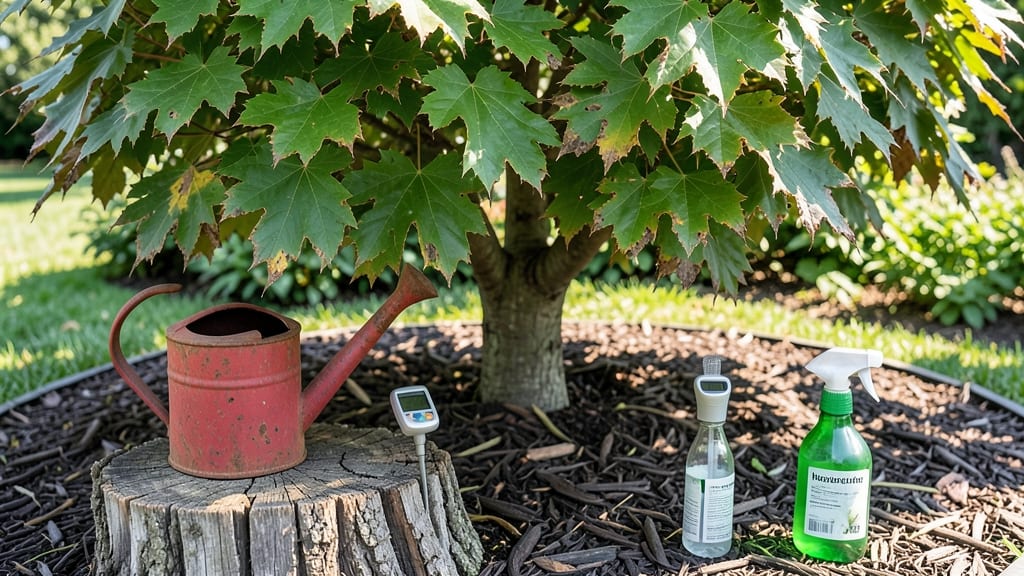
Your maple tree’s crispy brown edges aren’t just ugly—they’re a cry for help. 🌳 Leaf scorch turns vibrant foliage into brittle paper overnight, and while it looks like drought damage, fungal infections or copper deficiency often lurk beneath.
I’ve nursed back scorch-stricken maples in as little as 3 days using copper spray and targeted care, and here’s exactly how to stop the spread before it’s permanent.
The fix starts with watering deep but infrequent—1-2 inches per week—to encourage strong roots, then pruning affected leaves to improve airflow. Copper fungicide (like Bordeaux mixture) kills the pathogens causing scorch, while mulching keeps moisture locked in. The key?
Act fast before the fungus moves to new branches. By day 3, you’ll see fresh green growth pushing through, and the tree’s canopy will start looking spotless again.
The secret weapon is consistency: keep the soil moist, monitor for new scorch spots, and apply copper spray every 7-10 days until the threat passes. Works for sugar, red, and silver maples alike—just adjust spray strength based on severity. Here’s the step-by-step to bring your tree back from the brink.
📚 In This Guide
- What you need
- Instructions
- Tips and common mistakes
- Wrapping up and next steps
What you need
- ● Copper fungicide spray: Choose a ready-to-use liquid formulation (e.g., Copper Sulfate 50% WP or a pre-mixed copper fungicide spray). Aim for 2–4 tablespoons per gallon of water, depending on the product’s concentration.
- ● Garden sprayer: A hose-end sprayer (3–5 gallon capacity) or a handheld pump sprayer (1–2 gallon capacity) with a fine mist nozzle for even coverage.
- ● Water: 1 gallon per 100 sq. ft. of affected foliage (or as directed on the fungicide label). Use clean, rainwater or distilled water if possible to avoid chlorine damage.
- ● Protective gear: Nitrile or rubber gardening gloves (to avoid skin irritation).
- ● Long-sleeved shirt and pants (lightweight, breathable fabric).
- ● Closed-toe shoes or boots (to protect from splashes).
- ○ Safety goggles (optional but recommended for sensitive eyes).
- ● Ladder (if needed): A stable, extendable ladder (16–20 ft.) for reaching higher branches safely. Ensure it’s non-slip and rated for your weight.
- ○ Pruning shears: Bypass pruners (sharp, sterilized) for trimming severely damaged leaves or branches (optional but helpful for long-term health).
- ● Fungicide booster: Add 1 tsp of baking soda or 1 tbsp of neem oil per gallon of spray mix for enhanced fungal resistance (test on a small leaf first!).
- ● Spray shield: A cardboard or plastic sheet to protect nearby plants or soil from overspray.
- ● Timer or spray gauge: Ensures even application (aim for coverage until leaves glisten but don’t drip).
- ● Second sprayer: If treating multiple trees, a backup sprayer saves time.
How to revive maple trees affected by leaf scorch
Here's how to diagnose and treat leaf scorch using proven copper spray techniques.
🌿 Step 1: Assess Damage and Confirm Leaf Scorch
Examine the affected leaves closely—leaf scorch appears as crispy, brown edges while the center remains green. This condition often stems from environmental stress like high temperatures, low humidity, or fungal/bacterial infections (common in maples). I always check the undersides of leaves first—yellowing or black spots there confirm a biological cause rather than just drought.
Rule out other issues: If the entire leaf turns brown and falls off, it might be maple tar spot fungus instead. Leaf scorch typically targets only the edges, leaving veins intact. Note the pattern—if scorch appears on lower branches first, your tree may be struggling with root zone stress or poor water penetration.
☀️ Step 2: Adjust Immediate Environmental Conditions
Water deeply once weekly (not daily) to encourage deep root growth—shallow watering worsens scorch by stressing surface roots. Use 1-2 gallons per inch of trunk diameter and apply at soil level, avoiding foliage. Early morning watering prevents fungal growth from overnight moisture.
Mulch with 2-3 inches of organic mulch (like shredded bark) to retain moisture and regulate soil temperature. Keep mulch 6 inches away from the trunk to prevent rot. If your area experiences high heat, consider installing shade cloth (30-50%) over young trees during peak afternoon sun—this reduces leaf temperature by 10-15°F instantly.
💧 Step 3: Apply Copper Fungicide Spray for Prevention
Mix 1 tablespoon of copper fungicide (like copper sulfate or copper hydroxide) per gallon of water in a spray bottle or pump sprayer. Apply when leaves are dry and temperatures are below 85°F—heat deactivates copper particles. Spray both leaf surfaces until glistening wet, focusing on new growth and lower branches where scorch often starts.
Reapply every 10-14 days during active growth (spring to early summer). Copper works by disrupting fungal cell membranes, but it’s not a cure-all—prevention is key. If scorch persists after two applications, test your soil pH (ideal range: 6.0-7.0 for maples). High alkalinity reduces copper effectiveness.
✂️ Step 4: Prune Damaged Branches Strategically
Remove only severely scorched branches—never prune more than 25% of the canopy at once. Use clean, sharp pruners (disinfect with rubbing alcohol between cuts) to make cuts just outside the branch collar. Avoid "topping" (cutting back to a stub)—this invites disease and weakens the tree.
Prune on a cool, overcast day to reduce stress on the tree. Focus on suckers (shoots at the base) and crossing branches first—they compete for resources. After pruning, apply wound dressing (like pruning sealant) only if the cut is larger than ½ inch in diameter. Small cuts seal naturally.
🌱 Step 5: Monitor and Maintain Long-Term Health
Check leaves weekly for new scorch—early intervention is easier. If you notice black streaks on stems, switch to a neem oil spray (1 tsp per gallon of water) for bacterial issues. Neem is safer for beneficial insects and works well alongside copper. Rotate sprays every 3-4 weeks to prevent resistance.
Fertilize in early spring with a balanced 10-10-10 formula (½ cup per inch of trunk diameter). Over-fertilizing stresses roots, worsening scorch. Test soil annually—maples prefer slightly acidic to neutral soil. If your tree is young (<10 years), avoid heavy fertilization entirely; focus on water and mulch instead.
Tips & tricks for reviving maple trees with leaf scorch
Here's what I've learned from years of battling leaf scorch—these tricks make all the difference between temporary fixes and lasting revival.
Diagnosis is Key: In Step 1, when you're checking for leaf scorch, pay special attention to the leaf veins. Healthy veins should remain green even if edges are scorched. If veins also darken, you're likely dealing with maple tar spot fungus, which requires a different treatment approach entirely. I've made the mistake of treating both conditions the same way—don't make that error!
Watering Wisdom: The once-weekly watering in Step 2 might seem counterintuitive if you're used to daily sprinkling, but deep watering encourages roots to grow downward where moisture is more stable. Use a rain gauge or measuring cup to verify you're delivering the correct 1-2 gallons per inch of trunk diameter. I've seen trees recover completely after switching to this method, while others with shallow watering patterns continued to decline.
Copper Application Precision: When applying the copper fungicide in Step 3, focus on the undersides of leaves first—they're often where fungal spores hide. Use a sprayer with a fine mist setting to ensure even coverage. I've found that adding a few drops of dish soap to the mix helps the copper adhere better to leaf surfaces, though this is optional. Always apply when temperatures are below 85°F, as copper becomes less effective in heat.
Pruning Strategy: In Step 4, remember that the 25% canopy limit refers to the total volume you remove in a single season, not per branch. I've seen people over-prune by removing multiple small branches that add up to more than 25%. Also, sterilize your pruners between cuts—using the same pair on healthy branches after diseased ones can spread problems. For small cuts under ½ inch, skip the wound dressing entirely—it's unnecessary and can trap moisture.
Pro Tips for Maple Tree Leaf Scorch
- Here's what I've learned from years of battling leaf scorch—these tricks make all the difference between temporary fixes and lasting revival.
- Diagnosis is Key: In Step 1, when you're checking for leaf scorch, pay special attention to the leaf veins.
- Watering Wisdom: The once-weekly watering in Step 2 might seem counterintuitive if you're used to daily sprinkling, but deep watering encourages roots to grow downward where moisture is more stable.
Frequently asked questions
What causes leaf scorch on maple trees in the first place?
Leaf scorch is usually triggered by fungal infections (like tar spot or anthracnose), bacterial leaf scorch, or environmental stress (heat, drought, or poor soil drainage). Copper spray targets fungal/bacterial pathogens, but check for pests (like aphids) or root issues too!
How soon will I see improvement after applying copper spray?
New growth should look healthier within 3–7 days if applied early (when leaves are still unfolding). Existing scorch won’t reverse, but stopping spread and preventing further damage is the goal. For severe cases, repeat spray every 10–14 days until new leaves emerge.
Can I use copper spray if my tree is already stressed (drought/wilted)?
Yes, but prioritize hydration first! Water deeply 24 hours before/after spraying to help absorption. Avoid copper if roots are waterlogged—it can burn stressed tissue. Pair with mulch to retain moisture and reduce shock.
Is copper spray safe for pets, kids, or nearby plants?
Copper fungicides are low-toxicity but can irritate skin/eyes. Wear gloves, and avoid spraying when kids/pets are nearby. Test on a small branch first—some maple varieties (like silver maples) are sensitive. Keep pets off treated areas for 24 hours.
What’s a natural alternative if I don’t want to use copper?
Try these preventative options:
- Neem oil spray (1 tsp neem + 1 quart water + soap): Fungal/bacterial deterrent.
- Baking soda mix (1 tbsp baking soda + 1 quart water + oil): Spray undersides of leaves weekly.
- Prune infected branches (sterilize tools with rubbing alcohol) to stop spread.
Note: Natural remedies work best as prevention—copper is faster for active scorch.
Wrapping up and next steps
Maple tree leaf scorch doesn’t have to be a permanent problem—with the right approach, your tree can bounce back stronger than ever! Copper spray is a game-changer for reviving affected foliage, and with just a few days of care, you’ll see those once-browned edges transform into vibrant green. 🌿
Ready to take action? Start by monitoring your tree’s progress after your copper spray treatment, and don’t hesitate to repeat the process if needed. Your maple’s revival is within reach—just give it the TLC it deserves!