
Leaf Blower
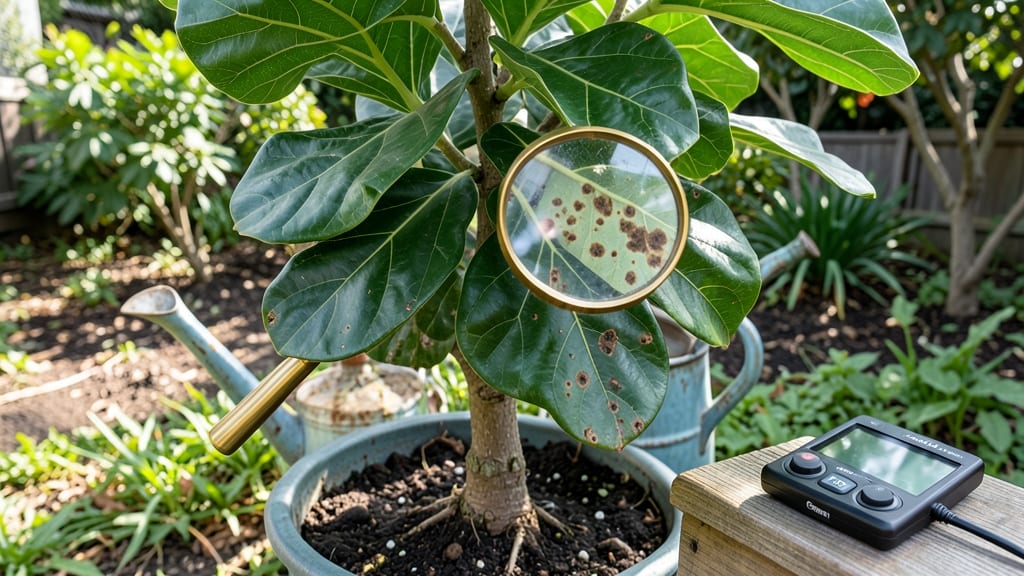
Your fiddle leaf fig’s new leaves are screaming for help with those brown spots—don’t panic, this is fixable. 🌿 The problem usually boils down to either overwatering (root rot’s silent killer) or underwatering (stress signals from thirsty leaves), but sometimes it’s even simpler: hard water buildup or a quick fungal infection.
I’ve nursed back more than my share of sad-looking fiddle leaf figs, and the baking soda trick is my go-to first line of defense.
Start by checking the soil—if it’s soggy or smells funky, you’re overwatering. Let the top 2 inches dry out completely before watering again, and always use room-temperature water.
For those stubborn brown spots, mix 1 teaspoon of baking soda with 1 quart of water, spray the leaves lightly (don’t soak them), and let the plant air-dry in bright, indirect light. The spots should fade within a week if the cause was water-related.
If the spots keep spreading or look crusty, you might be dealing with powdery mildew—prune those leaves immediately and increase airflow around your plant. For long-term health, wipe leaves monthly with a damp cloth to remove dust, and avoid placing your fiddle leaf fig near drafts or heating vents.
With these adjustments, your plant will bounce back faster than you think.
Here’s the kicker: once you solve the immediate issue, focus on prevention. A consistent watering schedule (every 7-10 days in summer, less in winter) and a humidifier nearby will keep those new leaves crisp and green. Your fiddle leaf fig will thank you with glossy, spot-free foliage in no time.
Root Causes Of Leaf Spots
Understanding why your fiddle leaf fig’s new leaves develop brown spots is the first step to saving them. These issues often stem from environmental stress, improper care, or unseen pests. Let’s break down the top culprits and why they trigger those unsightly marks.
Fiddle leaf figs (Ficus lyrata) are tropical plants that hate soggy roots.
When soil stays too wet for too long, it creates the perfect conditions for: - Root rot (caused by Phytophthora or Pythium fungi) - Oxygen deprivation in the root zone, leading to nutrient starvation - Fungal infections that spread to leaves, causing brown, mushy spots
Why it happens:
- Compacted or non-porous soil traps excess moisture.
- Lack of drainage holes in pots forces water to pool at the roots.
- Overzealous watering (especially in cooler months) slows evaporation, keeping soil damp longer than the plant can tolerate.
💡 Pro Tip: Stick your finger 1-2 inches into the soil—if it’s damp, wait. Fiddle leaf figs prefer soil that’s 60-70% dry between waterings.
While overwatering is a common killer, drought stress can also cause brown spots—especially on newer growth.
Here’s how: - Plasmolysis: When cells lose too much water, their edges shrink and brown from dehydration. - Leaf scorch: Edges and tips crisp up as the plant prioritizes water to older leaves. - Low humidity (below 40%) forces leaves to transpire faster, accelerating moisture loss.
Why it happens:
- Infrequent watering in dry climates or during heating season.
- Central heating or AC sucking moisture from the air.
- Small pots dry out faster than larger containers.
🌡️ Fix It: Group your fiddle leaf fig with other plants to raise humidity, or use a pebble tray with water beneath the pot.
Tiny invaders like spider mites, mealybugs, or scale insects feed on leaf sap, leaving behind:
- Stippled brown spots (from spider mites)
- Sticky residue (honeydew) that attracts sooty mold (a black fungal growth)
- Yellowing and curling as pests drain nutrients
Why it happens:
- Dry air weakens leaves, making them easier targets.
- Dusty leaves block stomata, reducing the plant’s ability to fend off pests.
- New growth is tender, so pests zero in on fresh leaves first.
🔍 Spot the Problem: Hold a white sheet beneath the plant and shake it—falling pests confirm an infestation.
Fiddle leaf figs thrive in stable conditions.
Sudden changes or extremes trigger: - Cold drafts (below 55°F/13°C) cause chilling injury, visible as dark, water-soaked spots that later brown. - Direct hot sun (especially after being indoors) leads to sunburn, where leaves develop bleached or crispy brown patches. - Frequent temperature fluctuations (e.g., near windows or doors) stress the plant, making it vulnerable to secondary infections.
Why it happens:
- AC vents or heaters creating microclimates.
- Moving the plant too quickly from low to bright light.
- Outdoor exposure in spring/fall without acclimation.
✨ Prevent It: Keep your fiddle leaf fig 10-20 feet from windows (indirect light) and avoid placing it near entryways.
If brown spots are dark, greasy, or spreading, a pathogen may be at fault.
Common offenders: - Leaf spot fungi (Cercospora or Alternaria): Cause target-like brown rings with yellow halos. - Bacterial leaf spot (Pseudomonas): Produces watery, brown lesions with yellow borders. - Anthracnose: Creates sunken, brown spots that enlarge over time.
Why it happens:
- Wet foliage (from overhead watering or high humidity) encourages spore growth.
- Poor air circulation traps moisture against leaves.
- Weakened plants (from stress) are more susceptible.
🧼 Clean Up: Remove infected leaves with sterilized scissors and spray remaining leaves with a copper fungicide (follow label instructions).
Revive Your Fiddle Leaf Fig
Brown spots on your fiddle leaf fig’s fresh leaves can feel like a heartbreaking setback, but don’t toss that plant just yet! With the right approach, you can nurse those leaves back to health—and even prevent future damage.
Below, we’ll break down practical solutions tailored to the most common causes, from quick fixes to long-term care. Let’s turn those sad spots into happy, glossy foliage again.
If your fiddle leaf fig is drowning in excess moisture, brown spots are often a sign of root stress or rot. Here’s how to bail it out:
🔥 Step 1: Stop Watering Immediately
Let the soil dry out completely before doing anything else. Overwatering is the #1 killer of fiddle leaf figs, so patience is key.
🍳 Step 2: Check the Roots
Gently remove the plant from its pot and inspect the roots:
- Healthy roots are firm and white.
- Rotten roots are mushy, black, or smell foul.
Use a clean pair of scissors to trim away the bad bits (sterilize with rubbing alcohol first).
👨🍳 Step 3: Repot in Fresh, Well-Draining Soil
- Choose a terracotta pot (if possible)—it breathes better than plastic.
- Use a light, airy potting mix (like a blend of peat, perlite, and orchid bark).
- Pro tip: Add a handful of perlite or coarse sand to improve drainage. 💡
🥘 Step 4: Adjust Your Watering Routine
- Wait until the top 2–3 inches of soil are bone-dry before watering again.
- Water deeply but infrequently—think "soak and dry" cycle.
- Avoid saucers that trap water; empty them after watering.
⏰ Prevention Tips
✔ Use a moisture meter to track soil dryness. ✔ Water in the morning so excess moisture evaporates during the day. ✔ Avoid misting—fiddle leaf figs hate wet leaves (they’re prone to fungal issues).
Crispy, brown edges or spots can also mean your fiddle leaf fig is thirsty or suffering from dry air. Here’s how to quench its thirst:
💧 Step 1: Water Thoroughly
- Stick your finger 2–3 inches into the soil—if it’s dry, it’s time to water.
- Water until it drains out the bottom, then empty the saucer.
🌧️ Step 2: Boost Humidity (The Easy Way) Fiddle leaf figs love 60–70% humidity.
If your home is dry (common in winter or with heating/AC), try: - Pebble trays: Fill a shallow tray with water and pebbles, then place the pot on top. - Group plants together to create a microclimate. - Use a humidifier near the plant (great for long-term care).
🎯 Step 3: Wipe Down Leaves
Dust and dirt clog pores, making it harder for leaves to absorb moisture. Gently wipe leaves with a damp (not soaking) cloth every few weeks.
✨ Prevention Tips
✔ Mist leaves lightly (but avoid overdoing it—this can cause fungal issues). ✔ Place near a bathroom or kitchen (steam from showers/cooking adds humidity). ✔ Rotate the plant every few weeks so all sides get even light and air circulation.
Tiny pests like spider mites, mealybugs, or scale can leave brown spots and sticky residue. Here’s how to evict them:
🔪 Step 1: Inspect for Pests
Look for:
- Webbing (spider mites).
- Cottony tufts (mealybugs).
- Hard, shell-like bumps (scale).
🚿 Step 2: Isolate and Clean
- Quarantine the plant to prevent spreading.
- Wipe leaves with a neem oil solution (1 tsp neem oil + 1 quart water + a drop of dish soap).
- For stubborn pests, spray with 70% isopropyl alcohol (test a small area first).
🌿 Step 3: Encourage Natural Predators
- Ladybugs eat aphids.
- Release lacewings (available at garden centers) to combat soft-bodied pests.
🛡️ Prevention Tips
✔ Check new plants before bringing them home. ✔ Avoid over-fertilizing—weak plants attract pests. ✔ Spray leaves with water occasionally to deter mites (they hate humidity).
If brown spots appear only on new leaves or in patchy patterns, your fiddle leaf fig might be getting too much direct sun.
🌞 Step 1: Move It to Indirect Light
- Bright, indirect light is ideal (east or north-facing windows).
- Avoid harsh afternoon sun (especially south/west windows).
🏠 Step 2: Use Sheer Curtains
If you can’t move the plant, filter the light with a sheer curtain.
🌱 Step 3: Rotate the Plant
Turn the pot quarter-turns every few weeks so all sides get even light.
🔥 Prevention Tips
✔ Watch for leaf bleaching—a sign of too much light. ✔ Gradually acclimate new plants to brighter spots over 1–2 weeks. ✔ Avoid fluorescent lights as the sole light source (they don’t provide enough spectrum).
If you’ve recently fertilized or used pesticides, brown spots could be a chemical burn.
💦 Step 1: Flush the Soil
- Water the plant thoroughly 2–3 times to leach out excess salts.
- Add perlite or coconut coir to improve drainage.
🛑 Step 2: Hold Off on Fertilizer
- Wait 2–4 weeks before fertilizing again.
- Dilute fertilizer to half-strength if you must use it sooner.
🌿 Step 3: Wipe Affected Leaves
- Rinse leaves with plain water to remove residue.
⚠️ Prevention Tips
✔ Follow label instructions—more isn’t better! ✔ Use organic fertilizers (like fish emulsion or compost tea) for gentler feeding. ✔ Test soil pH (ideal range: 6.1–6.5) to ensure nutrients are absorbing properly.
For fungal spots or general leaf stress, a baking soda spray can work wonders:
- Mix 1 tsp baking soda + 1 quart water + a drop of dish soap.
- Spray affected leaves (avoid over-saturating).
- Repeat every 2 weeks if needed.
Remember: Fiddle leaf figs are resilient—with the right care, those brown spots won’t tell the whole story. Act fast, adjust your routine, and watch your plant bounce back to its lush, leafy glory! 🌿✨
Frequently asked questions
Why do new fiddle leaf fig leaves get brown spots while older leaves stay green?
New leaves are more vulnerable because they're still developing. Brown spots often appear when the plant struggles to transport water/nutrients efficiently to fresh growth. This typically happens with overwatering (root stress) or underwatering (drought stress), where older leaves get priority. Check soil moisture—if the top 2 inches are dry, it's thirsty; if soggy, you're overdoing it.
Are brown spots on fiddle leaf fig leaves always a sign of disease?
Not necessarily! Many brown spots are environmental, not infectious. Common non-disease causes include low humidity (below 40%), hard water buildup (white crusty deposits), or sunburn from direct afternoon light. Only if spots are greasy, spreading rapidly, or accompanied by yellow halos should you suspect fungal/bacterial issues.
How quickly should I expect to see improvement after adjusting care?
With proper fixes, you'll often see changes within 1-2 weeks. For water-related issues, new growth should look healthier in 3-4 weeks. If spots persist beyond 6 weeks despite adjustments, check for pests or fungal infections. Remember: fiddle leaf figs are slow growers—don't expect dramatic overnight changes, but consistent care will show results.
Can I save a fiddle leaf fig with severe brown spots that cover most new leaves?
Yes, but you'll need to act fast and be patient. First, prune heavily damaged leaves to redirect energy. Then focus on root health (check for rot) and environmental adjustments. If the plant's center stem is still firm and roots are mostly healthy, it can regrow new leaves. Severe cases may need 3-6 months of careful recovery care to show full improvement.
Will my fiddle leaf fig ever grow new leaves without brown spots again?
Once you identify and correct the root cause, your plant will produce fresh, healthy leaves. The key is consistency—maintain proper light (bright indirect), watering (when top 2 inches are dry), and humidity (40-60%). With stable conditions, new growth typically emerges within 2-4 weeks, and you'll see spot-free leaves within 2-3 months.