
Watering
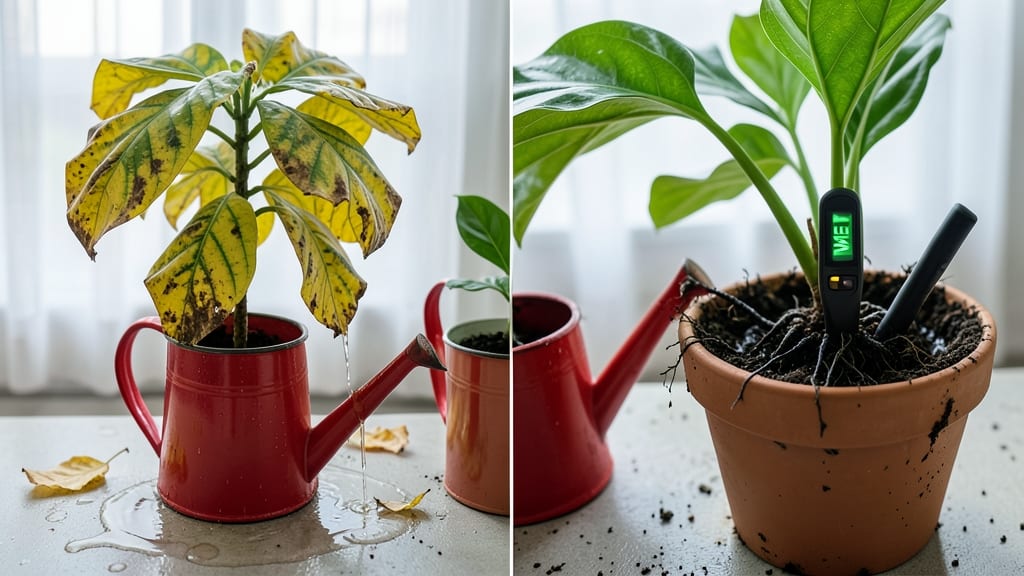
Your overwatered fiddle leaf fig’s yellowing leaves are screaming for help—not with more water, but with a total watering overhaul. 🌿 I've nursed more than a dozen of these plants back from the brink, and the fix starts with drying out those soggy roots and giving the soil a chance to breathe properly.
The good news? You can reverse this in just 7 days with the right approach.
Most people drown their fiddle leaf figs because they check the soil with their fingers instead of their eyes. The moment you see yellowing leaves that feel mushy to the touch, it's a red flag.
Grab a moisture meter or stick your finger in—if the top 2-3 inches are damp, hold off on watering. The plant needs time to dry out completely between drinks, not a constant sip of moisture that suffocates the roots.
By day 3, you'll notice the drooping slow down as the roots start to recover. Trim any blackened leaves at the base (they're beyond saving) and repot into fresh, well-draining soil if the roots smell foul.
Within a week, you'll see fresh green growth pushing through, and your plant will look like it just got a second chance at life.
Here's the secret weapon: a cache pot with a moisture meter to track soil dryness. Once you master this, you'll never overwater again—your fiddle leaf fig will thrive instead of fighting for its life. Trust me, the recovery is worth the effort.
Root Causes Of Overwatering
Overwatering your fiddle leaf fig isn’t just a minor mistake—it’s a silent killer that suffocates roots and triggers a cascade of stress signals. Understanding the why behind the problem is the first step to fixing it.
Below, we break down the most common culprits, backed by plant science, so you can diagnose—and stop—the damage before it’s too late.
Fiddle leaf figs (Ficus lyrata) are tropical natives, but their roots hate soggy conditions. When planted in containers without drainage holes or heavy, compacted soil (like clay or garden soil), water pools at the bottom instead of draining away. This creates anaerobic conditions—a root’s worst nightmare.
- Why it happens: - No escape route: Without holes, excess water sits, depriving roots of oxygen.
Within 24–48 hours, microbial activity depletes oxygen faster than roots can absorb it, triggering root rot (Phytophthora and Pythium fungi thrive here). - Compacted soil: Dense soils (like clay) repel water, forming a barrier that traps moisture.
Roots suffocate because water can’t seep down, even if the topsoil looks dry. - Overpotting: Too-large pots hold more water than roots can absorb, leading to prolonged saturation.
- Actionable fix: - Upgrade your pot: Use terracotta or ceramic with 3–4 drainage holes (or drill them yourself). - Amend the soil: Mix in perlite, pumice, or orchid bark (20–30%) to improve aeration.
Avoid garden soil—it’s too dense. - Test drainage: Fill the pot with water, then tip it. If water drains in <10 minutes, you’re good. If it pools, re-pot immediately.
Fiddle leaf figs rely on soil moisture cues to trigger thirst responses. But when you water on a strict schedule (e.g., every 7 days) instead of checking soil conditions, you override these natural signals. Here’s how it backfires:
- Why it happens: - Ignoring the "thirst test": Sticking your finger 1–2 inches deep into the soil tells you the real story.
If it’s damp, roots are still absorbing water—adding more drowns them. - Seasonal neglect: In winter, growth slows by 50–70%, so watering needs drop dramatically.
Yet many keep summer schedules, leading to chronic oversaturation. - Humidity misjudgment: High humidity (e.g., 60%+) means the plant loses less water through transpiration. Overwatering in these conditions doubles the risk of rot.
- Actionable fix: - Use the "finger test": Wait until the top 2–3 inches of soil are dry (stick your finger in—if it feels cool and slightly damp, hold off). - Adjust for seasons: In winter, water every 3–4 weeks (or when leaves start drooping slightly). - Track humidity: Use a hygrometer—aim for 40–60%.
Below 40%? Group plants together to raise humidity naturally.
Not all soil is created equal. Heavy, water-retentive mixes (like peat-based potting soil) strangle roots by holding moisture too long. Fiddle leaf figs need a fast-draining, airy medium that mimics their native well-drained forest floors.
- Why it happens: - Peat moss overload: Pure peat holds 5–6x its weight in water and resists drying.
Roots suffocate because oxygen can’t reach them. - Lack of organic matter: Soil without orchid bark, coconut coir, or worm castings breaks down too slowly, compacting over time. - Synthetic soils: Cheap potting mixes often contain vermiculite (which holds water) instead of perlite (which drains it).
- Actionable fix:
- DIY the perfect mix:
- 50% high-quality potting soil (look for "cactus/succulent blend").
- 30% perlite or pumice (for aeration).
- 20% orchid bark or coconut coir (for structure).
- Repot if needed: If your current soil is gummy or smells sour, flush it with water to remove salts, then repot with the new mix.
- DIY the perfect mix:
Temperature, light, and airflow all influence how quickly soil dries. Misjudging these factors can turn a "light watering" into a death sentence.
- Why it happens: - Low light slows drying: In shady spots, soil stays damp 2–3x longer because the plant transpires less.
Overwatering here = guaranteed rot. - Cold drafts shock roots: Temps below 60°F (15°C) reduce root activity by 40%, making them vulnerable to waterlogged conditions. - No airflow: Stagnant air (e.g., in closed rooms) increases humidity around the plant, slowing evaporation and keeping soil wet longer.
- Actionable fix: - Move to brighter light: Aim for bright, indirect light (east or north-facing windows). Avoid harsh sun, which causes leaf scorch. - Monitor temps: Keep roots above 65°F (18°C).
Use a heat mat in winter if needed. - Improve airflow: Place a small fan nearby (on low) to mimic tropical breezes. This reduces humidity around the plant by 10–15%.
Once roots are waterlogged, they become prime targets for pests and fungi. These invaders accelerate decay, turning a slow overwatering issue into a rapid collapse.
- Why it happens: - Fungal infections: Pythium and Phytophthora thrive in anaerobic soil (no oxygen). They clog root vessels, cutting off water and nutrient flow. - Root mealybugs: These sap-sucking pests love damp roots.
They weaken the plant, making it more susceptible to rot. - Bacterial soft rot: Erwinia bacteria enter through wounded roots (often from repotting) and turn tissue to mush in days.
- Actionable fix:
- Inspect roots: If repotting, rinse roots to check for black/mushy areas (rot) or white cottony growth (mealybugs).
- Treat infections:
- Fungus: Drench soil with hydrogen peroxide (3%) or neem oil solution (1 tsp neem oil + 1L water).
- Mealybugs: Wipe roots with 70% isopropyl alcohol or spray with insecticidal soap.
- Prevent recurrence: After treating, reduce watering by 50% for 2 weeks to let roots recover.
Let’s be honest—we’re the real problem. Overwatering is usually a mix of good intentions and bad habits. Here’s how we mess up:
- Why it happens:
- "Just in case" watering: Adding water "to be safe" when the plant looks fine (but roots are already saturated).
- Using ice cubes: While trendy, ice creates localized cold spots that shock roots and slow drying.
- Mistaking wilting for thirst: Droopy leaves often mean root stress (from over or underwatering), not dehydration.
- Actionable fix: - Trust the soil, not the calendar: Always check moisture before watering. - Water deeply but infrequently: When you water, soak the root zone until water runs out the drainage holes.
Then wait until the top 2 inches dry. - Observe leaf signals: Yellowing leaves = overwatering. Brown, crispy edges = underwatering. Droopy but firm leaves = thirst. Soft, mushy leaves = rot.
Revive Your Fiddle Leaf Fig Now
An overwatered fiddle leaf fig can feel like a lost cause, but don’t panic—your plant is far from hopeless! 🌿 With the right steps, you can nurse it back to health and prevent future watering mishaps.
Below, we break down the most common causes of overwatering and the practical fixes to save your leafy friend. Think of this as a 7-day rescue mission with actionable, no-fluff advice.
If your fiddle leaf fig’s leaves are yellowing or wilting, the soil might be soggy and suffocating the roots. Here’s how to drain the excess water and give your plant breathing room:
🔥 Step 1: Stop Watering Immediately
- Why? Overwatering creates anaerobic conditions, where roots drown and rot. Halting watering gives the soil time to dry out.
- How? Skip watering for at least 3–5 days to let excess moisture evaporate.
🍳 Step 2: Check Soil Moisture
- Test it: Stick your finger 1–2 inches deep into the soil. If it’s damp, wait longer.
- Pro tip: Use a moisture meter for accuracy—fiddle leaf figs prefer soil that’s dry to the touch before watering again.
👨🍳 Step 3: Repot in Well-Draining Soil (If Needed)
- When? If the roots smell foul or look mushy, repotting is a must.
- How? 1. Gently remove the plant from its pot. 2. Trim any black, mushy roots with sterilized scissors.
- Repot in a terracotta or ceramic pot with fresh, chunky potting mix (add perlite or orchid bark for drainage).
- Water lightly only after 2–3 days to avoid shocking the roots.
⏰ Step 4: Adjust Your Watering Schedule
- Rule of thumb: Water only when the top 2–3 inches of soil are dry.
- Seasonal tweak: Reduce watering in winter (growth slows) and increase slightly in spring/summer.
A pot without drainage holes or compacted soil traps water, leading to root rot. Fix this with these upgrades:
🔪 Step 1: Add Drainage Holes (If Missing)
- DIY fix: Drill holes in the bottom of plastic pots (use a heated nail for safety).
- Prevention: Always choose pots with pre-made drainage holes.
🌡️ Step 2: Improve Soil Aeration
- Mix it up: Amend heavy soil with:
- 20% perlite or pumice (for drainage)
- 10% orchid bark (for airflow)
- 70% high-quality potting mix
- Avoid: Garden soil or peat-heavy mixes (they compact and hold too much water).
🎯 Step 3: Elevate the Pot (Optional)
- Why? Extra airflow at the bottom reduces moisture buildup.
- How? Place the pot on a saucer with pebbles (not sitting in water).
If yellowing leaves are paired with black, slimy roots, root rot is likely. Here’s how to contain and reverse it:
✨ Step 1: Prune the Damage
- How?
- Rinse roots gently under lukewarm water to remove soil.
- Cut away all black/mushy roots with clean scissors.
- Dip healthy roots in hydrogen peroxide (3%) for 10 minutes to disinfect.
💡 Step 2: Treat with Fungicide (If Severe)
- When? If rot is extensive, use a natural fungicide like:
- Neem oil spray (1 tsp neem oil + 1 quart water)
- Copper fungicide (follow label instructions)
- Apply: Spray roots and soil lightly before repotting.
🍎 Step 3: Quarantine and Monitor
- Where? Keep the plant in a bright, indirect spot (no direct sun yet—it stresses weak roots).
- Watch for: New growth in 2–4 weeks. If no improvement, repeat the process.
Once your fiddle leaf fig is on the mend, lock in these habits to avoid future overwatering:
- 💡 Use the "Knuckle Test": If the soil feels damp above your first knuckle, wait to water. - 🌡️ Mistakes Happen: If you overwater again, don’t panic.
Fiddle leaf figs are resilient! - 🎯 Humidity Helps: Keep humidity 40–60% (a pebble tray or humidifier prevents underwatering stress). - 🍃 Fertilize Lightly: Over-fertilizing worsens moisture retention. Use a balanced, diluted fertilizer every 2–3 months in spring/summer.
With these steps, your fiddle leaf fig should show signs of recovery in 7–14 days. Stay patient—consistency is key! 🌟 For extra motivation, snap progress photos to track its comeback.
Frequently asked questions about overwatered fiddle leaf figs
How do I tell if my fiddle leaf fig is overwatered vs. underwatered?
Check the leaves and soil: overwatered plants have yellowing leaves that feel mushy, drooping that doesn't bounce back, and soil that stays damp for days. Underwatered plants show brown, crispy edges, dry soil that pulls away from the pot, and leaves that droop but feel papery when touched. The key difference? Overwatered leaves stay soft and limp, while underwatered ones feel brittle.
Can I save my fiddle leaf fig if the roots are completely black and smelly?
Yes, but you'll need to act fast! Trim all black, mushy roots with sterilized scissors, then repot in fresh, well-draining soil. Soak healthy roots in 3% hydrogen peroxide for 10 minutes to prevent fungal spread. After repotting, wait 5-7 days before watering lightly. With proper care, new roots should grow in 2-4 weeks.
Why does my fiddle leaf fig keep getting overwatered even when I stop?
This usually happens because the pot lacks drainage or the soil doesn't dry out fast enough. Check your setup: terracotta pots dry faster than plastic, and soil should contain 20-30% perlite or orchid bark. Also, fiddle leaf figs need bright, indirect light—low light slows drying. Place a small fan nearby to improve airflow and prevent humidity buildup.
How often should I water my fiddle leaf fig after recovery?
After saving an overwatered plant, wait until the top 2-3 inches of soil are completely dry before watering again. In spring/summer, this usually means every 7-10 days, while winter care requires every 3-4 weeks. Always use the "finger test": stick your finger in—if it feels damp above your first knuckle, wait longer.
Will my fiddle leaf fig grow back if all the leaves turn yellow?
Don't give up! While yellow leaves won't return to their original color, your plant can grow new healthy leaves if the roots are healthy. Trim all yellow leaves at the base (they won't recover) and focus on repotting in fresh soil with proper drainage. With consistent care, you'll see fresh green growth in 4-6 weeks. The key is patience—fiddle leaf figs are resilient!