
Aphids
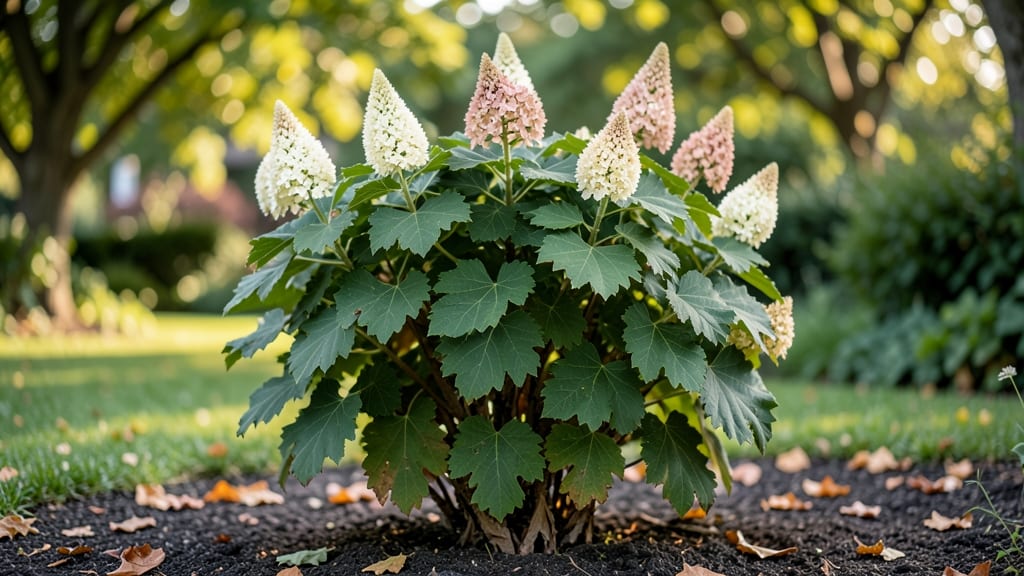
Photos of the oakleaf hydrangea will show you why this plant is a game-changer in shade gardens, with its bold seasonal color shifts that steal the show. 🌿 I’ve grown them for years, and their ability to transform from lush green to fiery red-orange makes them a must-have for any low-light garden. Unlike other hydrangeas, their foliage is the real star—bold, textured, and packed with personality.
The best part? They thrive in partial shade, where many plants struggle. Pair them with ferns, hostas, or bleeding hearts for a layered look that feels effortless.
Their large blooms add height and drama, while their fall foliage turns heads in neighborhoods. This isn’t just a plant—it’s a year-round statement piece that keeps evolving.
Imagine your garden in late summer: creamy-white blooms contrasting with deep green leaves, then the spectacular shift to fiery reds and oranges by October. Oakleaf hydrangeas do all the work—just give them a little space and consistent moisture.
They’re low-maintenance but high-impact, perfect for borders, focal points, or even as a standalone specimen.
For the best results, plant them where they’ll get morning sun and afternoon shade. Mulch well to protect roots, and watch as they become the backbone of your shade garden. Whether you’re designing a new space or refreshing an old one, these plants deliver drama with minimal effort.
📚 In This Guide
- What you need
- Instructions
- Tips and common mistakes
- Wrapping up and next steps
What you need
- ● Camera or Smartphone: DSLR or mirrorless camera (recommended for professional results)
- ● OR a high-quality smartphone (e.g., iPhone 12+, Samsung Galaxy S21+) with a 48MP or higher sensor
- ● Tripod or Stabilizer: Lightweight tripod (for steady shots in low light)
- ● OR a smartphone gimbal (e.g., DJI Osmo Mobile) for smooth movement
- ● Lenses (if using a DSLR): Wide-angle lens (e.g., 16-35mm) for full shrub shots
- ● Macro lens (e.g., 60mm or 100mm) for close-up foliage details
- ● External Flash or Reflector: Softbox flash (e.g., Godox TT350) for even lighting
- ● OR a 5-in-1 reflector (gold/silver for contrast)
- ● Best Time of Day: Early morning (6–9 AM) or late afternoon (4–7 PM) for soft, diffused light
- ● Weather Conditions: Overcast days (natural diffuser!) or light rain for vibrant, glossy leaves
- ● Seasonal Timing: Spring: Emerging leaves (pink/red hues)
- ● Summer: Lush green foliage
- ● Fall: Fiery orange/red transitions
- ● Polarizing filter (reduces glare on leaves)
- ● Pruning shears (to shape hydrangeas for framing)
- ● Drone (e.g., DJI Mini 2) for aerial shots of large gardens
- ● Editing apps (e.g., Lightroom Mobile, Snapseed) for post-processing
How to capture oakleaf hydrangea's seasonal color shifts in your shade garden
This stunning shrub transforms through the seasons—here's how to photograph its vibrant shifts from spring blooms to fiery fall foliage.
☀️ Step 1: Scout Locations for Peak Color Moments
Visit your oakleaf hydrangea at least three times across the growing season to document its full transformation. Start in late spring when the first cone-shaped blooms emerge, then return in mid-summer when flowers mature to soft pink or white, and finally in early fall when leaves blaze crimson, orange, or purple. I always shoot at golden hour—the hour before sunset—when light enhances the foliage's fiery hues.
Look for dappled shade under the plant where light filters through leaves, creating dramatic backlighting. Avoid direct midday sun, which flattens colors and creates harsh shadows. The best photos capture the textured leaves and arching branches—position yourself slightly below the plant to emphasize its three-dimensional form.
📸 Step 2: Master Lighting for Each Seasonal Phase
Spring blooms thrive in soft, diffused light—overcast days or early morning work best to avoid lens flare on the petals' delicate edges. Use a polarizing filter to deepen the emerald-green leaves against the blooms. In summer, when flowers dominate, shoot on cloudy days to prevent blown-out highlights on the pink or white blooms. I always bracket exposures—taking shots at -1, 0, and +1 stops—to ensure the bloom details aren't lost in bright light.
Fall is all about contrasting textures. The rough, lobed leaves and smooth flower heads create natural depth. Use a reflector to bounce light onto shaded areas, especially under the dense canopy. If shooting in direct sunlight, position the hydrangea so the sun backlights the foliage, creating a glowing silhouette effect.
✂️ Step 3: Compose Shots to Highlight Structural Beauty
Oakleaf hydrangeas have arching branches that beg for low-angle shots. Get down to knee level and shoot upward to emphasize the swooping growth habit and layered foliage. Include foreground elements like moss-covered rocks or ferns to add depth and context. I often use a wide-angle lens (16-35mm) for these shots to capture the full shrub's grandeur while keeping the background blurred.
For close-ups, focus on individual blooms or leaf clusters using a macro lens (60mm or longer). Look for dewdrops on morning leaves or spiderwebs in the branches to add artistic interest. Shoot in RAW format to preserve the true color range of the foliage—hydrangea leaves shift from chartreuse to burgundy in a single season, and you’ll want to capture that spectrum accurately.
🌿 Step 4: Edit for Seasonal Accuracy and Mood
In post-processing, enhance—but don’t over-saturate—the colors. Oakleaf hydrangeas have natural depth, so I boost shadows slightly to retain the leaf texture while increasing highlight contrast to make the fall foliage pop. Use a selective color adjustment to warm up the orange and red tones in autumn shots while keeping spring greens cool and vibrant. Tools like Lightroom’s HSL panel let me fine-tune each color channel without losing realism.
For a cohesive series, apply the same white balance and tone curve to all images. I often add a subtle vignette to draw attention to the center of the frame, where the most saturated leaves or densest blooms appear. Avoid heavy filters—these photos should feel natural and timeless, not overly stylized.
📅 Step 5: Plan a Year-Long Photo Series
Schedule shoots at 4-week intervals to document the full metamorphosis. Note the exact dates when colors peak—this helps you predict future seasons. I keep a shot list with specific angles: wide shots of the entire shrub, mid-range views of branching patterns, and macro shots of individual leaves. Include before-and-after pairs (e.g., a bloom in spring vs. its dried form in winter) to showcase the plant’s dynamic lifecycle.
For a professional touch, add contextual elements like garden tools leaning against the trunk or a pair of gardening gloves in the foreground to emphasize the hands-on nature of gardening. Label each photo with the date and location—future viewers will appreciate the seasonal progression you’ve captured. Store files in a dedicated folder with consistent naming (e.g., OakleafHydrangeaSpring_2024_05_15).
Tips & tricks for capturing oakleaf hydrangea's seasonal beauty
Here’s how to elevate your seasonal hydrangea photography from good to breathtaking—with insider techniques that’ll make your shots stand out.
Golden Hour Timing: The hour before sunset during your three seasonal visits is non-negotiable for that magical light. But here’s the secret: check your local sunset times two weeks before each shoot. Weather apps can give you a heads-up if clouds might diffuse the light too much. I’ve missed golden hour more times than I’ll admit—always have a backup time (like 30 minutes before) when conditions aren’t ideal. For spring blooms, arrive 45 minutes before sunset to capture the softest light on delicate petals.
Seasonal Lens Selection: Your wide-angle lens (16-35mm) is perfect for wide shots, but don’t overlook a telephoto zoom (70-200mm) for isolating individual blooms or leaf clusters. In fall, the telephoto lets you compress the background for a dreamy bokeh effect that makes those fiery leaves pop. I keep both lenses on my tripod during autumn shoots—switching between them captures the full spectrum of textures. Pro tip: Use a lens hood to prevent lens flare from low-angle sunlight reflecting off the leaves.
Post-Processing Color Harmony: When editing your seasonal series, create a custom color profile in Lightroom that matches the natural palette of each season. For spring, I boost the green channel slightly (+5) while keeping shadows neutral. In fall, I warm up the reds and oranges (+8) but leave the yellows cooler (-3) to maintain realism. Save these presets and apply them consistently across your series—this creates visual continuity that makes your progression feel intentional. The key is subtle enhancement; oakleaf hydrangeas have stunning natural colors that shouldn’t be overpowered.
Weather Backup Plan: Overcast days are ideal for summer flowers, but what if the sun breaks through? Keep a small white reflector (or even a foam board) handy to bounce light onto shaded areas. For spring shoots, I’ve used a polarizing filter to cut through haze and deepen leaf colors when humidity makes the air thick. Always check the forecast and pack these tools—nature doesn’t always cooperate with your perfect timing.
Pro Tips for Photos Of Oakleaf Hydrangea
- Here’s how to elevate your seasonal hydrangea photography from good to breathtaking—with insider techniques that’ll make your shots stand out.
- Golden Hour Timing: The hour before sunset during your three seasonal visits is non-negotiable for that magical light.
- Seasonal Lens Selection: Your wide-angle lens (16-35mm) is perfect for wide shots, but don’t overlook a telephoto zoom (70-200mm) for isolating individual blooms or leaf clusters.
Frequently asked questions
When is the best time to photograph Oakleaf Hydrangea for vibrant colors?
The peak moments are late spring to early summer for fresh green foliage and fall for fiery reds, oranges, and purples. For winter interest, snap shots when snow dusts the exfoliating bark—contrast is everything! Pro tip: Early morning light softens shadows and enhances colors.
Why aren’t my Oakleaf Hydrangea leaves turning the expected fall colors?
Color shifts depend on sunlight, temperature drops, and stress. If your plant stays green, it might need more sunlight (but not scorching afternoon rays) or less water as fall approaches. Over-fertilizing can also dull vibrancy. Try pruning spent blooms in early summer to redirect energy to foliage.
What’s the best camera setting for Oakleaf Hydrangea photos in shade?
Use aperture priority mode (f/2.8–f/5.6) to blur backgrounds and highlight textures. Increase ISO to 400–800 if shooting in low light, and underexpose by 1/3 stop to retain detail in deep shadows. A polarizing filter reduces glare on leaves for richer colors.
Can I grow Oakleaf Hydrangea in containers? If so, what’s the ideal setup?
Yes! Use a large container (15+ gallons) with well-draining soil (mix garden soil with perlite). Choose a part-shade spot and water consistently—containers dry out faster. Winter protection is key: wrap the pot in burlap or move it to a sheltered area.
How do I prevent aphids or other pests from ruining my Oakleaf Hydrangea?
Aphids love new growth! Spray with water to dislodge them, or use neem oil (mix 1 tsp per quart of water). Introduce ladybugs for natural control. Prune infested areas immediately and dispose of clippings. For prevention, ensure good airflow and avoid over-fertilizing with nitrogen.
Are there alternatives to Oakleaf Hydrangea for shade gardens with similar fall color?
Try:
- Smoke Bush (Cotinus): Fiery foliage and wispy plumes.
- Japanese Maple (Acer palmatum): Delicate lace-like leaves in reds and oranges.
- Virginia Sweetspire (Itea virginica): Fragrant blooms + golden fall hues.
- Crape Myrtle (Lagerstroemia): Bold, layered colors (needs slightly more sun).
Wrapping up and next steps
The oakleaf hydrangea is a true gem for shade gardens, offering stunning seasonal transformations that bring life to any landscape. From fiery fall foliage to delicate summer blooms, its beauty is unmatched—perfect for adding year-round interest with minimal effort. 🌿
Ready to elevate your garden? Snap some photos of your oakleaf hydrangea’s seasonal shifts and share them with fellow gardening enthusiasts! Or, if you’re inspired to plant one, now’s the perfect time to explore varieties and bring this shade-loving superstar home.