
Pests and Diseases
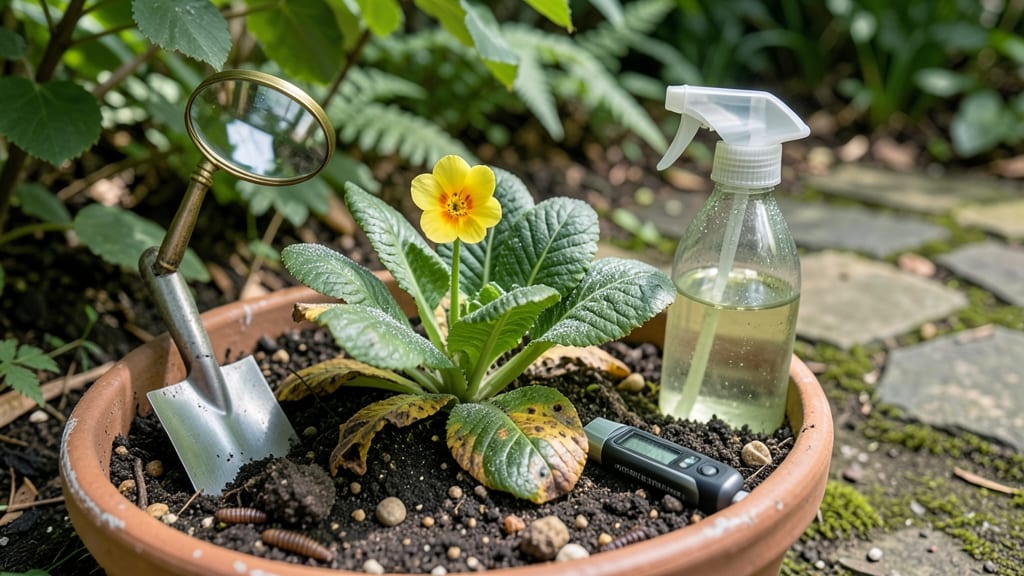
Your primula leaf problems are sending you a clear warning—those dark spots or powdery coatings aren’t just cosmetic. 🌿 I’ve battled fungal spots on my primulas for years, and copper spray isn’t just a last resort—it’s the precision weapon that stops the spread while keeping your plants safe.
The key? Spraying at the right time, with the right mix, before the spots turn your leaves into Swiss cheese.
Most fungal problems start with too much moisture or poor airflow—whether from overwatering, crowded pots, or rainy seasons. Powdery mildew looks like dust, while rust creates orange pustules, and bacterial spots show up as water-soaked marks.
Slugs? They leave jagged holes, but the real damage is the fungal hitchhikers they bring along. The earlier you act, the easier the fix.
Copper spray works because it disrupts fungal spores without harming your plants or beneficial insects. Mix it right (1 tablespoon of copper fungicide per gallon of water), apply it on a dry morning, and repeat every 7–10 days until new growth appears.
Within 2–3 weeks, your primulas will bounce back with fresh, spot-free leaves—no more hiding their pretty faces.
This method works for both container and garden primulas, and it’s safe for pollinators once dry. The secret? Consistency. Skip a treatment, and the fungus wins. But nail it, and you’ll have primulas that stay vibrant all season—no more panicking over spots or wilting blooms.
Root Causes Behind Primula Leaf Issues
Understanding why your primula leaves develop spots, discoloration, or other distressing symptoms starts with identifying the underlying triggers. These vibrant plants are susceptible to specific environmental stressors and biological threats that compromise their health.
Below, we break down the most common culprits—backed by science—and explain how they wreak havoc on your primula’s foliage.
Fungal pathogens are the #1 culprit behind primula leaf problems, thriving in moist, stagnant conditions. Two of the most notorious offenders are:
- **Powdery Mildew (Erysiphe spp.) This fungus forms a white, powdery coating on leaves, blocking sunlight and stunting photosynthesis. It spreads via windborne spores and flourishes in high humidity (70%+) with poor airflow. The fungus weakens the leaf’s cuticle, allowing secondary infections to take hold.
- Leaf Spot Diseases (Alternaria, Septoria, or Cercospora spp.) These fungi create dark, irregular spots with yellow halos, often surrounded by dead tissue. They enter through leaf wounds (e.g., from pruning or hail) and exploit wet foliage (water sitting on leaves for >12 hours).
Over time, spots merge, leading to premature leaf drop.
Why it happens:
Moisture + Warmth = Fungal Feast. Fungi require
If your primula sits in a shady, damp spot (like under a tree or in a greenhouse with poor ventilation), spores land and multiply rapidly. Copper-based fungicides disrupt fungal cell membranes, but prevention—like spacing plants for airflow and watering at the base—is key.
Bacterial infections often go unnoticed until water-soaked lesions or yellowing veins appear. The most damaging culprits for primula include:
- Xanthomonas campestris pv. primulae This bacterium causes bacterial leaf spot, creating greasy, watery lesions that ooze when wet. It spreads via splashing water (e.g., overhead irrigation) and contaminated tools.
- Pseudomonas syringae This pathogen triggers bacterial blight, leading to dark, angular spots with yellow margins. It thrives in cool, wet conditions and can survive in plant debris or infected soil.
Why it happens:
Bacteria hitchhike on
Unlike fungi, they don’t need spores—just a warm, humid environment (60–80°F) and open wounds to invade. Copper sprays (like Bordeaux mixture) are effective because copper ions disrupt bacterial cell walls, but sterilizing tools and avoiding overhead watering can prevent outbreaks.
Not all leaf problems stem from pathogens—environmental factors can weaken primulas, making them vulnerable to secondary infections. Key triggers include:
- Overwatering or Poor Drainage Primulas hate soggy roots. When soil stays waterlogged, root rot (Phytophthora spp.) sets in, starving leaves of nutrients. Symptoms? Yellowing leaves, wilting, and blackened stems.
- Low Light or Sudden Temperature Shifts Primulas prefer partial shade but hate direct sun (which causes leaf scorch) or chilly drafts (which stress the plant). Cold snaps (below 40°F) can trigger gray mold (Botrytis cinerea), a fungal invader that thrives on weakened tissue.
- Nutrient Imbalances (Too Much Fertilizer!) Over-fertilizing (especially with nitrogen) leads to soft, sappy growth—a buffet for pests and fungi. Deficiency in magnesium (a common issue in acidic soils) causes interveinal chlorosis (yellowing between veins), mimicking disease.
Why it happens:
Stressed plants = open invitations for pests/diseases. For example,
While fungi and bacteria get the spotlight, pests often kickstart leaf problems by creating entry points for infections. Watch for:
- Aphids & Spider Mites These sap-suckers inject toxins into leaves, causing yellow stippling, curling, or sticky honeydew (which fosters sooty mold). They thrive in dry, dusty conditions.
- Slugs & Snails Their ragged feeding marks leave primula leaves tattered and prone to bacterial rot. They’re most active in cool, damp nights.
- Thrips These tiny insects scratch leaves while feeding, creating silver streaks—perfect gateways for fungal spores.
Why it happens:
Pests
Pro Tip: Keep a plant journal to track symptoms, watering schedules, and environmental changes. Often, the pattern (e.g., spots after rain, yellowing in winter) reveals the root cause faster than guesswork! 🔍
Fixing Primula Leaf Issues Fast
Revitalizing your primula’s health starts with identifying the root cause—and acting swiftly. Below are targeted solutions for common primula leaf problems, from fungal spots to pests, paired with prevention tips to keep your plants thriving. Let’s tackle each issue step by step!
Causes: Overhead watering, poor airflow, or damp conditions create the perfect breeding ground for fungi.
🔥 Immediate Treatment
- Remove Infected Leaves
- Snip off yellowing or spotted leaves with clean, sterilized scissors (dip in rubbing alcohol between cuts).
- Dispose of them in the trash (not compost)—fungi can survive in soil!
- Apply Copper Fungicide (Precision Spray)
- Mix copper sulfate or copper fungicide (1 tsp per gallon of water) in a spray bottle.
- Spray undersides of leaves (where spores hide) and stems early in the morning (when humidity is high).
- Reapply every 7–10 days until new growth appears.
- Improve Air Circulation
- Space plants 3–4 inches apart to reduce humidity pockets.
- Use a small fan on low setting near primulas for 5–10 minutes daily (encourages airflow without stressing plants).
🌡️ Prevention Tips
- Water at the base (avoid wetting leaves) with a drip irrigation system or watering can with a rose attachment.
- Space mulch 2–3 inches away from stems to prevent moisture buildup.
- Rotate plants every few weeks for even sunlight exposure (fungi thrive in shaded, damp areas).
Causes: Weak plants (from overcrowding or poor nutrition) attract pests, while slugs target tender primula leaves.
🍳 Organic Pest Control Methods
- For Aphids & Spider Mites
- Neem Oil Spray (1 tsp neem oil + 1 tsp mild soap + 1 quart water): Spray directly on pests (focus on leaf undersides).
- Blast off mites with a strong stream of water (disrupts their webs).
- Introduce ladybugs (natural predators—available at garden centers).
- For Slugs & Snails
- Beer traps: Bury a shallow dish filled with beer near plants—slugs crawl in and drown.
- Copper tape barriers: Wrap around pots or garden beds (creates a mild electric shock slugs avoid).
- Diatomaceous earth: Sprinkle around the base (non-toxic but deadly to slugs—reapply after rain).
🎯 Long-Term Prevention
- Handpick pests in the early morning (when they’re sluggish).
- Encourage predators: Plant marigolds or lavender nearby to attract beneficial insects.
- Avoid over-fertilizing (weakens plants, making them pest magnets).
Causes: Soggy soil from poor drainage or excessive watering suffocates roots.
⏰ Emergency Fixes
- Check the Soil
- Stick your finger 1 inch deep—if it’s damp, pause watering for 3–5 days.
- If soil smells sour or moldy, root rot is likely.
- Repot if Necessary
- Gently remove the plant, trim mushy roots with sterilized scissors, and repot in well-draining mix (add perlite or sand).
- Use a pot with drainage holes and elevate it on pebbles to prevent future waterlogging.
- Adjust Watering Habits
- Water only when the top inch of soil is dry (use your finger as a gauge).
- Bottom-water by placing the pot in a tray of water for 10 minutes—lets roots absorb moisture without drowning.
💡 Pro Tips for Drainage
- Terracotta pots (porous material) help wick away excess moisture.
- Mulch lightly (½ inch) with orchid bark to retain moisture without suffocating roots.
- Avoid saucers unless they’re empty after 30 minutes—standing water = root rot.
🌟 Quick Recap:
| Problem | Fix It With | Prevent It By |
|---|---|---|
| Fungal spots | Copper spray + airflow | Water at base, space plants |
| Pests | Neem oil, beer traps, ladybugs | Strong plants, copper barriers |
| Root rot | Repot + dry soil | Well-draining mix, less water |
With these practical fixes, your primula should bounce back in 2–4 weeks. Stay vigilant—early action is key! 🌿✨
Frequently asked questions
Why do my primula leaves suddenly develop yellow spots with brown edges?
Those symptoms likely indicate bacterial leaf spot or Alternaria leaf spot, both common fungal infections. The brown edges appear when the fungus blocks water and nutrient flow. Remove infected leaves immediately and apply a copper fungicide spray (1 tsp per gallon of water) every 7-10 days until new growth appears. Avoid overhead watering to prevent spreading spores.
Can I still use my primula if it has powdery mildew on the leaves?
Yes, but treat it first! Powdery mildew is unsightly but rarely fatal. Wipe leaves gently with a damp cloth to remove surface spores, then spray with a 1:10 dilution of baking soda and water (add a drop of dish soap). For severe cases, switch to copper fungicide. Move your primula to a sunnier spot with better airflow—this fungus thrives in shady, humid conditions.
How do I tell if my primula's leaf damage is from pests or disease?
Check the edges: Pest damage (like slugs or aphids) creates irregular holes or chewed edges, while disease (fungal/bacterial) shows spots with defined borders. Look for other clues—sticky residue (honeydew from aphids) or tiny webs (spider mites) mean pests. Diseases often appear first on older leaves and spread upward. If you see both, treat pests first with neem oil, then address disease with copper spray.
Will my primula recover if I cut off all the spotted leaves?
Yes, but only if you address the root cause! Pruning removes the visible damage, but fungi/bacteria can survive in soil or on remaining leaves. After cutting (use sterilized scissors!), apply copper fungicide and improve growing conditions. Healthy new leaves should emerge in 2-3 weeks if you also adjust watering (base-only) and spacing. For severe cases, consider repotting with fresh, sterile soil.
How often should I spray copper fungicide on my primula?
Start with 3 applications spaced 7-10 days apart, then switch to monthly preventative sprays during humid seasons. Mix 1 teaspoon copper sulfate per gallon of water and spray early morning when humidity is high. Stop if rain is forecast within 24 hours—copper needs time to work. Rotate with baking soda spray (every 4th week) to prevent resistance.