
Flowers
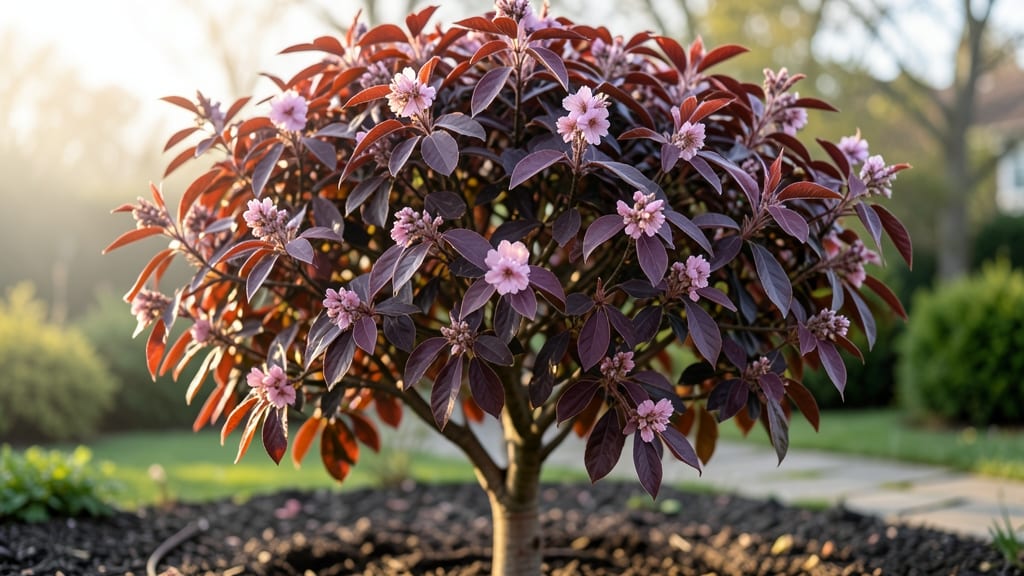
Purple leaf plum trees burst into vibrant spring blooms that turn your garden into a dreamy, pastel masterpiece. 🌸 I’ve watched mine go from barren branches to a riot of pink and purple flowers that last for weeks—with the right care, yours can too.
The secret lies in full sun exposure and well-draining soil. These trees thrive where others struggle, their deep purple foliage providing year-round drama. Prune in late winter to encourage dense growth and more abundant flowers, and watch them reward you with show-stopping blossoms every spring.
By summer, you’ll have lush, glossy leaves and a canopy of fragrant flowers that attract pollinators. The best part? These trees are low-maintenance once established, making them perfect for busy gardeners who still want high-impact results.
Whether you’re planting a single specimen or lining a driveway, purple leaf plums deliver four-season interest—from spring blooms to fiery autumn foliage. Let’s get yours thriving!
📚 In This Guide
- What you need
- Instructions
- Tips and common mistakes
- Wrapping up and next steps
What you need
- ● Purple leaf plum tree: 1–3 nursery-grown saplings (3–5 ft tall, Prunus cerasifera ‘Atropurpurea’ or similar cultivar)
- ● OR seeds (less common; requires stratification for germination)
- ● Planting site: Full sun (6+ hours/day)
- ● Well-draining soil (amend with compost if clay-heavy)
- ● Space: 15–20 ft apart (for mature tree spread)
- ○ Soil amendments (optional but helpful): 5–10 lbs organic compost or aged manure per planting hole
- ● 1 cup bone meal (for phosphorus, supports root growth)
- ● Garden trowel or spade
- ● Shovel (for digging planting holes)
- ● Pruning shears (for trimming dead branches post-planting)
- ● Watering can or hose (with gentle spray nozzle)
- ● Mulch (2–3 inches of shredded bark or pine needles)
- ○ Optional but handy: Soil pH test kit (ideal range: 6.0–7.0)
- ● Tree stakes + ties (if planting in windy areas)
- ● Fertilizer (balanced 10-10-10 or slow-release granular)
- ● Best planting time: Early spring or fall (avoid extreme heat/cold)
- ● Check local frost dates (purple leaf plums are hardy to USDA Zones 5–9)
- ● Verify no Prunus species (like cherries or plums) are banned in your area (fire blight risk!)
Step-by-step guide to planting and caring for purple leaf plum trees
Here’s how to cultivate these showstopping trees for maximum bloom and foliage impact.
🪴 Step 1: Select the Right Location and Prepare the Soil
Purple leaf plums thrive in full sun—at least 6 hours daily—and tolerate a range of soil types, though they prefer well-draining, slightly acidic soil with a pH of 5.5-6.5. Choose a spot with good air circulation to prevent fungal diseases, which can plague these trees when humidity lingers. I always dig a hole twice as wide as the root ball but only as deep as the container’s base—planting too deep suffocates the roots.
Amend heavy clay soil with 2-3 inches of compost mixed into the bottom of the hole. This improves drainage and provides nutrients for the tree’s first critical growing season. If your soil is sandy, work in 1 inch of organic matter like peat moss to retain moisture. Test the soil’s drainage by filling the hole with water—it should drain completely within 2 hours. Slow drainage means you’ll need to raise the planting mound.
🌱 Step 2: Plant Your Purple Leaf Plum Tree
Remove the tree from its container and gently tease the roots outward if they’re circling. Position the tree so the top of the root ball sits 1-2 inches above ground level—this prevents water from pooling around the trunk. Backfill the hole with native soil mixed with compost, tamping lightly every 2 inches to eliminate air pockets. Avoid compacting the soil too firmly, as this restricts root growth.
Create a 2-3 inch deep watering basin around the base to direct irrigation. Water deeply immediately after planting to settle the soil and eliminate gaps. You’ll know it’s right when the soil feels uniformly moist but not soggy. Mulch with 2-3 inches of organic mulch (like wood chips) in a 3-foot diameter circle, keeping it 6 inches away from the trunk to prevent rot. This conserves moisture and regulates soil temperature.
☀️ Step 3: Water and Fertilize for Optimal Growth
Water your purple leaf plum deeply once weekly during the first growing season, providing 1-2 gallons per watering depending on the tree’s size. Check moisture by sticking your finger 2 inches into the soil—if it feels dry, it’s time to water. Overwatering leads to root rot, while underwatering causes stress that dulls the foliage’s signature purple hue. In hot climates, increase watering to twice weekly during peak summer months.
Apply a balanced, slow-release fertilizer (10-10-10 or similar) in early spring as new growth begins. Follow the package instructions, but I halve the recommended dose for the first year to avoid burning tender roots. Purple leaf plums respond well to organic options like composted manure or fish emulsion. Avoid high-nitrogen fertilizers, which promote leafy growth at the expense of vibrant blossoms. You’ll see the most dramatic foliage color when the tree receives moderate phosphorus and potassium.
✂️ Step 4: Prune for Shape and Flower Power
Prune your purple leaf plum in late winter or early spring, before buds swell but before new growth begins. Remove any dead, diseased, or crossing branches first—these compete with healthy growth and detract from the tree’s structure. I also thin out crowded branches to improve air circulation, which is critical for preventing fungal issues. Cut back to the nearest outward-facing bud or lateral branch to encourage a balanced shape.
To encourage abundant blooms, prune selectively to maintain an open canopy. Avoid heavy pruning, which can reduce flowering. You’ll notice the most vibrant purple foliage on younger branches, so prioritize removing older wood that’s past its prime. After pruning, apply a copper fungicide spray as a preventative measure, especially if your area has a history of fungal diseases. This step is non-negotiable—healthy foliage starts with proactive care.
🌿 Step 5: Maintain Through the Seasons
In late fall, apply a 2-3 inch layer of mulch to insulate roots from freezing temperatures. Purple leaf plums are hardy in zones 4-8, but younger trees benefit from winter protection. Avoid mulching too heavily, as this can suffocate roots. Prune lightly in late winter to remove any winter-damaged branches, which are easy to spot as they’re often brown or shriveled.
Watch for pests like aphids or scale, which can weaken the tree and dull its foliage. A strong spray of water often dislodges aphids, while neem oil treats scale effectively. I also monitor for powdery mildew, especially in humid climates—prevent it with regular pruning to improve airflow. By summer, your tree should be established enough to handle typical garden conditions with minimal intervention. The key to stunning purple foliage and prolific blooms is consistency: water, feed, and prune at the right times, and your tree will reward you with a garden centerpiece.
Tips & tricks for showstopping purple leaf plum trees
These pro-level insights will help you coax out the most dramatic purple foliage and abundant blooms from your purple leaf plum.
Sunlight Strategy: While the instructions specify 6 hours of full sun daily, I’ve found that positioning your tree where it gets morning sun and afternoon shade in hot climates (zones 7-8) actually preserves the vibrant purple color longer. The intense afternoon sun can sometimes bleach the foliage, especially in summer. If your garden has limited full-sun spots, consider a location with at least 5 hours of direct sun—the tree will still thrive, though the foliage may be slightly less intense.
Soil Drainage Test: The instructions mention testing drainage by filling the hole with water and waiting 2 hours for it to drain. Here’s what I do differently: I perform this test a week before planting to give myself time to adjust the soil if needed. If water drains too slowly, I’ll raise the planting mound by adding a layer of gravel or compost at the bottom of the hole. This prevents waterlogging, which can cause root rot—the silent killer of young purple leaf plums.
Early Season Fertilizer Boost: While the instructions recommend a balanced fertilizer (10-10-10) in early spring, I’ve had the best results with a low-phosphorus, high-potassium fertilizer (like 5-5-10) during the first year. The extra potassium enhances the purple pigment in the leaves and supports the tree’s flowering potential. Apply this in late winter just before buds begin to swell—this timing gives the tree a head start on vibrant growth without overstimulating early foliage.
Pruning for Color: The instructions emphasize pruning to maintain an open canopy, but here’s the secret: focus on removing branches that grow toward the center of the tree. These "inward-facing" branches block sunlight from reaching the inner foliage, which can cause the purple color to fade. I also make it a point to prune any branches that are growing straight up—these rarely produce vibrant purple leaves and can make the tree look leggy. By keeping the canopy open and balanced, you’ll maximize that stunning purple display throughout the entire tree.
Pro Tips for Purple Leaf Plum Flowers
- These pro-level insights will help you coax out the most dramatic purple foliage and abundant blooms from your purple leaf plum.
- The intense afternoon sun can sometimes bleach the foliage, especially in summer.
- Soil Drainage Test: The instructions mention testing drainage by filling the hole with water and waiting 2 hours for it to drain.
Frequently asked questions
Got questions about purple leaf plum flowers? You’re not alone! Here are some of the most common queries gardeners have—plus quick, practical answers to help you grow and enjoy these showstopping blooms with ease.
When is the best time to plant purple leaf plum trees?
The ideal time to plant Prunus cerasifera is in early spring (after the last frost) or fall (4-6 weeks before the first frost). This gives roots time to establish before extreme temperatures. Avoid planting in summer heat or winter freezes—both can stress young trees.
How long do purple leaf plum flowers last, and when do they bloom?
These vibrant flowers typically bloom for 1-2 weeks in early spring (March–April, depending on your climate). While individual blossoms are short-lived, the tree’s foliage remains stunning year-round, with deep purple leaves that turn bronze in winter. For longer blooms, choose a variety like ‘Newport’ or ‘Atropurpurea’.
Can purple leaf plum trees survive cold winters?
Yes! Most varieties are hardy to USDA Zones 5-9, meaning they tolerate winters down to -20°F (-29°C). However, young trees may need winter mulch (3-4 inches of shredded bark) to protect roots. In Zone 4, opt for ‘Pissardii’, a hardier cultivar.
Do purple leaf plum trees produce edible fruit?
Nope—their small, tart fruits (plums) are not edible for humans (though birds and wildlife love them!). The tree’s real star is its ornamental value: striking flowers, year-round foliage, and minimal maintenance. If you want edible plums, plant a separate variety like ‘Santa Rosa’.
What pests or diseases should I watch for with purple leaf plums?
These trees are generally low-maintenance, but keep an eye out for:
- Scale insects: Look for sticky residue on leaves—treat with horticultural oil.
- Fire blight: Blackened, oozing branches? Prune infected areas 6 inches below the damage and sterilize tools.
- Powdery mildew: Improve airflow and spray with neem oil if needed.
Healthy trees with good sunlight and drainage rarely have major issues!
Wrapping up and next steps
Purple leaf plum flowers aren’t just a burst of color—they’re a garden game-changer, blending beauty, resilience, and low-maintenance charm.
Whether you’re drawn to their vibrant blooms, year-round foliage, or butterfly magnet appeal, these trees prove that stunning landscapes don’t require endless effort. Ready to elevate your outdoor space?
Start small—plant one this season, or sketch a plan for a purple-dominated paradise. Grab your gloves and dig in! 🌸 Your future self (and local pollinators) will thank you.