
Plants
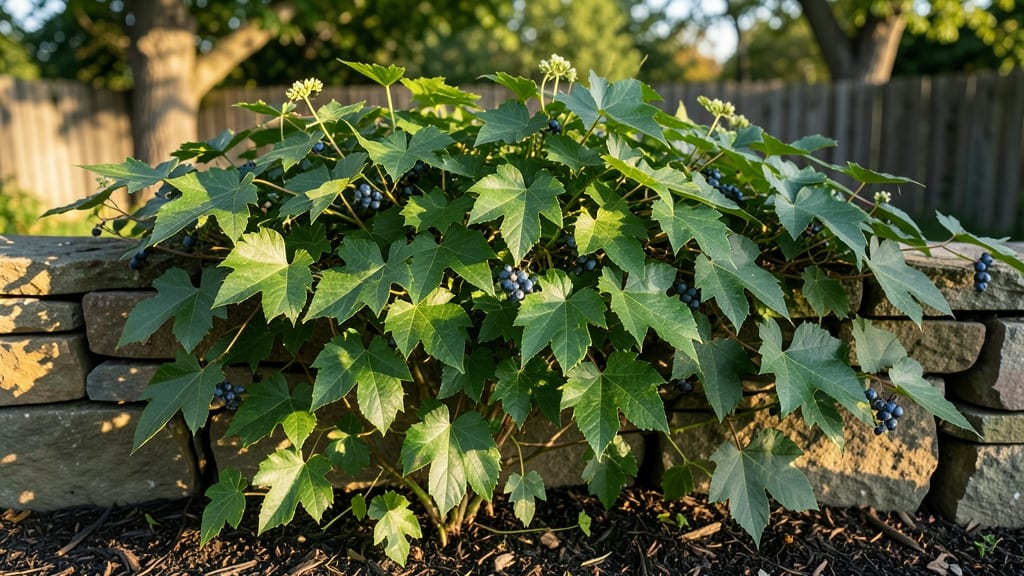
That five-leaf climbing vine with its signature star-shaped leaves is the secret weapon for instant vertical drama. 🌿 I planted mine last spring, and by summer, it had already transformed a bare wall into a lush green curtain—no pruning required.
The key lies in its adaptability: it thrives in partial shade, tolerates poor soil, and even handles urban pollution better than most vines. You'll need a sturdy trellis, fence, or wall for support—this vine can grow 30-50 feet if left unchecked.
Plant in well-draining soil during early spring or fall, spacing plants 6-10 feet apart for full coverage. Unlike wimpy annuals, this vine stays evergreen in mild climates and bursts back to life in spring after winter dormancy. Once established, it's nearly maintenance-free.
Water deeply once a week during dry spells, but don't overdo it—soggy roots are its only real enemy. A light application of balanced fertilizer in early spring keeps it vigorous, though it rarely needs pruning beyond removing dead wood or shaping in late winter.
Perfect for covering unsightly structures, creating privacy screens, or adding instant texture to landscapes. The real magic? It turns any space into a verdant retreat with minimal effort—just plant, watch, and enjoy the show.
📚 In This Guide
- What you need
- Instructions
- Tips and common mistakes
- Wrapping up and next steps
What you need
- ● Five-leaf climbing vine plants: 1–3 healthy nursery-grown vines (bare-root or potted, depending on season). Look for disease-free specimens with 5–6 vibrant leaves.
- ● Well-draining potting mix or garden soil: For containers: 5–10 gallons of lightweight potting mix (add perlite or sand for drainage).
- ● For in-ground planting: Amend soil with compost (1–2 buckets per plant) to improve fertility.
- ● Support structure: Trellis, arbor, or fence: At least 6–8 feet tall (vines can grow 30–50 feet in ideal conditions!).
- ● For containers: A sturdy cage or obelisk (4–6 feet tall).
- ● Organic mulch: 2–3 inches of shredded bark or wood chips to retain moisture and suppress weeds.
- ● Basic gardening tools: Trowel or spade (for planting)
- ● Gloves (to protect hands from thorns)
- ● Pruning shears (sharp and sterilized)
- ○ Fertilizer (optional but helpful): Balanced 10-10-10 or slow-release granular fertilizer (apply once in spring).
- ● Fish emulsion (for organic boosts).
- ● Watering can or hose with nozzle: Drip irrigation is ideal for container plants.
- ● Sunlight assessment: Confirm your vine will get full sun to partial shade (6+ hours of light for best growth).
- ● 🌡️ Check hardiness zone: Five-leaf vines thrive in USDA Zones 3–9—verify yours before buying!
- ● ✨ Container hack: Use a self-watering pot if you travel often (vines love consistent moisture!).
- ● 🔥 Thorn warning: Wear gloves—some varieties have sharp tendrils!
How to grow a thriving five-leaf climbing vine
This fast-growing beauty needs just three things: the right spot, a little training, and occasional pruning to stay lush.
🪴 Step 1: Choose the Perfect Location
Pick a site with bright, indirect light—think east-facing windows or a porch with morning sun. Direct afternoon sun can scorch the delicate leaves, while too little light makes growth sparse. I always test a spot for a week first by placing a similar plant there and watching how it responds.
If growing outdoors, select a shady area under a tree or along a north-facing wall. The vine thrives on 60-75°F temperatures, so avoid drafty spots or areas where temps drop below 50°F at night. You'll know you've picked well when new leaves unfurl vibrant and evenly spaced.
🌱 Step 2: Plant and Train the Vine
Plant your five-leaf vine in well-draining soil mixed with 20% compost to encourage strong root growth. Dig a hole twice as wide as the root ball but only as deep—burying too deeply suffocates the plant. Water thoroughly right after planting to settle the soil around roots, but avoid drowning it.
Install a sturdy trellis or fence within 6 inches of the plant so the vine can start climbing immediately. I like to weave the main stem gently through the trellis supports and secure it with soft plant ties. This prevents the vine from flopping while encouraging upward growth. Watch for the first tendrils—those little curly growths—that signal it's ready to grab and climb.
💧 Step 3: Water and Fertilize Consistently
Keep the soil evenly moist but never soggy—water when the top 1-2 inches feel dry to the touch. Overwatering causes root rot, while underwatering makes leaves curl and drop. I water deeply once a week in summer, then taper off in winter when growth slows. A self-watering pot helps maintain consistent moisture if you travel often.
Feed with a balanced 10-10-10 fertilizer every 6 weeks during spring and summer. You'll see the difference in leaf size and color within weeks. In fall, switch to a low-nitrogen fertilizer to encourage hardier growth before winter. Always water before fertilizing to prevent root burn.
✂️ Step 4: Prune for Bushiness and Health
Prune in early spring to shape the vine and remove any dead or yellowing leaves. Cut just above a leaf node where new growth will emerge—this encourages branching. I never remove more than 20% of the plant at once, as this stresses the vine. Use clean, sharp pruners to make cuts at a 45-degree angle to prevent tearing.
If the vine grows too leggy, pinch back the tips of the longest stems to redirect energy into bushier growth. You'll notice new side shoots forming within 2-3 weeks of pruning. In winter, reduce pruning to just removing dead growth—this lets the plant conserve energy for spring.
☀️ Step 5: Adjust Care Seasonally
In summer, increase watering slightly to accommodate faster growth, but avoid letting water pool in saucers. Move indoor plants outdoors for a few hours weekly to acclimate them to outdoor conditions. You'll see the leaves darken and thicken as they adapt to natural light.
For winter care, reduce watering by half and stop fertilizing entirely. If growing indoors, keep the plant away from cold drafts and supplement with a grow light if natural light is scarce. The vine enters a natural dormancy period, so don't panic if growth slows—just maintain basic care until spring.
Tips & tricks for perfect five-leaf climbing vine care
Real talk: The difference between a vine that thrives and one that struggles often comes down to these small but crucial details.
Location Testing: Before committing to a spot, I test potential locations for a week by placing a similar plant there. Watch how the leaves respond—if they droop or yellow, that spot gets too much direct sun. The ideal location should keep leaves vibrant and evenly spaced throughout the day. This simple test saves you from moving a fully grown vine later.
Soil Mixing: The 20% compost recommendation isn't just about nutrients—it's about creating the perfect balance. Too much compost can make the soil too dense, while too little won't provide enough organic matter. I mix the compost thoroughly with the existing soil to ensure even distribution. For container growing, use a blend of 60% potting mix and 40% compost for optimal drainage and aeration.
Trellis Timing: Installing that trellis within 6 inches of the plant is crucial for immediate support. I've seen vines struggle when given too much freedom to flop before they develop tendrils. The key is to position the trellis as you're planting, then gently weave the main stem through the supports. This gives the vine something to grab onto right from the start, preventing that awkward "waiting for support" phase.
Seasonal Adjustments: The temperature ranges you see in the instructions (60-75°F) are perfect, but real-world conditions vary. In summer, if you notice leaves curling slightly, it might be a sign of heat stress—move the plant to a slightly shadier spot for a few hours. In winter, if your home stays consistently above 60°F, you can maintain normal watering, but if it drops below 50°F at night, reduce watering by half to prevent root rot.
Pro Tips for Five Leaf Climbing Vine
- Real talk: The difference between a vine that thrives and one that struggles often comes down to these small but crucial details.
- Location Testing: Before committing to a spot, I test potential locations for a week by placing a similar plant there.
- Soil Mixing: The 20% compost recommendation isn't just about nutrients—it's about creating the perfect balance.
Frequently asked questions
Got questions about keeping your five-leaf climbing vine thriving year-round?
Here are answers to the most common concerns—from care tips to troubleshooting—so you can enjoy its lush beauty with ease.
How fast does a five-leaf climbing vine grow, and how often should I prune it?
The five-leaf climbing vine (Parthenocissus quinquefolia) grows moderately fast—about 12–18 inches per year—but its growth slows in winter. Prune it once a year in late winter or early spring to shape it and encourage healthy new growth. Minimal pruning is key—just remove dead or overgrown branches to maintain its natural, lush look. Pro tip: Use sharp pruners to avoid damaging the vine!
Can I grow a five-leaf climbing vine in containers, or does it need to be planted in the ground?
Yes, you can grow it in containers! While it thrives in the ground, a large pot (at least 15–20 gallons) with well-draining soil works well for small spaces or patios. Just ensure the container has drainage holes and you water it regularly (especially in hot weather). For best results, plant it in spring and move it indoors or to a sheltered spot in winter.
Why are the leaves on my vine turning yellow or brown? What’s wrong?
Yellow or brown leaves usually signal overwatering, underwatering, or nutrient deficiencies. Check the soil—it should be moist but not soggy. If the roots are waterlogged, let the soil dry out slightly. Brown edges can also mean low humidity or too much sun. Fertilize lightly in spring if growth seems slow. Quick fix: Trim affected leaves to encourage new, healthy growth!
Does the five-leaf climbing vine lose its leaves in winter? How do I protect it?
Yes, it’s deciduous and drops leaves in fall/winter, but don’t worry—it’s completely normal! To protect it, mulch the base with 2–3 inches of organic mulch (like shredded bark) to insulate roots. In extreme cold zones (below Zone 4), wrap young vines with burlap or use frost cloth. No pruning is needed in winter—wait until spring!
Are there any alternatives to the five-leaf climbing vine for similar shade and beauty?
If you love the five-leaf vine’s lush, shade-providing look, consider these hardy alternatives:
- Boston Ivy (Parthenocissus tricuspidata) – Fast-growing with vibrant fall color.
- Virginia Creeper (Parthenocissus virginiana) – Similar care but with red berries in fall.
- Star Jasmine (Trachelospermum jasminoides) – Fragrant flowers and evergreen in warm climates.
- Clematis (Clematis spp.) – Offers stunning blooms (choose non-toxic varieties).
Wrapping up and next steps
The five-leaf climbing vine proves that stunning greenery doesn’t require constant upkeep—just a little patience and the right care! With its hardy nature, minimal pruning needs, and year-round lushness, it’s the perfect choice for both beginners and seasoned gardeners.
Whether you’re draping it over a trellis or training it along a fence, this vine rewards effort with vibrant foliage and easy maintenance.
Ready to transform your space? Start small—plant one vine, observe its growth, and let its beauty inspire you to expand! 🌿✨ Your green oasis awaits—happy planting!